How Bilhah Found the Baby

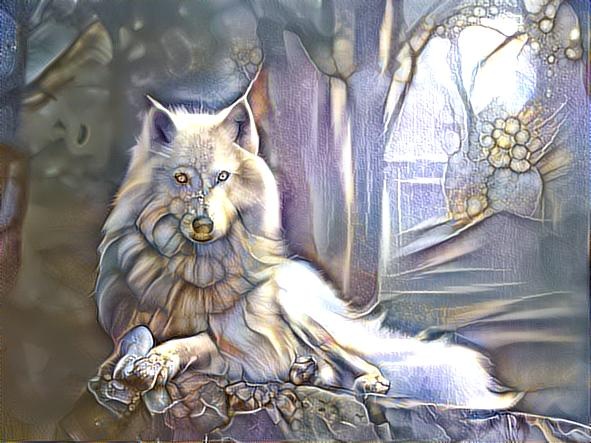
wolf

Gratitude List:
1. Giving in–just taking the day off work. Sometimes you just can’t muscle through, and you have to ask for help.
2. Sleep
3. Ibuprofen–this version of the bug has every nerve and muscle aching
4. Featherbed
5. The way stories reach out and grab you

May we walk in Beauty!

This is what happens after a night and a day of flu-fueled half-sleeping/dreaming:

How Bilhah Found the Baby

Bilhah, the daughter of Gormlek the Mourner, found the baby one evening after she’d been working in the almond orchards outside of the city walls. She only told the story to her father, and then to the child herself, as she grew.

In preparation for the celebration of the Wolf-King’s birthday the following week, many of the regular harvesters had been conscripted to work in the palace kitchens and sculleries, so there were only about eight young women in Bilhah’s group that day, and none of them would work the far ends of the rows because of the rumors that a great and vicious she-wolf had been seen prowling along the river, down beyond the orchards. Bilhah, seeking solitude, found herself working alone in the fringe of trees where the others refused to go.

Keeping her ears peeled for the sound of the bells that signaled the end of the work day, Bilhah had a found a rhythm to the picking that kept her moving at a quick pace. She loved the skittering sound of the almonds clattering into her basket, and reveled in the scent of the nuts warming in the afternoon sun. At the very end of the row of trees, she paused, sighed, and lifted her eyes to the river. A thrill of terror mingled with excitement filled her: there in the shadows of the big rocks by the river, she could clearly discern the form of a large wolf. It was sitting quietly, as though it were simply one of the city dogs, patiently waiting for its human to finish working and come home. Had she imagined its tail thumping twice against the ground?

She slipped back into the orchard to the next row, three trees back, and began picking her way once more toward the end of the row. She could see Zoha and the others working the other way down the row, close to the safety of the city walls. As she reached the river end of the next row, she looked again for the wolf. This time, she clearly saw the tail thump, and the creature stood, took two steps toward her, remaining in the deep shadows by the rocks.

Bilhah had lived with dogs all her life, and something in the demeanor of this fearsome wild creature kept reminding her of her own beloved Tigo and Amona. Underneath her fear, she felt an undeniable sense that this wild thing was trying to communicate something. She took a few steps out from under the trees toward the large rocks. The wolf shrank back into shadow. Another step. The wolf bolted to the left, down the rocky trail toward the river, but stopped suddenly in the shadow of a large fig tree and looked back toward Bilhah. She wants me to follow her!

At that moment, the bells began to ring in the city, letting the harvesters know that the work-day had ended. She heard Zoha and the others calling her name down the row. She had made the decision before she realized it had been made. Making momentary eye contact with the wolf, she turned and headed back into the trees. “Coming!” she called to the others, slipping down the row toward them.

Breathless, she caught up with Zoha. “Can you take my basket back for me? I want to see if I can find some figs for Abba on those trees by the river.”

“Oh, please don’t, Bilhah,” Zoha pled. “You know they’ve been seeing that wolf down by the river.”

“I’ll be fine, Silly. I worked down there by the river all day, and no wolf has eaten me yet.” She managed not to lie, exactly.

Zoha took her basket begrudgingly: “If you aren’t back by nightfall, I’ll send Uncle Drago out to find you.”

“Thank you, Zoha. You don’t need to worry about me. You know Granny goes out to the river all the time, and she’s never been attacked by the wolves.”

She watched the colorful flock of her friends melt into the shadows by the city gates, and turned to walk down the row of trees. There at the end of the row, almost hidden in shadow underneath the last tree, was the she-wolf! She followed me! Another thrill of fearful horror overcame her, and she almost turned and ran back to join her friends, but again something in the expectancy of the wolf’s posture made her pause, take a breath, and walk toward the waiting creature.

As she approached, the animal whirled and dashed into the shadow of the rocks by the river trail. She followed steadily, the wolf retreating in short bursts, waiting in shadows for her to approach. Down the long path along the river they went, and Bilhah even managed to pick several figs from the low branches of trees to tuck in her skirts in order to give truth to her words to Zoha.

The sun settled lower and lower in the sky, and Bilhah began to worry that she would not make it back to the city before nightfall and the closing of the gates. This wolf might be friendly, but what about the packs that roamed the steppes at night? She had seen the green glow of their eyes in the dark when she had stood on the city walls with her father to look at the stars.

And suddenly the wolf disappeared. She had dashed into shadow by an outcropping of rock up a little hill away from the path, and Bilhah lost sight of her. She waited, uncertain, considering whether she ought to just start back down the path to the city and safety.

A wolfy whine startled her, and she could hear distinctly the sounds of tiny cub whimpers. She has led me to her den. The realization filled her with a new mixture of fear and awe. She stood frozen, wondering what her guide intended. Am I supposed to climb up and see her babies?

That was when she heard the human baby, a whimpering sound, not of distress but of demand.

Without thinking further, she began to scramble up the hillside toward the rocky outcrop. Shadows impeded her view as she peered into the space between the rocks, and her eyes took moments to adjust before she could make out the distinct shapes of mother wolf and cubs deep in the den. A lighter shadow moved among them. A human child, nursing with the wolf cubs. The baby looked to be only weeks old, but well-fed and carefully tended. The mother wolf’s eyes were glowing green in the shadows. Bilhah watched her tenderly licking her cubs, wolf and human alike. As the squirmy bunch settled down to milk-dazed satisfaction, the she-wolf raised her head to Bilhah, gave a little whine, and again licked the head of the child. She is offering me the child. That’s why she led me here!

Slowly, hardly daring to breathe or even to think, Bilhah eased forward into the tight doorway of the den until her body blocked the light, until she could touch the smooth skin of the child. Her nose was assaulted by the musky odor of wolf, and the she-wolf gave another doggy whine. As Bilhah reached to take the child, she felt the tender tongue of the mother wolf slide over her fingers as it gave its tiny charge one last kiss.

Bilhah backed slowly from the den. “Thank you,” she breathed, catching the green glow of the mother wolf’s eyes one last time as she turned to slide as carefully as she could down the rocky hillside to the path, holding her sleeping charge carefully in her arms.

She hurried as quickly as she could up the rocky river path in the growing dusk, filled with the wonder of her encounter and of the child she carried in her arms. How had she come to be there in the wolf’s den? Had the mother wolf stolen the child? Had a desperate mother, unable to care for one more child, left her baby girl there at the wolf’s den? Bilhah stumbled in the near dark and almost lost her footing, but managed not to fall. Panting, she stopped and held the baby tightly, fearing to fall and harm the child, but fearing to be left outside the city gates when the wolves began to prowl.

As she began to step more carefully along the path toward the orchards, she became aware of a light ahead, bobbing up and down on the pathway, and then she heard her father’s voice calling her name.

“I’m here, Abba!” she called, waking the babe, who gave a tiny squawk.

***
Gormlek the Mourner told his neighbors the story of his cousin’s daughter, out in the Seven Villages, who had become involved in an unfortunate relationship with a passing merchant. The child of their union would have been taken to the orphanage in the Market District of the city. Wanting to save the child from such a fate, he and his daughter had decided to take her into their home and raise her as their own. They named her after his late wife and Bilhah’s mother: Leeta.
The Wolves of Zammarqand

Gratitude List:
1. Rays of crows flying out from the trees in front of a magenta sunset cloud
2. The way stories come when you call them
3. Finding center, finding balance
4. Light. There’s always light somewhere.
5. The dark. There’s comfort in the dark when I move past the panic of losing light.

May we walk in Beauty!

zammarqand

I woke in the wee hours this morning with this phrase in my head:
The wolves of Samarkand have greenish eyes.

I looked up Samarkand, thinking I was going to be telling a story of the far north, where snow blows around the city walls, only to discover that Samarkand is a city in Uzbekistan, a much warmer place than my mind had conjured. But there are wolves. In fact, Genghis Khan, who conquered Samarkand in 1220, was known as the Blue Wolf. I don’t think I have it in me to write anything so epic as a Genghis Khan story at this point in time. In fact, not being familiar with the words and ways of Uzbekistan, I will change the spelling of my city to make it more mine, though I think I will keep it in the steppes of a place similar to central Asia.

The Wolves of Zammarqand

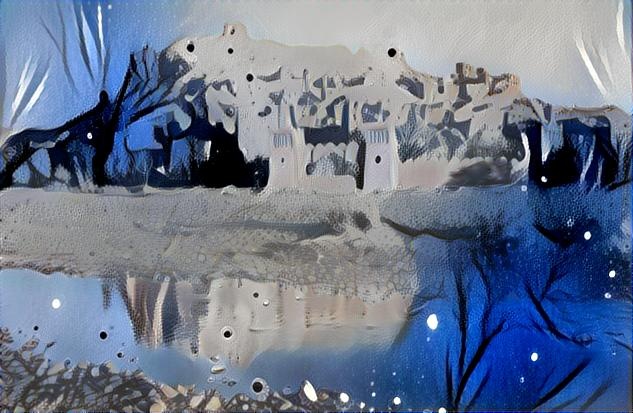
The wolves of Zammarqand have greenish eyes. At night, when the sheep and the children of the city have been safely enclosed within the walls, Leeta the Storymaker stands on the high wall overlooking the valley and watches for the green glow of their eyes in the starlight, the shadowy forms moving restlessly in moonlight. She hears their singing from the high ridge across the river.

Legends live long in these hills. Leeta is the Storymaker charged with remembering, with telling the ancient tales. Leeta remembers the hi’Story of the ancient Wolf-Queens, when the strong looked after the weak, the powerful encircled the vulnerable, when the city’s power was determined by the strength of its ability to care for all of its members.

Centuries have passed since the times of the Wolf-Queens, since the good of the pack gave way to might and ferocity, since power over others became the rule. The Wolf is still the city’s symbol, a snarling face with bared teeth and angry eyes. But when Leeta wanders the streets, she can find the ancient face of the mother wolf–eyes watchful, patient–carved into the stones of pillars and temples, painted above doorways. As the city was repeatedly re-built upon itself over centuries, it covertly remembered its mothers in quietly lupine statuary and artwork. Anyone with eyes to see–and half a desire to do so–could find them.

On moonlit nights, Leeta goes by secret ways, out of the city, returning in the hushed moments before dawn, leaving a trail of footprints in the dew.

The daughters of Leeta the hi’Storian all have green eyes.

Bottle of Water, Bottle of Wind

reading

Gratitude List:
1. Feeling better. All day, I have been feeling a general malaise, achy and dull. By the time school was over, I felt like I’d been hit by a truck, and I was sure I would call for a substitute for tomorrow. But I had no fever, and I didn’t want to call off if I could help it. Now, after rest and coffee and supper, I feel like a new person. It feels so good to feel good.
2. Light. Christmas lights, lamps, room lights. This is the season when the encroaching darkness makes me panicky. I could hardly bear it today, but there are plenty of lights about. I will bathe in the lights that I can get. Perhaps I’ll have to take my lunch breaks outside these days in order to gather a little more sunlight.
3. Boy and his dad playing chess here at the end of the table.
4. Boy reading with his cat under the Christmas tree.
5. Shining lights–you and you and you.

May we walk in Beauty!

A longish story today. I have been mulling it for several days now, writing a little here, a little there. I think it’s time to bring it into the light:

Bottle of Water, Bottle of Wind

Have you ever been to the Bottle Lady’s stand at Market? Oh, I can never remember exactly where she’s located. I always have to search a bit to find her. She wears a dress and a cardigan sweater like every Mennonite woman at every little vegetable stand in the building. Unlike them, her hair escapes her bun to fly in curls and wisps about her face like a halo.

The first time I saw her, she was nibbling a bit of baklava–that’s why I think her stand might be somewhere near the Greek Delights stand, and I definitely recall the delightfully eye-watering horseradish of the neighboring stand. She winked at me: “You should go over there and get some of this before it’s gone. It’s delicious!”

I paused in my meanderings to peruse her wares: row upon row of empty bottles, in stepped shelves cascading over a purple velvet cloth with golden trim. Each bottle wore a tag held in place with a colored ribbon. The labels looked to be mostly in languages I didn’t understand, some in strange scripts and pictograms. On the lowest shelf was a small dark-blue bottle with water inside. I could read its label clearly: Waters of the World.

The Bottle Lady watched me pick it up and hold it to the light. “That one’s three hundred dollars,” she told me, licking the sticky baklava filling from her fingers. I quickly replaced the bottle on the shelf, lest I break it. “The one you want is right next to it–see there? No, the one on the left, with the green ribbon. See the label? Dreams Come True. That one is only a dollar today.”

Before I’d even had a chance to register what was happening, she had wrapped the bottle in tissue paper, and placed it in a little paper bag gift bag with glitter all over it. I simply pulled out my wallet and handed her a dollar. I couldn’t help but smile. I rarely remember my dreams, but I still had flashes of the dream from the night before, in which I stumbled through a strange city, finding money in odd places.

As I stopped at the Greek Delights stand to buy some baklava, I spotted a five dollar bill on the ground at my feet. I asked all around, but no one seemed to have dropped it, and the owner of Greek Delights refused to hold it for someone who might or might not return. “You just keep it, Sweetie. You just keep it and spend it on a little something for yourself.”

Sure, I connected it to the little bottle. It was hard not to, especially when I found a quarter, two dimes, and a dollar bill on the sidewalk–all just on the walk to my car! It lasted for another week or so. Every time I walked down the street, I found at least a coin or two. I found bills tucked into my jeans, caught between the couch cushions, in the dryer hopper at the laundromat. I kept it all in a jar–over one hundred dollars by the time the luck dried up.

It was a couple weeks before I found myself at market again, and I just couldn’t find her stand. I could have sworn it was between the Greek Delights and the horseradish man–but when I went there, there was no stall between them: they’re direct neighbors. I couldn’t imagine what I had been thinking. I had almost given up, and I was standing in the really long line at the Sacred Grounds Coffee stand–my friend Zia works there, and I wanted a mocha to warm me up on a cold day–when I turned around, and there was the Bottle Lady’s stand. It must have been the baklava that made me think it was on the other side of Market. I wandered over, not paying attention to the fact that I was losing my place in line. There were fewer bottles on the stand this time. “I’ve had really good business today,” she told me, as she sipped her coffee. “How’d the Dream thing work for you?” she asked.

I told her it had been lots of fun, sort of a thrill really. I wondered if she might have a bottle with a love potion in it or something. She gave a musical laugh, then got really serious, studying me as if I were an object under a microscope. “No. No love potions for you right now,” she said. She started to sort through the bottles on the shelves, humming tunelessly to herself. At intervals, she would look up at me with a keen and studying glance, then start clinking and shifting the bottles again. Her hand brushed against the little cobalt bottle of Waters of the World, sending it tipping dangerously toward me. I had instinctively reached out to steady it, and caught it as it fell.

“Whew. That’s fortunate,” she breathed. “I have been saving that for someone. Ah, here’s the one for you.” And she reached out and scooped the tiny bottle of water from my hand, and replaced it with a larger bottle, ornately etched with a tiny dragon. It appeared as empty as most of the others, but as I looked closer, I could see that it was filled with a cloudiness, like smoke. I could make nothing of the letters on the tag. “What is this?” I asked.

“You can see it right there on the label,” she said. “Gumption. That will be two dollars.” And as I looked again, the letters resolved themselves in my brain, and I could read the word in its elaborate script.

Yes, I certainly had more energy, more get-up-and-go, in the coming days. She told me to keep my door closed that night in my room, and to take the cork out of the bottle just before I drifted off to sleep. The next morning, I felt more rested and ready for the day than I had in years.

And that’s how it went. Every few weeks, I’d find my way to Market, search around for the Bottle Lady’s stand, and only find her when I had given up and decided to do something else. I don’t have a good sense of direction, and Market can be confusing. I can never remember whether that bakery with the German-style bread is in the third or fourth row down from the entrance, and there are always a few little stands that are empty, and then there’s just something about the way all the women who work there look sort of the same. Still, I always seemed to find her just when I had decided to give up the search.

She always seemed to choose for me. Oh, I asked for something specific each time I went, but she always had some suggestion or idea that seemed right for me, so I just went along, paying one or two dollars each time. Once I bought a plain little Mason jelly jar with a screw-top lid labeled Common Sense. Paid five dollars for that one. Oy, did that one ever get me through a week of weirdness.

The bottles and jars began to accumulate on my bedside stand. Sometimes I would try to re-use them, and there were often some minor effects, but nothing like the pure moment when I first opened the bottles themselves.

Each time I saw her, I asked about the lovely blue bottle of Waters of the World. Had the buyer come for it already? Why was it still there? What were Waters of the World? I could never quite get an answer out of her about it, but she always gave me a good tip for what treats to buy myself:

“The samosas over at the Middle Eastern stand are really spicy today! You should get two for your supper.”

“You have to try one of these fresh fruit smoothies from the smoothie stand–it’ll be good for what ails you.” She was right, of course.

“Mrs. Stoltzfus over at the bakery has some really nice whoopie pies today. Just the regular traditional kind without any funky flavors in the fillings. They’re so much better that way, don’t you think?” And I agreed, and bought one for my dessert. It was so big, I had some left over for the next day’s breakfast.

One Saturday last month, I met Zia when she got off work at the Sacred Grounds. Zia had been feeling sort of depressed, like she was spinning her wheels, stuck like molasses in her job at the Grounds, and not sure how to take the next step to anywhere. “Let’s go see this Bottle Lady you’re always talking about,” she said.

It was sort of embarrassing–I couldn’t really say where the stand was exactly, but we wandered around, bought some German chocolate from the German stand, and I bought Zia a little potted narcissus from the Plant Man. We had given up searching for the Bottle Lady, and were making our way toward the exit next to the fishmonger, when I spotted her purple cloth, tucked between the celery folks and the woman who sells gourmet dog biscuits.

She was nibbling on a cookie shaped like a dog bone. “Oh yes,” she said when she saw my wide eyes. “I can see that it would be confusing. No, the cookie stand on the other side of the aisle is celebrating Adopt-a-Dog week at the Humane League by selling these incredible dog-bone cookies. They have chocolate centers. You should try some.”

Zia was poring over the labels on the bottles, trying to read the cryptic writing. “Can my friend buy one of your bottles of Dreams Come True?” I asked.

The Bottle Lady gave Zia her studying look, over the tops of her glasses. “No-o-o-o,” she said slowly. “I think this one has not been having such good dreams lately.” Zia crinkled her forehead and nodded.

“How about. . .this one!” Her hand paused above a little green bottle with swirls and spirals embossing its surface. “Yes, I think you could use a Bottle of Wind.” Of course she was right, as right as she’d been about samosas and smoothies and whoopie pies and every bottle she’d ever sold me.

We paid and were putting the little package carefully into Zia’s bag, when the Bottle Lady turned to me: “It’s high time you took your Waters of the World, don’t you think? I’ve got that one on Special today for three dollars.” I barely had time to gasp before she had it wrapped in tissue paper and was plopping it into my hand.

She told me how I needed to keep replenishing the waters: a tear here, a raindrop there, a drop of water from the River I crossed each day on my way into town. How I was to give it a gentle shake when I had added a new water. How I needed to keep releasing the waters, too: water a plant with one drop, put a drop behind my ears or on my forehead, offer a drop to the palm of a weeping friend, give a drop to the River. How it all balanced out when I was careful and thoughtful and full of gratitude. “I know you are ready for this,” she said with a wink. “I don’t think I will be seeing much of either of you again here for a little while. Don’t forget to buy yourselves some cookies on the way out.”

The Bottle of Wind blew through Zia’s life with a beautiful chaos, and now she’s off to New Hampshire for a three-month writing residency at some kind of artists’ camp. I’ve never seen her so happy. And my Waters of the World? I am tending the waters carefully, replenishing them regularly, releasing them with gratitude. And tomorrow I am catching a flight to Iceland–I want to see glaciers. And then to wherever the waters seem to take me. I’ve packed up all my empty bottles in a padded box. Who knows what I may find to put in them?

Market opens at six o’clock tomorrow. You should go see if you can find the Bottle Lady. I can’t honestly tell you where her stand is, but if you look around a while, I am sure she’ll appear somewhere.

Invisible as Wind

sweetfred-edited

Today’s Tiny Tale:

There once was a boy who could become invisible as the wind. He would vanish without a word, without leaving a trail, and slip through the cracks in the walls, underneath doors, between lines of lazy type across a page.

Gratitude List:
1. Sundogs
2. The robust and muscular figure of a hawk in a skeletal winter tree
3. Stories
4. Snuggly cat
5. Sleeping and dreaming. This is the season.

May we walk in Beauty!

The Girl Who Could Read the Landscape

2014 April 119

In the days when the people had begun to keep their lives in great boxes, living less and less on the land, a girl was born who could read the scripts and runes in the landscapes.

When a frog leaped into the pond with a startled “Eeep!” the ripples and circles in the surface of the pond read, “Splash!” of course, but also something about the day being green, the waters cool on the gills, and the polliwogs growing hale and hearty.

In a branch burrowed and tunneled by bark beetles, she could read the insect-runes: “Chronicle of the Year of Our Lady Wingshine: We are preparing for another winter. Tunnels and fortifications are underway and a healthy grub population is thriving. No woodpeckers spotted in three cycles.”

The branches on the trees crossed and curled to make whole novels of story, revealing the secret lives of owl and warbler, the gossip of squirrels, and the wisdom of ancient oaks.

Across a vast tangerine sunset, she read the letters and lines created by flocks of migrating geese and calling swans: “When your heart has two homes, you will always be a wanderer.”

And much more subtle, but as real as the words in water or bark or sky, the musky tang of a fox in the undergrowth wove through the lines and curls of autumn grasses, which she read as, “There is always a trail to follow, if you will give your heart to the moment.”

Gratitude List:
1. Advent songs
2. Sunday lunch with my parents
3. Naps
4. New stories, old stories, holding stories
5. Bringing in the greens

May we walk in Beauty!

Leave a Trail

my-heart-edited
Heart of Stone. It doesn’t always mean what the song-writers say it means.

“I want to be a mermaid. I’m half-mermaid already. The human half.”  ~~my friend Liza

“I am always aware, when I am trailing an idea–it may be a god in disguise.”  ~~Dr. Martin Shaw, Westcountry School of Myth

I have been thinking of shape-shifting lately, and of myth, and of magic. I have been pondering art and poetry and activism. Pondering hysteria and alarm, contemplation and calm. I have been considering how we can leave a trail for our children and grandchildren, so that when the people of the future look back upon us, they will be able to see the webs of resistance that we created against the tides of hate and insult and discrimination and injustice.

heartstone

She appeared at dawn, her skin shining in the water, the color of the sun rising over the ridge, a tangerine carp-fish large as my thigh, her head breaking the surface for a hush of a moment. Bubbles broke the surface. Fish and womanfish, she spoke: “Leave a trail for them to follow.” And she was gone in a whisk of orange fin, water roiling behind her, the tiny sunfish and polliwogs scattering to the shallows.

A glinting of sunlight shafted through maples, and the air around the pond’s edge filled with sudden electricity. The pond waters boiled forth and a golden bird erupted from the surface. Sunlight lanced and ricocheted through the glade, and I lost the trail of shining feathers in the glare.

The surface of the pond became a still and silent mirror once again, a capricious breeze skuthered a cloud across the sun’s face, and a single golden feather floated lazily out of the hole of sky between treetops.

Later, I climbed the hill to the high fields, pausing to search the pathway for shining quartzite, or the gaze into the blue sky for signs of the bird. Reaching for a shining stone in the path, my fingers found a silky feather, one side golden, one side blue. My ears pricked at a whistle and a calling over the crest of the hill. I topped the ridge, and the golden bird fluttered out of the trees to earth before me. “Leave a trail,” she called. “Something for them to follow.”

Again, she was gone, this time a whisk of a tail into grasses and brambles, ginger-furred fox, fleetfoot. A phantom. Eyes could not avail, but for slight shimmering movements ahead in the meadow, yet scent drew me onward to follow her trail. Down the steep hill of the orchard she led me, up over the hill to the field of the winds.

Two trees stand at the field edge, one tall and graceful, losing its last leaves in the autumn wind, the other broken and twisted, dead for long years. The trees of life and death. Again the sun was shining, a shaft glowed between the trees, and for one brief moment I saw the pointed nose of the fox, and heard one last time, “Leave a trail for others to follow.”

stonehear

Gratitude List:
1. The annual tree-hunt at McPherson’s Tree Farm. Setting up and decorating for the holidays.
2. Exploring the cycle of the coming year with a dear friend, an old soul with a young heart.
3. These webs–sometimes I read or hear a thing that resonates with what has been happening in my head, and suddenly, I see the webs of the idea everywhere. Mindweb synchronicity.
4. I really like our new neighbors.
5. Saturday evening games of Sorry and Farkle.

May we walk in Beauty!

Woman in the Wilderness


DSCN8186

Gratitude List:
1.  Pete Seeger’s version of Ode to Joy
2.  Earnest community
3.  Making stuff with the boys
4.  All that is shiny
5.  Satisfying work

May we walk in Beauty!

Sometimes the professor of this course that I am taking in Shaping Classroom Communities will suggest that one option for our writing assignments might be to do something creative rather than purely academic.  This week, one of the assignments was to take a quotation from one of the books we are reading and to reflect on it.  He invited us to consider other forms of creative expression than simple essay.  Here is mine:

Woman in the Wilderness

When I was at the Jesuit monastery, I spent a few quiet hours in the Resource Room, with breezes coming in the open window, paging through the works of the Indian Jesuit priest Anthony de Mello.  Several of de Mello’s books are written as short fiction pieces, each a moment of encounter between seekers or disciples and a Master.  I have been thinking about these short pieces of writing in the weeks since, considering the possibility of working on a similar sort of writing project, incorporating some of the fairy tale images that I have been working with in my poetry.  Reading Parker Palmer’s discussion of the Desert Mothers and Fathers has inspired me to try to create some of these short pieces as a response to this Kairos prompt, with the possibility that I might expand them and add to them in the future.

“We too must stand apart from the modern alliance of knowledge and power.  We too must enter an uncharted space, beyond the familiar confines of the city of intellect, seeking another way to know and to teach” (Palmer 40).

The old woman known as Amma lived in a clearing in a forest, far from the well-worn paths of travelers and adventure-seekers.  Her cottage and its little garden could be found by pilgrims and wanderers who left the common ways and followed the trails hidden among brambles along winding streams.


LOST AND FOUND

A group of seekers wandered for weeks in the forest, torn by briars and terrified by wild beasts, when finally they stumbled upon the clearing where the old woman kept her small cottage and garden.

“Amma!  Wise Mother!” they cried as they rushed into her garden, “We have finally found you!”

The old one pinched off a tip of mint and crushed it between her fingers, releasing the bright fragrance into the air.  “I was not aware until this moment that I was lost.”

ON THE INDIVIDUALITY OF ANGER

“Elsewhere the world may be blustering or sleeping, wars are fought, people live and die, some nations disintegrate, while others are born, soon to be swallowed up in turn — and in all this sound and fury, amidst eruptions and undertows, while the world goes its merry way, bursts into flames, tears itself apart and is reborn: human life continues to throb. So, let us drink a cup of tea.”  – Muriel Barbery, “The Elegance of the Hedgehog”

Two young activists showed up at Amma’s door one day.  During their travels, they had encountered injustice and evil.  They had marched in the streets to lend their voices to the voiceless.  They had walked with people in great distress.  They had spoken truth to power.  But they had come to doubt themselves and their work in the world.

“You are angry,” she said to them both.  “You carry your anger with you wherever you go.”

They bowed their heads silently for a moment.  “What shall we do?” they finally asked.

“You,” she said to the first, “must carry your anger within you like the coals that start a fire.  Use it to feed you when you feel as though you cannot go on, when you feel your energy flagging.”

“And you,” she said, turning to the other, “you must let your anger go.  Put out those coals, or they will eat you up, and drain your energy, leaving you a burned-out shell.”

“Do this,” she said to them both, “and the work that you do in the world will thrive and bear fruit.”


JOKES

A group of serious-minded seekers came to the old woman to learn wisdom.  For weeks, they worked with her in her garden, learning the disciplines of hard work and of silence, learning the names and the ways of the herbs and the birds and the insects that inhabited the clearing where she lived.

One evening, she called to them to pour themselves some tea from the kettle, and settle on the benches around the table near the fire.

Finally! they thought.  Now she will speak to us of wisdom.  Now she will teach us how to become wise.

“So,” said the old one, looking into the expectant faces, “have you heard the one about the rabbi, the priest, and the witch who walked into a bar?”

For hours, hoots and peals of laughter rang through the trees surrounding the old woman’s cottage as Amma and the seekers told each other funny stories and jokes.  As the embers of the fire were glowing in the grate, one of the seekers wiped the tears of mirth from her eyes and said, “This was wonderful, Old Mother, but when are you going to speak to us of wisdom?”

Amma gathered the empty mugs from the table.  “I already have,” she said.


CONVERSION

Once, a woman came to Amma and asked to be her intern.  “You can teach me,” said the young one, “how to live a holy life.”

“Go home,” responded Amma, “and return when you are ready to be converted.”

“But,” the young one protested, “I have already been converted!  Years ago, in my childhood.  Now I am ready to learn to be holy.”

Amma knelt down and began to pull the weeds from around her broccoli plants.  “This morning, I woke up and dressed and prepared myself a cup of tea,” she said.  “And then suddenly I realized that I was not awake, that I had dreamed my waking.  And so then I awoke and dressed, made my tea, and went out to milk the jersey cow.  Then again, I realized that all that time I had only been sleeping, and so I awoke again and did it all again.  Each time I woke up, I was sure that I had reached the full state of wakefulness, and yet each time I had another layer of dream to throw off.”

“But Amma, how do you know that, even now, you are not still sleeping, and dreaming this moment?”

The old woman shrugged.  “Perhaps I am dreaming even now.  I will do the tasks that this dream requires of me so I am ready for the next awakening.”

She clipped several nettle stalks into her basket.  “Do you still want to learn to be holy,” she asked.  “Or perhaps you would prefer to dream with me a while.”

Waking Up

Today’s Writing Prompt from Auto Writing Prompt is to write a two sentence story with a mood change.

I have been walking through this fog, in this wood, since before there was a before.  Today I saw a shimmering silver light above the trees.

Gratitude List:
1. Deer on the hillside
2. Sharp-shinned hawk in a tree
3. Snowflakes
4. Baby wombats (google “baby wombat images”)
5. Mary Oliver’s “Starlings in Winter” (you can google that, too)

May we walk in Beauty!

Child of Promise

Yesterday’s writing prompt from a friend of a friend: “Write a seven sentence story featuring a grape leaf, a kayak, and the color chartreuse.”

So I tried my hand at a sort of flash fiction thingie in the interstices of the day. I think mine turned out more like a fragment or the conclusion of a larger piece than an actual story, but here goes. Seven sentences, and all the necessary words included.

Eleanor the Illustrious, Queen of Chickenroost, opened her eyes just as the golden kayak of the sun slipped free of its horizon moorings and sailed into view above the hills east of the farm. Shadows shifted in the corners of the coop, and Eleanor ruffled the last sooty vestiges of night from her speckled feathers, keeping one bright eye on the strange Visitor who snored shallowly, curled in a pile of straw across the room from her nesting box.

On the rooftop, the sudden clarion of Janticle’s matins rang forth upon the hills and fields, juddering the Visitor to a wakeful and wary crouch, patchy grey fur a-quiver and bare pink tail snaking over the dusty floor.

“Mistress,” spoke the tiny royal hen into the ringing silence that followed the Rooster-king’s bugling, “you will be safe as long as you stay in these lands. We have heard tales, whispered from the rafters by wandering spiders and trilled through the gardens by sparrows and finches returning from sojourns in southern lands, of the Brave and Valiant deeds of Chartreuse D’Rat, and of the Vanquishing of Moses the Viper only last week in the Battle of the Vineyard.”

Chartreuse the Mighty calmed visibly as Her Ladyship spoke, and–bowing low and murmuring her thanks–held out the bundle she had carried close and warmed with her own body heat for the last days of her long journey.

“Here,” she said, unwrapping a small brown egg from a grape leaf and placing it gently beneath the soft feathers of the amazed Queen, “is the Child of the Prophecy.”