Well, here’s a fun etymology! Syn- means together, as in synchronize, synonym, synapse, sync. But that second part is harder. It could, according to etymologyonline.com, come from the old Greek word kerannynai, or the word krasis, which both carry the meaning of a mixture or blending. To blend together. Probably the appropriate linguistic trail.
But eymologyonline.com also explains that the cretism could also refer to Crete, and an old adage about “lying like a Cretan.” To bring the liars together? Hmmm.
The word took on specific meaning during the German Reformation, when people with varying ideas of religion were fracturing into sects, and theologians were working to “bring together” or syncretize their theological systems. As often happens when people try to stitch varying ideas together, the sects became even more fractured, and syncretism became a bad word, taking on the meaning of trying to put together things which absolutely should not be put together.
Which is how I learned it, in a Religion class in my Mennonite High School. Syncretists, we learned, see religious experience as a smorgasbord, taking a little of this and a little of that, whatever shiny ideas their ignorant or heretical minds find appetizing. We were told that they don’t commit to a single path, so they are less enlightened, less spiritually mature, than the creedal religions, like Islam, Judaism, and especially Christianity.
While I certainly, and to my shame, felt the superiority and pity required by the fervent evangelical system of my Religion class regarding the syncretists, something in me started singing then–perhaps it was the budding poet: “Not everyone feels compelled to fit the boxes! Some people choose their path.” Perhaps that was when I first began to give myself just a little permission to look at my spiritual story from a lens other than the steel-sided theological boxes I was handed by church and school.
I love the old Catholic women who pray to Mary and also read tarot cards, the devout Mennonite grandmothers of my own lineage who may have been practitioners of the German sympathetic magical tradition of powwow, the indigenous people who honor the ancestral truths passed on to them while weaving them into faith traditions they’ve known from other lines of ancestry, the witches who follow the path of the Earth Goddess and maintain their heritage faiths in whatever way seems best to them.
Today, I often call myself a Universalist, which applies, and yet that label takes me out of the specific realms where I find my spiritual buffet. I am an Anabaptist Mennonite, steeped in the peace tradition and the yieldedness and the opposition to Empire that my Mennonite ancestors experienced. Faith without works is dead, they said, and the priesthood belongs to all believers. I no longer accept the moniker Christian because of the way that term has been drained of its life-force and turned vampirical by the blood-sucking life-denying forces of the modern US evangelical movement. But I am dedicated to the teachings of Jesus. And, like the old Catholic women, I pray to his mother in all her forms.
And I am a witch, a word I wore quietly in private until it was given me as a public accusation and I chose to wear it proudly and publicly. A witch is one who trusts her own connection to the life-giving force of the Earth, of the Goddess who is the spiritual expression of Earth. One who believes in being her own priestess (like the Mennonites and their egalitarian priesthood). One who believes in finding Truth in her embodied experience. One who believes that magic is, as Dion Fortune wrote, “changing consciousness at will,” beginning with my own consciousness. I honor the rich traditions of indigenous spirituality here in the US and in Africa and elsewhere in the world, not choosing to assimilate their beliefs into my own, but allowing them to inform and enrich my personal practices and beliefs, which are grounded in my own heritage.
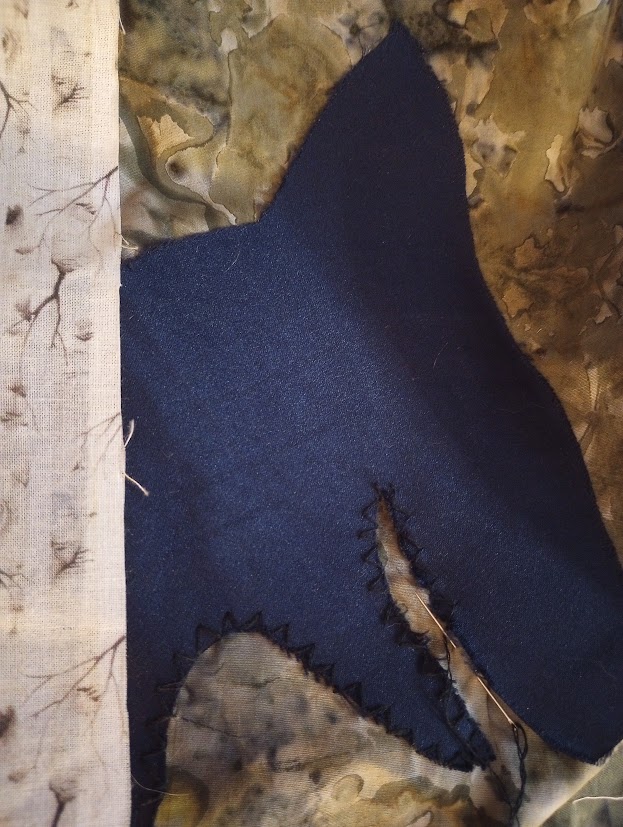
Mostly I am a poet, finding significance in metaphor and symbol, in the way words and ideas and images and people weave together to create a tapestry of meaning.
I recently watched The Truman Show again with one of my high school classes, and afterward we compared the image of Truman Burbank standing at the top of the staircase at the edge of the sky at the border of his world with the image of the “Flammarian Engraving” of the man peeking under the veil of the visible world into the deeper reality of the workings of the universe. I want to be always finding my way to the next doorway, the next veil, ready to face my fears and stand in awe at the new discoveries to be made. Ready to syncretize new ideas and revelations with my current limited understanding.