Funny, Isn’t It?

Sometimes it takes a lot of reworking and re-arranging, and cutting up phrases to fit to other phrases. This one was almost too easy. I like how it fell together, so I am not going to tug and pull at it for a few more days. I think it’s done. Great Gratitude to all the Facebook Friends who submitted phrases!

Funny, Isn’t It?
a Facebook Crowd-sourced Poem
by Beth Weaver-Kreider

We had been in camp for three months.
In the very middle of the front row,
his bony hands clasped in front of him:
“That’s why everyone hates each other nowadays—
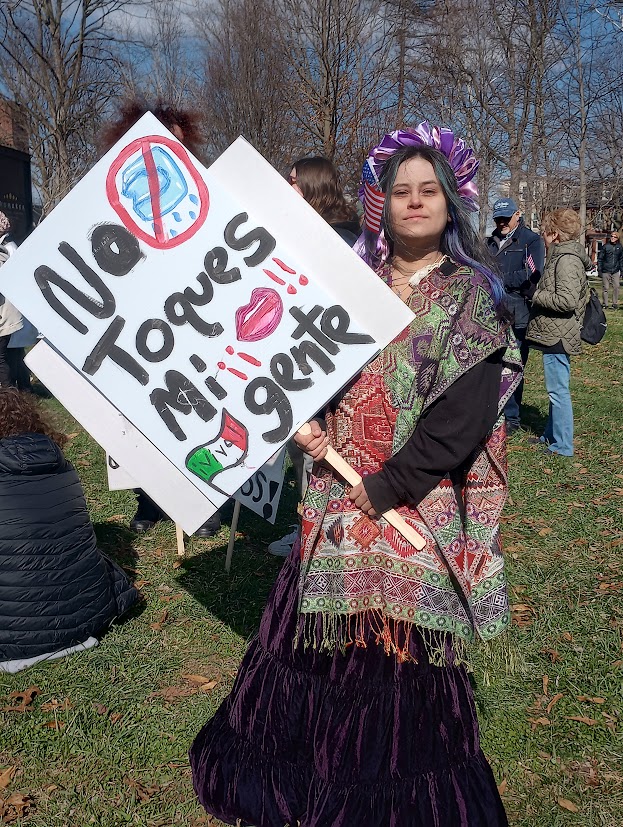
I guess poor guys dont get kissed on the lips.”
My stomach drops at the muffled sound of glass breaking.
Since when do men care about such things?
This is a dangerous time for you.

We have to confront each of our shadow aspects.
I was in the habit of considering that etheric
little bone defying the course of the waters,
but the crucial bit of magic was to keep your focus
on every angle of a question.
I had decided to build and not destroy,
start with the strongest sensation.
I didn’t expect it to look so wild.

Learn from those far away and long ago.
In many spiritual traditions, sin does not exist.
A nation where you can’t ask questions
is one that is going downhill.
Atonement is unnecessary, since dreams
bring guidance from the well of Being.
Firebrands ask questions,
and I would say she is everything.
Her job took on a new shimmering significance.
Funny, isn’t it? How it all comes around.


Sources:
Adichie, Chimamanda Ngozi. Dream Count.
Alexie, Sherman. The Absolutely True Diary of A Part-time Indian.
Barbery. Muriel. The Elegance of the Hedgehog
Callahan, Patti. Once Upon a Wardrobe.
Genet, Katherine . The Gathering.
Haig, Matt. The Life Impossible.
Haig, Matt. The Midnight Library.
Harpman, Jaqueline . I Who Have Never Known Men.
Helminski, Camille Hamilton Adams. The Way of Mary.
King, Karen L. The Gospel of Mary of Magdala.
Kinney, Wallis. A Dark and Secret Magic.
Klein, Gerda Weissman. All but My Life.
Lee, Min Jin. Pachinko.
Menakem, Resmaa. My Grandmother’s Hands.
Myss, Caroline. Sacred Contracts.
Patchett, Ann. Tom Lake.
Quinn, Kate. The Briar Club
Reichel, Hanna. For Such a Time As This: An Emergency Devotional
Rowling, JK. Harry Potter and the Order of the Phoenix.
Shaw, Martin. Scatterlings.
Winspear, Jacqueline. The Comfort of Ghosts.


Gratitude List:
1. Playing with words
2. Being on Break!
3. How hard the guitarists and singer worked this morning to prepare for their performance at Grandfriends’ Day
4. Getting things done (this is a recurring gratitude for me–I think it’s about my tendency to procrastinate, so it feels especially soul-cleansing to have a list of things I have accomplished.)
5. Anticipating time with Beloveds
May we walk in Beauty!

Riot Piggy

Piggy Riot
by Beth Weaver-Kreider

Quiet Piggy
Sit down Piggy
I do not permit
a Piggy to speak
Piggies should be seen
and not heard
Shake it Piggy
Bake me a cake Piggy

Awaken Piggy
Make a break
for it Piggy
Stand up Piggy
Speak out Piggy
Sing Piggy
Riot Piggy


Today instead of a gratitude list, I want to mark Trans Day of Remembrance, begun in 1999 by trans activist Gwendolyn Ann Smith to commemorate the murder the previous year of Black trans performer Rita Hester.

  • In the past three years, our community in Lancaster area has lost at least five young trans people to suicide.
  • Proportionally, more trans people lose their lives to violence than just about any other group in the US.
  • What can you do to create safe and brave spaces where everyone is completely free to be themselves and live their truth?

Meditation

Today’s poem is based on a daily meditation I have been doing with my rosary. I think of each decade as representing one of the elements–Earth, Air, Fire, Water, and Spirit–and I map those elements onto the pentacle points of my body: left hand is Earth, left foot is Air, and so on. During the past few weeks, I have been visualizing flowers at those points, as I visualize myself opening to what the day will bring to me.

Meditation
by Beth Weaver-Kreider

My left hand holds a stone bowl of rich dark loam
and a green shoot that breaks from a seed, emerges,
grows, blossoms, fruits, drops seed, and dies
only to emerge again, a surging and an ebbing.

A witch hazel tree grows from my left foot,
strings of yellow blossom teased by breezes,
fruits rattling in the the wind, dragon mouths snapping open

My right foot is on fire with a flamboyant in bloom,
the tree’s red petals blazing and alive with bees,
the hum of bees like waves of crackling flame
flowering into a raging bonfire of blossom.

A blue lotus floats in the pond of my right palm,
its single stem anchored deep within me,
enchanting blue nymph, serene in her bowl

A field of purple cosmos bursts from my brow,
opening my third eye, the home of spirit,
petals opening to the sun, gathering the light.


Gratitude List:
1. Flowers
2. Meditations
3. Bouncing back
4. The fierce delight of Middle Schoolers playing gaga ball
5. Doing Crossword puzzles with my seniors
May we walk in Beauty!

Cast Off

Cast Off
after Liz Berry

I crossed the border into the Republic of Heretics,
and discovered a savage and beautiful country.

I handed over my badge, my Confession of Faith, and my halo,
removed my uniform, and put on a robe of ragged motley,

took up the pen and the wand, the seed and the bowl,
and made my home in the wildlands beyond the hedge.

I ran naked with outcasts through ruined cities,
and when trespassers came from the other world

we circled around them, stared into their rabbit eyes,
and ran on in our wayward ferality. I had cast off shame

like outworn garments, had no need of the bound ones
and their domestic pronouncements.

How I howled when the moon rose over that country. In this place,
I can feel my bones, and the blood in the rivers of my body.


The first line of Liz Berry’s “Republic of Motherhood” in the current issue of The Poetry Foundation’s magazine Poetry arrested me, and I couldn’t stop thinking of it. Each new shouldered identity becomes a border crossing, a new country. I often felt like an outsider in The Republic of Motherhood, though it has been a joyful and fulfilling place for me. Still, I have never felt so much belonging as I have since I have taken on the identity of Heretic, and joined the ones who howl at the moon.

As I was working on my poem, I was caught by how quickly the synonyms for wild get very negative–savage, brutal, fiendish–and how the synonyms for tame tend toward blandness. The set which seems to break that mold, and which I want to work with more deeply in the future is unbroken and broken. Wild and unbroken, broken and tame. I like the word ferality. And wildishness.


Gratitude List:
1. Good company
2. YouTube videos that inspire art
3. My very creative and caring colleagues
4. Grace. Let’s all give ourselves a little grace today
5. So many good books to read!
May we walk in Beauty!

Persephone Knows Her Work

This is the second of my three posts for Way of the Rose for this novena, the walk through the Sorrowful Mysteries, which I call: The Agony in the Garden, The House of Pain, the Village of Shaming, the Grove of Shadows, and the Gates of Life and Death:

In her book Lost Goddesses of Ancient Greece: A Collection of Pre-Hellenic Myths, Colleen Spretnak tells an older version of the Persephone story, one before the northern Zeus worshippers swept south into Greece, before it became a story of abduction and assault, This earlier telling gives the young Persephone (the Kore maiden) agency. Demeter, goddess of the Earth and all things living, is responsible, too, for Death. Her intuitive daughter feels the lost souls of the dead surrounding them, seeking solace, but Demeter knows that her own work is to instruct the mortals to store seed in the Earth that the dead may fertilize the seeds for new growth, and that to do more for the dead will keep her from her other important work. Essentially, she tells her daughter, “tending to the solace of the dead is not my job.”

In this story, Persephone knows in her bones that this will be her work, to tend to the wandering souls of the dead, to offer them comfort and belonging. Although Demeter tries to forbid her, Persephone knows her work, and enters a crevice in the Earth to go deep into the Underworld to care for the souls of the dead. I can see her, full of curiosity, full of adventure, full of the knowledge of her purpose, entering the crevice, traveling the winding passageways to the underworld, perhaps following the Torch-bearer Hecate, Finder of Ways, Keeper of the Keys.

Today we overlay the Sorrowful Mysteries on this Mystery of the Scourging (the House of Pain), and I listen not only for the purposeful footfall of the young woman who takes her destiny upon herself, but for the wild keening of the mother, lost in her own shadowy labyrinth of grieving. And I watch my own children embark on their young adulthood, and I wonder if I am strong enough to let them go on their own underworld journeys, to seek their purpose away from me and my influence. Of course I want them to find their own way, to succeed, to be their own people, but the letting go demands that I grieve, too, like Demeter. And it is a comfort to know that Persephone (who is known as both death-bringer and light-bringer) is single-minded, purposeful in her pursuit of her life’s work. I know that when eventually she brings death for me and my beloveds, she will come trailing light, with an invitation to adventure.
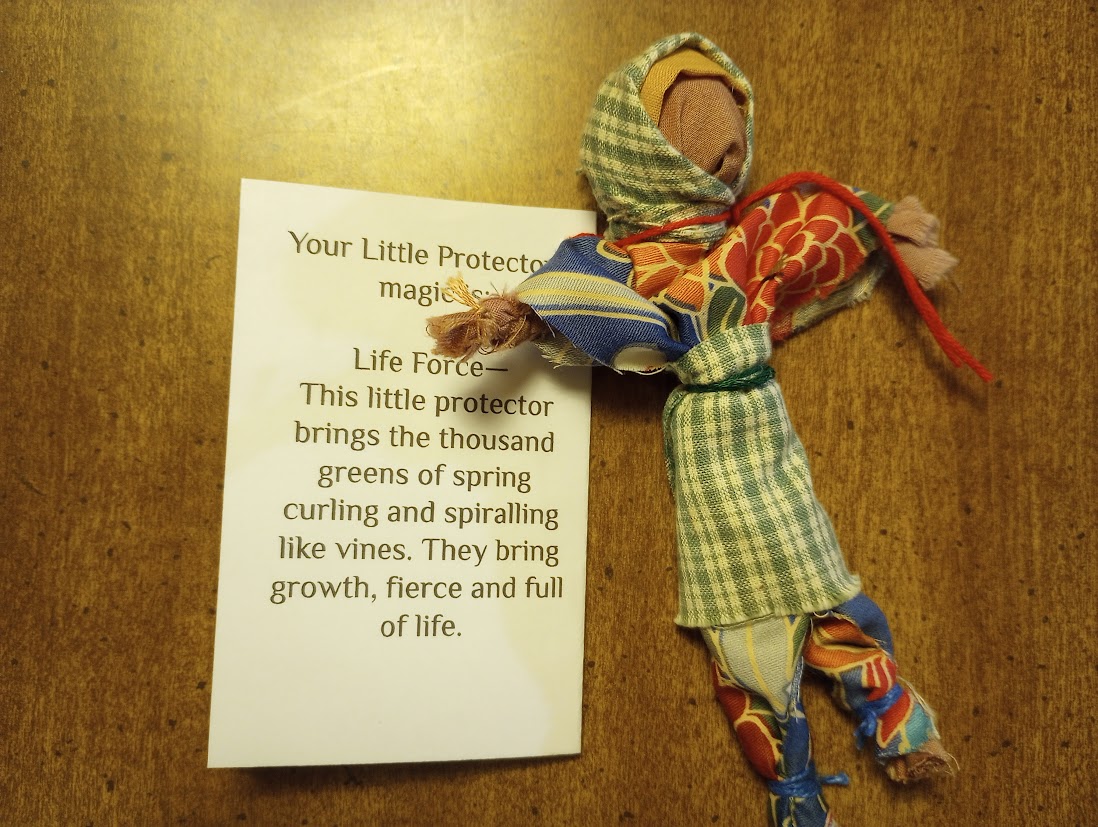
Practice (this is a version of my Heart’s Desire Prayer for this novena). I have assigned each of the five stages of this journey to an animal or bird that has made itself known to me in recent weeks. You can, of course, choose your own:

Lady, take me Deep,
Let me tumble through the cave-mouth
into your realm of shadow and transformation.

Follow Kore into the cave, seeking the Land of the Dead (I see her as a young deer)
I enter the cavern in wonder,
full of curiosity, full of adventure.

Follow Demeter, Queen of the Earth and her harvests, on her search for her disappeared child (mother raven)
I listen for the flutter of my longings,
for the distant song of my deepest desire.

Follow Hecate, Torchbearer, Way-Finder, Keeper of the Keys, through the labyrinthine caverns (grandmother owl)
I step onto the winding pathway,
holding my torch and my keys.

Enter the Realm of the Dead, the Circle of Ancestors (I think of serpents)
I sit in the firelit circle of Ancestors,
and receive their Sapient Council.

Receive the blessing of Persephone, Queen of the Dead (I see a crocodile)
I follow the Bringer of Death, Bringer of Light
with open heart, quiet mind, dancing feet, and willing hands.

Blessed Be.

Finding Meaning in Paradox

My online Rosary Group, The Way of the Rose, is currently contemplating the Sorrowful Mystery of the Scourging, which I call The House of Pain, for our 54-day novena, which will take us to Solstice. Today was my turn to meditate on the Joyful Mysteries in this context:

The rosary unsettles me, jars me, and shakes me up. Even as it provides a thread to follow, consistently, carefully, into the narrative of my life, like Ariadne’s Red Thread that guides the seeker through the labyrinth, step by step, bead by bead, it leads me into Rooms of Mystery where I am not always sure I am prepared to go. I balk in the doorways.

Joyful Mysteries? How can I dare to enter those rooms when children are still dying in Gaza, when innocent, hard-working people are being abducted from our streets by masked men, when a friend dies of cancer? And yet I walk into the room of the Garden of Yes, and then I Visit the House of my Beloved, and on into the following rooms, and I learn something about joy, how joy is woven into the cloth of my rages and sorrows and fears, how choosing joy is truly an act of resistance in the face of death-dealing and war-mongering, greed and tyranny.

And Sorrow? How can I enter those rooms again, feel the dread of a dead-weight in the pit of my stomach, to relive the traumas I hold in my bones? Yet each time I walk through the caverns of sorrow, I am healed yet again, brought through to the rooms of Glory, the resurrecting, the re-awakening, the re-imagining of life on the other side.

And here, in these days, we have the extra layer of unease, discomfiture and disorientation, walking through the rooms of the Joyous Mysteries even as we meditate on the Scourging, on the pain. It can feel like a cracking and dissolving of the psyche, stepping into two rooms at once, yet the work of Joy as Resistance, the holding of Sorrow even as I allow Joy to infuse my spirit, is not a brokenness and a fracturing, but a healing of the disparate pieces of my psyche, allowing me to be more fully human. There is teaching in this paradox, a chance to learn to live in the liminal spaces, in the betweens, where the possibilities merge and mingle.

In this novena, we sit in the House of Pain (my phrase for the mystery of the Scourging), yet even in this place is a joyful Garden of Yes, a House of my Beloved, a village of my Birth, a place of Blessing by the elders, and a Finding my feet on the temple floor. Finding joy in moments of pain is not toxic positivity, a refusal to experience the pain. Instead, it’s an acknowledgement of the complexity of life, not just that we go through cycles of joy and pain and resurrection, but that these cycles are overlaid upon each other, that our humanity equips us to live with such complexity.

I rework my Hail Marys each novena to reflect my heart’s desire prayer, each decade a slightly different version of the prayer. During this novena, one of my prayers is to Persephone: “Holy Persephone, help me to reclaim and heal and integrate the pieces of myself within your cycles of transformation.”

May we reclaim, heal, and integrate our lamenting and our celebrating selves, our longing and our satisfied selves, our despairing and our hopeful selves, as we walk through these caverns and rooms into the Solstice.

Practice: Sit quietly and settle into your breath. Feel your roots anchoring you to Mother Earth. In your mind’s eye, follow the torch-bearer through the twisting underground passages to a wooden doorway. You know this door. You have entered it before, the door to the House of Pain. Take a good deep breath, knowing that when you enter, you will only need to face the pain you are ready to face, knowing that you carry within you the mysteries of joy. Picture Joy as a shining stone you carry in your hand. Feel its weight and its heft. The torch-bearer hands you the keys and you open the door. Keep breathing deeply as you enter, and straighten your shoulders. Speak to yourself: I am resilient and strong. I have the tools within me to face the pain. Find rest within yourself here. Listen for the messages the pain has to tell you, even as you hold fiercely to joy. Stay only as long as you feel able. Breathe. Square your shoulders. Walk into the new day.

Notes for an All-Souls’ Day Ritual

It’s November, so it is time to begin Poem-a-Day again. As I was looking for inspiration for this first day’s poem, I saw some notes I had made for the work I am doing with Kore/Persephone, Demeter, and Hecate. I wanted to set the poem onto the page in a format similar to the way I take notes.

Poem-a-Day Rules for Myself:
1. I am free to write utter crap.
2. My intention is to post a poem every day in November, no matter how small, no matter how late in the day.
3. If I get one good poem out of the month, I will celebrate.


Gratitude List:
1. My parents are safe and well in their new apartment.
2. The way the light angles in during this season.
3. My incredible students–I love watching the seniors create and present their Local Legends and Lore presentations on our Halloween Trail every year. I had to miss it this year because of my parents’ move, but helping them prepare is always a highlight.
4. An extra hour of sleep tonight.
5. Rituals to mark the changing seasons (externally and internally)
May we walk in Beauty!

What Do You Break Down? What Do You Build?

A week ago, I came across the call for an economic blackout from September 16-20. Someone made the suggestion that the real impact would be for as many people as possible to stop using social media for the duration because Facebook and Instagram and their ilk are also owned by the big-money folks, so I stepped off social media for the week as well. Yesterday, I talked with my friend and mentor Sarah Preston about boycotts and protest and change. Here are some of my thoughts in response to our conversation and this past week:

  • I’m not sure this particular economic boycott had much effect. Probably the more affective economic protest this week was the Disney+ cancellations in the wake of the Jimmy Kimmel suspension.
  • Sarah pointed out that writing to the company/ies you are boycotting to explain what you are doing ought to be part of the boycott. Write to Disney-ABC Home Entertainment and Television Distribution, 500 S. Buena Vista St., Burbank, CA 91521-3515. Perhaps those of us who can’t really boycott because we don’t have Disney/ABC ties can write letters anyway.
  • What do we want from boycotts? Is it just to force the billionaire bros to notice how they hurt the people by supporting an authoritarian regime? If we want to make lasting change, will a short-term boycott of the soulless corporations do that work? Likely not. They might have some excellent short-term effects, but in the long run, we have to have other tools in our basket.
  • Audre Lorde said, “The master’s tools will never dismantle the master’s house.” Let’s get to thinking outside of the master’s toolbox.
  • The billionaires are definitely part of the problem. Also, their fortunes are made on speculative economies, of stocks and bonds and “imaginary” wealth. That imaginary and speculative wealth is certainly powerful in the world today, but what if we move more and more to economies that work outside their paradigm? That seems to be at least part of the intention of a boycott. But what if we began functioning more completely and permanently within our local economies? What if we did more barter? More gift economy? More sharing? More creating and growing and making? It’s all well and good to refuse to go to Walmart for a week or to temporarily stop ordering from Amazon, but what if we refused, en masse, to ever buy from them again?
  • Ugh. That means I have to find the will and the creativity to republish my books of poetry in some other format, instead of the Amazon-adjacent KDP. (Here’s another reason to join temporary boycotts, even if you don’t think they’re going to do much to actually change anything: they change you. I need to follow up on this.)
  • Also, when there is an economic boycott or a buy nothing week, consider local impacts. Instead of simply refusing to take part in any economy, use times of boycotting the billionaire bros to flood the local economy. Buy from local stores, local farmer’s markets, local businesses. Strategize more permanent change to working within the local economies. Let these experiments in shifting economic power become permanent shifts in your buying habits.
  • That brings me to my title: Yes, a lot of our work in these days is about breaking down. Breaking the power of the billionaire class, breaking the power of the authoritarians and the theocrats and the demagogues, smashing the patriarchy. But what are we creating to replace those structures? What can you and I do right now to begin developing the just and safe community-based world we envision? This has been a time of great network-forming, such marvelous web-building. How can we look to these webs as the basis for the future?
  • I admit, the networking and community-building can often be exhausting for me. I am realizing that I can be a part of creating and supporting and participating in the webs without it feeling like I have to attend every potluck and party and teach-in.
  • The social media fast for the past week has been good for my mental health.
  • Also, I have missed that web of community. I feel like my social media connections have been an important part of building the community webs I have been talking about here. But they’re all on platforms owned by the billionaire bros, and they support those very structures I want to tear down. I’m not sure how to shift this. I know lots of people have abandoned FB for Substack and others. I totally get it. AND–I am also hesitant to make that shift complete. I don’t do social media because of the amount of influence I can build, but because of the particular people I have connected to there. If I leave FB or IG, I may develop connections on another platform, but I lose the particular (and meaningful) connections on those sites.

I’ve been attending Menno Action’s Tuesday evening Zoom meetings called Courage School for the past few weeks. One of the images they keep referring to is the idea that we think of the power structures as a pyramid with a strong, wide base, impossible to break down. In reality, it’s more like an inverted pyramid, propped up by church, community organizations, schools, businesses, corporations. If we can begin to very deliberately pull out the support of those struts, the structure will collapse. So yes, I think boycotts can be at least a temporary part of influencing those props to shift away from supporting the empire. And also, we need to be strategic about pulling out those props, and using them to build the world we envision.

Let’s keep staying grounded, keep breathing, keep loving, keep checking in with each other, keep reaching out, keep building, keep nurturing, keep protesting. . . Breathe, ground, dance, hug, write, sing, hum, hold babies, paint, remember, tell stories–whatever you need to do to stay with the process, to hold onto hope and truth and peace and your sense of your truest self.

Dream Passenger

In last night’s dream, a woman commandeered my car to drive somewhere way out into Nowheresville. This is the second time in two weeks that I’ve had a dream about someone taking over the wheel of my car so they could drive to their destination out in the middle of nowhere. It’s not a carjacking, because they fully intended in both cases to get out and leave my car to me when we reached our destination, but still, it’s uncomfortable to me to find myself a passenger in my own car. 

In the dream, a woman motions me into a parking lot at a convenience store, and I pull in, sort of catty-cornered, so I can hear her question. She starts talking even before I get the window open, asking me if I know the way to Lizard Point.

She has a sort of shopping cart filled with all sorts of things, including a baby seat with a baby climbing out of it. She just opens the door of my car and starts putting the baby seat into the back seat, so I grab the baby who is sweet and cooing, and I clean up the vomit baby has spit up all over itself. Before I know it, the woman is in the car getting ready to back out of the parking lot on the way to Lizard Point. 

I don’t remember the trip in the dream, but when we get to the building where she wanted to go, while the woman unloads her things, I go to get the baby out of the car seat. The baby has thrown up all over again, this time much worse, and there’s nothing in the car or anywhere to clean up the mess. The baby’s face is ashy white and I’m afraid the child has died or will die. 

At this point lucid brain kicks in, and I realize that I’m in a dream, that this baby is a symbol or metaphor for something instead of a living (dying) child, and that I can pull myself out of the dream so I don’t have to keep experiencing the horror of this image. It’s 3:00 in the morning. 


A note about Lizard Point: this is the name of a geography game that I sometimes play but haven’t for a while. If you like geography, and want to learn more, I recommend it or Seterra. Globle and Worldle (notice the extra L) are also fun. Especially in times like these when there’s lots of news of places around the world, I like that my brain can now see where on a map Ukraine or Yemen or Myanmar is. It helps me feel connected. 

One of my beloveds recently mentioned that they thought I’m a little too deferential, that I don’t speak up enough for what I really want. While I am working on saying things like, “I want,” “I need,” “I desire,” I’m also a Seven on the Enneagram, which means that pretty much anything can make me feel happy and content. So if I say, “Hey, let’s do this!” And you say, “Sure, but what about this instead?” I’m probably going to agree with the thing you suggest because both things will make me happy just being with you is what makes me happy. Still, I do want to take this person’s point seriously, and I wonder at these dreams in which someone commandeers my car, whether there is a message that I need to start saying, “No, I really want to do this.”

These dreams about someone else driving my car might also relate to the fact that we have a driver with a learner’s permit in the family right now. I am now mostly in the passenger seat, so that’s an image my brain would likely latch onto.

I could wake myself up from the horror dream of a dying child, but I wake into a world where children are dying, and it seems that people are too distracted, like the mother in my dream, to notice the constant crisis. And I feel utterly helpless.

Syncretism

The “Flammarian Engraving.” Artist unknown

Well, here’s a fun etymology! Syn- means together, as in synchronize, synonym, synapse, sync. But that second part is harder. It could, according to etymologyonline.com, come from the old Greek word kerannynai, or the word krasis, which both carry the meaning of a mixture or blending. To blend together. Probably the appropriate linguistic trail.

But eymologyonline.com also explains that the cretism could also refer to Crete, and an old adage about “lying like a Cretan.” To bring the liars together? Hmmm.

The word took on specific meaning during the German Reformation, when people with varying ideas of religion were fracturing into sects, and theologians were working to “bring together” or syncretize their theological systems. As often happens when people try to stitch varying ideas together, the sects became even more fractured, and syncretism became a bad word, taking on the meaning of trying to put together things which absolutely should not be put together.

Which is how I learned it, in a Religion class in my Mennonite High School. Syncretists, we learned, see religious experience as a smorgasbord, taking a little of this and a little of that, whatever shiny ideas their ignorant or heretical minds find appetizing. We were told that they don’t commit to a single path, so they are less enlightened, less spiritually mature, than the creedal religions, like Islam, Judaism, and especially Christianity.

While I certainly, and to my shame, felt the superiority and pity required by the fervent evangelical system of my Religion class regarding the syncretists, something in me started singing then–perhaps it was the budding poet: “Not everyone feels compelled to fit the boxes! Some people choose their path.” Perhaps that was when I first began to give myself just a little permission to look at my spiritual story from a lens other than the steel-sided theological boxes I was handed by church and school.

I love the old Catholic women who pray to Mary and also read tarot cards, the devout Mennonite grandmothers of my own lineage who may have been practitioners of the German sympathetic magical tradition of powwow, the indigenous people who honor the ancestral truths passed on to them while weaving them into faith traditions they’ve known from other lines of ancestry, the witches who follow the path of the Earth Goddess and maintain their heritage faiths in whatever way seems best to them.

Today, I often call myself a Universalist, which applies, and yet that label takes me out of the specific realms where I find my spiritual buffet. I am an Anabaptist Mennonite, steeped in the peace tradition and the yieldedness and the opposition to Empire that my Mennonite ancestors experienced. Faith without works is dead, they said, and the priesthood belongs to all believers. I no longer accept the moniker Christian because of the way that term has been drained of its life-force and turned vampirical by the blood-sucking life-denying forces of the modern US evangelical movement. But I am dedicated to the teachings of Jesus. And, like the old Catholic women, I pray to his mother in all her forms.

And I am a witch, a word I wore quietly in private until it was given me as a public accusation and I chose to wear it proudly and publicly. A witch is one who trusts her own connection to the life-giving force of the Earth, of the Goddess who is the spiritual expression of Earth. One who believes in being her own priestess (like the Mennonites and their egalitarian priesthood). One who believes in finding Truth in her embodied experience. One who believes that magic is, as Dion Fortune wrote, “changing consciousness at will,” beginning with my own consciousness. I honor the rich traditions of indigenous spirituality here in the US and in Africa and elsewhere in the world, not choosing to assimilate their beliefs into my own, but allowing them to inform and enrich my personal practices and beliefs, which are grounded in my own heritage.

Mostly I am a poet, finding significance in metaphor and symbol, in the way words and ideas and images and people weave together to create a tapestry of meaning.

I recently watched The Truman Show again with one of my high school classes, and afterward we compared the image of Truman Burbank standing at the top of the staircase at the edge of the sky at the border of his world with the image of the “Flammarian Engraving” of the man peeking under the veil of the visible world into the deeper reality of the workings of the universe. I want to be always finding my way to the next doorway, the next veil, ready to face my fears and stand in awe at the new discoveries to be made. Ready to syncretize new ideas and revelations with my current limited understanding.