News Break

MO

I am taking the rest of the day off from news.

I am signing off for the rest of the day.
Today when I think about guns,
when I think about Syria,
when I think about politicos who infuriate me,
when I think about the students who are in such pain,
instead of riding the tide of fury or despair or anxiety,
I will take a moment to notice the feeling,
then go and focus on where the energy or prayer must go.
I am not even doing a public gratitude list today.
Know that I am grateful,
especially for you,
for all the light and wonder,
all the hope and energy,
all the passion and intensity
you bring to my life and to the world.
Walk in Beauty, in Peace, in Salaam, in Shalom.

The Contemplative and the Activist

Kloster Disibodenberg

Two streams have been nudging me in different directions lately.

On one hand, I have been working through the Desert Wisdom Advent series from Spirituality and Practice.  While it can be frustrating to try to dig further into a contemplative life during the hustle and bustle of the daily, I believe that it is possible, and this is helping me to find my spaces.  I am trying to maintain that interior castle (was it Teresa of Avila who called it that?), the place of calm and contemplation that keeps me from getting whirled away by the whirlwind of the moment.

The other stream is the rising despair that I am feeling about the lack of will we seem to have in the United States to do anything about our mass murder problem.  We begin to look like people who live in a repressive political regime, unwilling and unable to make a change because the oppressor is too big for us to conquer.  But here it isn’t a government that is keeping us cowed and silent–it’s the NRA.  What keeps us from standing up and saying, “Enough already!”  The US has had more gun-related mass murders than there have been days in 2015.  I think we need an active anti-NRA revolution.

I glibly wrote something the other day about how the work of the contemplative needs to feed the work of the activist in order to keep the activist from despair, in order to keep the contemplative from irrelevance.  Perhaps that can be true.  Somehow I need to find the link.  Contemplation and calm are not the same thing as apathy and impotence.  Perhaps activism can be honed and sharpened by inner work.

Gratitude List:
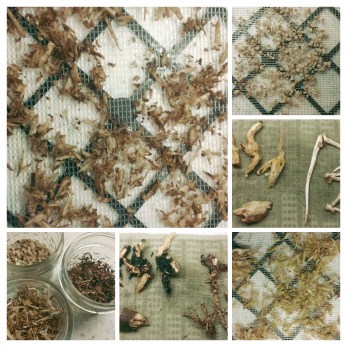
1. New batch of fire cider on the way
2. Today’s brain is less foggy than yesterday’s
3. Thursday (it’s almost Friday)
4. Ginger
5. Rich colors for drab days

May we walk in Beauty!

Stones for Memory

Carin

Today’s prompt is to write a poem about memory.

I have always envied others their power of memory.  My own is so fickle, so capricious, unreliable.  My ability to concentrate and memorize poetry or lines for a play in the present moment are, I think, above average.  I’m nowhere close to having a photographic memory, but I feel like I understand the brains of people who do.  This has served me well in the short-term.  I can quickly learn a story, hold a lesson plan, memorize a poem, prepare for a play.  But my powers of remembering in the long-term are, I think, way below the average.  I can remember very few of the teachers in my growing up years.  Even college, even grad school, even my first years of teaching–all are receding, dragged backward out of my memory.  This has always been kind of painful for me.

What I tell myself is that I live in the present so completely, that the butterfly of my personality sits so completely in the now, that I do not take my mind back enough to pull out the pieces of past and examine them, and so they flow out and away.  Perhaps this is not exactly a defect in my personality, but it remains a deep and abiding pain.  I lose the past too utterly, and I do often feel it as a personal deficiency: if only I would get my flightly brain to concentrate more often on what has gone before, perhaps I could keep it, hold on to it.  Still, I cannot make myself hold memory.  My brain is wired for this moment.

I place in the hands of Time these stones:
the story of this day,
the people I have been near to,
the songs the Fates have whispered in my ears,
the colors that haunt me.

See how they turn to mist,
how they glow for a moment–
red, then golden, then blue–
then dissipate like ash blown by a wind
before I can register
that they have lost their substance.

Where does memory go
when it flows out with the tide,
when it slips down the drain,
when it is blown out with the morning fog?

I am still the child in the forest,
walking blind through the swirling mists,
under the shadows of the great trees.
With each forward step on the trail,
a little bird flutters from the pathway behind,
a bread crumb in its beak.

Gratitude List:
1. Memory
2. Longing
3. This moment
4. The shades of dawn
5. Small moments in which to breathe.

May we walk in Beauty!

Submerged

DSCN8708

I realized yesterday that if I sort of scrunch the meanings of a couple of my early November poems into the themes that Robert Lee Brewer suggests on his blog, I only have to write to extra poems to catch up to the Poem-A-Day thing.  I just can’t resist. I will get those two extras written.  Mockingbird reminds me that they don’t have to be super-poems.

Today’s prompt is to write a submerged poem.  I have been wanting to try the triversen form.

Beneath the surface of the dream
where tiny rodents skitter and run
I could feel the story rising.

There, where the memories yield their harvest,
where travelers wander deep in shadow,
I caught its scented breezes.

Inside the dreaming of the house
where rooms went on forever,
lay a village of self to explore.

Below the one about the baby
and the orphaned white kitten
flowed rivers of recognition.

What do you do
when the gods of the dreamings
offer you maps for the journey?

How will you answer
when the night-folk cry out:
“Give us the hope of our meanings!”

Gratitude List:
1. That pecan pie
2. Bridges.  Hope. Bridge of Hope
3
. Breathing
4. Dream-work
5. Writing poems

May we walk in Hope!

River of Song

hymnal

On Friday mornings, we have a faculty and staff hymn sing for fifteen minutes before the school day begins.  It’s usually about fifteen of us–all four parts represented.  Someone suggests a song, the pages rustle, the pitch pipe hums, and we’re off into a river of harmonies, notes and words tumbling together.

During the past couple weeks, I have been struck by how the harmonies pull against each other and support each other, forming a thing that is greater than the sum of the parts, how we make a landscape of sound, a basket, a tapestry, a bridge.  Singing together with attentiveness makes use of a subliminal sense that goes beyond hearing and sight and touch.  We share breath and heartbeat.  

Perhaps the sixth sense is the sense of connection to others, the awareness of the web of human interbeing.  Singing together acknowledges this web in powerful ways, as we rest and flow and build the song with each other.  What a gift it is to sing with the gathered community of these people who are all focused on the one task of teaching and supporting our students.  It strengthens and supports our work, builds us together.  The bridge of music that we build between us is at once the symbol of the support we create for our students, and the support itself.

Never Enough

DSCN8608
A couple weeks ago, we took a ride on a little train, the Ma and Pa–we were in the open car, and our shadows raced along beside us in the leaves.

It’s never enough
to say that the eagle flies
over the River.
It’s never enough to say
that the River is flowing.

Gratitude List:
1. Den’s Service Center: Thursday at 4, I called them and said that I was on my way home from work with a slow leak in my tire.  They said they’d look at it, even though it would be the last (and busiest) half hour of their day.  I made it safely, they found the nail and fixed it, and they only charged me $13.
2. Harvest hymns in Friday morning hymn sing yesterday.
3. Oaks–less showy than the sugar maples, perhaps.  A rich rusty red.
4. The monarch I saw the other day at school.  I stepped outside in a brief moment, and there it was, dancing through the slanting autumn sun rays.
5. Breath.  (Ellis says I need to include things that I take for granted.  I agree.)

May we walk in Beauty!

Because

DSCN8672

I think I have written before about how my poems often want to begin with the word so, as if I am beginning right in the middle of the conversation that you and I are having, and the poem itself is a continuation of thought rather than its own new thing.  Lately, when a poem starts to shape itself in the back of my brain, it wants to begin with because.  Do my poems want to justify themselves?  Defend their need to be?  Or are they themselves trying to explain the world to me?  Because the maple tree caught fire against the blue sky. . .  Because you were listening to the owl in the early morning. . .  The oddest thing about this particular compulsion is that when I look back to my poems at this time last year, because is a featured word there, too.  I wonder if October seeks for reasons.

Because October seeks a reason,
because the owl called down that crescent of a moon,
because I cannot get those words you said
to settle down in the room of my head.

Because of the way the stories grow inside us,
telling themselves in our sleep,
waiting to be taken by the hand
and led into the golden glare
of October afternoons.

Gratitude List:
1. October
2. Digging out of the hole
3. Sleep
4. Wrist warmers
5. Inhabiting the story

May we walk in Beauty!  Because.

White Rose and Blue Clouds

Gratitude List:
1. There is a Murmuration in the hollow, though it sounds perhaps more like a thousand screen doors screeking.  It can be positively deafening out there when the starlings are settling into the treetops.  In the videos of them flying above open land, they look like a single creature, made of light and motion.  We get a little of that show here in the hollow, though it’s much more contained within the bowl of the trees and so a little less fantastical.  For these few weeks while we have this crowd of treetop guests, I must be extremely careful where I park the car.  Apparently, they enjoy the purple poke berries, and they decorate the world with joyful abandon.  Still, I love them, and the way they fly like a veil twisting and twirling in the breezes.

2. Some days, teaching is really hard.  I have days when it feels like every lesson I diligently (or perhaps not-always-so-diligently) plan falls with a thud on the classroom floor.  Or I get snappy and grouchy with all the chatter and distraction.  On those days, I need to remember days like today.  Every class was somehow more focused, more thoughtful.  My favorite part was my two Academic Writing classes, where instead of having to cajole and badger to get people to read their essays, there were suddenly too many hands raised to get to them all, and every time someone would read their essay, everyone else had thoughtful feedback and supportive comments.  They called each other “courageous” and “gutsy” today. I think their writing is definitely improving, and their grammar is getting stronger, but the things that matter–their ability to make connections between ideas, to build bridges between themselves and others, to articulate their vision–these things are definitely growing and expanding.  I love sophomores.  They are so aptly named.  So wise.  So playful.

3. Holy synchronicities like this one.  One of the things that was shiny about class today had to do with the day’s poem, Jose Marti’s “The White Rose” (see below).  I put the Spanish original up on the board, and in every single class, they were immediately drawn to the puzzle of trying to pronounce it and trying to interpret it.  The kids with Spanish as a first language chuckled–politely–at those of us who learned in school as we tried to speak it carefully and tried to figure out the flow of the words.  Then I read them the English version.  One girl, who is perhaps only just now learning to believe in herself as a scholar, blurted out, “I get it!  It’s about turning the other cheek!”  Brilliant.
But the moment of holy coincidence came in the last period of the day, when one girl’s eyes started to sparkle when I read the poem.  She raised her hand to say that her grandmother is a niece or cousin of Jose Marti.

4. The blue bellies of the clouds on the way home today.  Once, during an art class I was taking, the teacher tried to teach us to recognize indigo by showing us the shadow part of the the underside of clouds.  That has become my baseline for recognizing indigo ever since.  The neurologist Oliver Sacks refers to the seeing of indigo as a numinous experience, and the plant and the dye process have been held in such honor through the centuries that I have begun to think of the experience of truly seeing indigo as a mystery.
The bellies of the clouds on the way home today may have actually been more of a cobalt, that shining blue that you see behind the clouds on a bright day.  But this was a shadow blue, right on the clouds, and so rich and shining a cobalt.  That, and the blue-ish ribbons of sun rays streaming down around Mount Pisgah as I drove home from work this evening, filled my soul.

5. Reading Madeline L’Engle with the kids.  We’re on to A Wind in the Door by now, and they’re not bored silly with all the talkiness.  They seem to get the idea of the Namers.

Be a Namer!  Walk in Beauty!

I HAVE A WHITE ROSE TO TEND

I have a white rose to tend
In July as in January;
I give it to the true friend
Who offers his frank hand to me.
And for the cruel one whose blows
Break the heart by which I live,
Thistle nor thorn do I give:
For him, too, I have a white rose.

CULTIVO UNA ROSA BLANCA… (Verso XXXIX)

Cultivo una rosa blanca,
En julio como en enero,
Para el amigo sincero
Que me da su mano franca.
Y para el cruel que me arranca
El corazón con que vivo,
Cardo ni oruga cultivo:
Cultivo la rosa blanca.


A Whole World in a Teeny Tiny Story

Beauty

Gratitude (no list today, but this):
Some days, the lesson plan sort of dissipates in the face of something else that takes over.  That happened today.  A couple times a week, I offer my students short, ungraded writing exercises at the beginning of class, just to keep the writing muscle toned.  Today, we wrote micro-fiction, trying to get a story into 6 words, but letting ourselves go up to 15, or maybe 20, and even more in a few cases.  In every class, there were teeny-tiny stories that took my breath away.

During 8th period, the stories kept coming, and people kept sharing, and it felt wrong to cut it short.  Something in the back of my head kept saying, “Umm.  We were planning to work with Dependent and Independent Clauses, and Participial Phrases and. . .” and another part of my brain (fortunately) told that first part to please sit down and be quiet a while.

One boy, who had been out of class for a couple weeks, told his tiny story.  Immediately a couple of the others raised their hands and wanted to talk about what they thought it meant.  Suddenly students were doing deep literary analyses of their classmates’ micro-stories.

Then a girl wrote a tiny story and explained that it was about race, and about how, even when you are successful in this culture, if you’re black, there’s a sense in which it’s never quite enough.  Nobody raised a hand to tell her differently.  They listened.  Oh, how they listened.

And then a boy raised his hand, the same one who recently returned to class, and he began to speak powerfully about resilience.  I worried for a moment that the girl might think he was telling her how she ought to feel, that because she didn’t know his story, she might think it was directed at her.  When he was done, she said, “I get what you are saying.”  Their eyes were shining as they left class today, and I didn’t do a thing but witness.

I am so glad that we did not study Participial Phrases today.

May we walk through our stories in Beauty!

Re-Gathered Community

“I hope you will go out and let stories, that is life, happen to you, and that you will work with these stories . . . water them with your blood and tears and your laughter till they bloom, till you yourself burst into bloom.” –Clarissa Pinkola Estés

Last night, I went to my thirtieth high school reunion.  I think there were about 23 or 24 of us classmates there, along with many spouses.

We talk about the beauty of youth, and I know the fact of that because I spend my days with teenagers.  I heard somewhere once that someone had somewhat scientifically determined that we reach the pinnacle of our physical beauty around age 30, and I can understand that, too.  But for well-polished and gracefully-tempered beauty, sit in a room of people just about to enter their second half-century.  I am trying to define the essence of it this morning: there’s grace in the faces, self-acceptance, a movement beyond the scrabbling and striving of earlier years.  The intervening years since we graduated have brought terrible pain to some of us, great joys, power and powerlessness, anxiety and fulfillment, and the stories and conversation last night were carried on a stream of grace that echoed in people’s voices and showed in their eyes.  People seemed to have moved into themselves.  They are beautiful in ways that make our high school selves look raw and unpolished, our young adult selves look over-polished and grasping.  These people were shining and grace-filled, and in a way that admitted of the harsh realities that we have experienced on our way here.

Gathered in that room, I know, were people of all political stripes.  Many of us sit firmly on one side or the other in the debates that are threatening to shatter our church.  But last night, we were one thing, one group, together sharing our stories.  Some stories got deeper, but many of us told the basic details.  Still, the regular tales of children and grandchildren born and growing up, of jobs and farms and hobbies–all took on deep significance.  There was an acceptance and a sense of belonging in that room, where many of us have become near-strangers over the past 30 years.

A moment of laughter appeared in the room.  Giggles and chuckles.  Then, as understanding dawned, a second wave, and a third.  And the laughter itself became a conversation.  Meaning was there, and levels and layers of meaning that went beyond the initial words that sparked the laughter.  Something holy happened in the laughter.  Did it last for five minutes or for twenty?

I feel shy and awkward with small-talk conversations with people I don’t know well.  Often I can push my way through and into small chat, but I never quite know how to navigate a room.  How long do we talk?  What about the awkward pauses?  Is it my turn to start the next piece of conversation?  It’s always easier for me when the conversation gets going on its own track, and I lose awareness of the way into the conversation, when mutual curiosity draws us together and lends energy to the forward movement of our talking.  In mingle-settings where there are lots of people, I also get a sense of wanting to connect with everyone, so I struggle to get into deeper conversation because there are too many people to connect with.  I get overwhelmed.  So the thing that I look forward to in reunions and gatherings is the group sharing.  Even though it isn’t intimate, and we each package our story into the short five-minute moment we are allotted, we all focus, for those moments, on the one person speaking.  We hear story together, and for a moment, we are a re-gathered community.

Gratitude List:
1. Middle age
2. Reunions and conversation
3. The language of laughter
4. The gravity-loosening power of music
5. October

May we walk in Beauty!