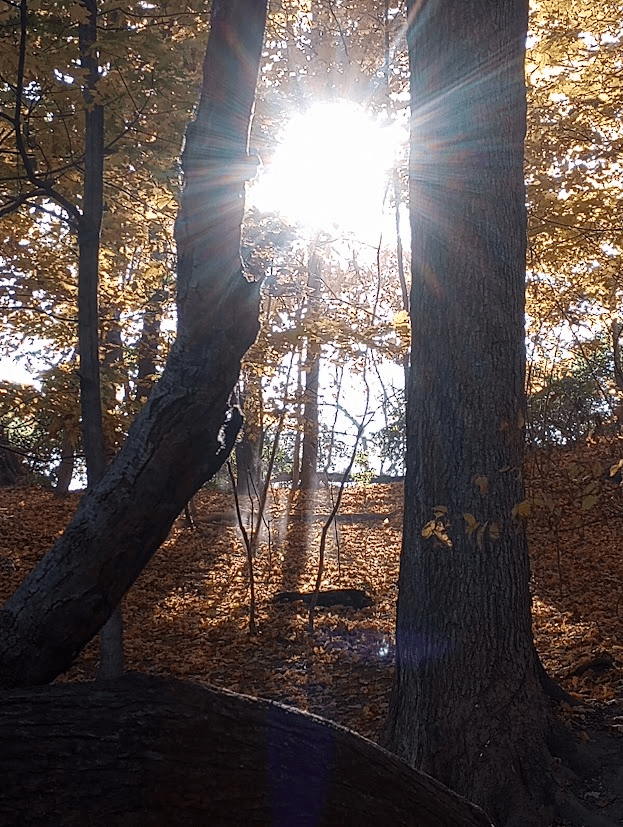
Today is the last of my three days of posting reflections on the Mysteries of the Dark Novena for Way of the Rose. Here are my thoughts:
Mysteries of the Darkness Novena
Day 41. Sorrowful Mysteries:
Walking in the Dark.
I have always felt compelled towards shadow work, looking deeply within, trying to understand my impulses and compulsions, my vices and my rages, the way desire flows and obsession grows.
Mystery, mysticism, paradox, counterpoint, magic, surrealism—that which is beyond the ken of daylight sight. Like the way you have to look to the side of the Pleiades to see them clearly.
When I was a teenager, if I was the last person downstairs at night, I used to hate those seconds after I had turned off the light before I got to the top of the stairs. The darkness behind me was too overwhelming. But today, when I get up in the night, I like to find my way through the dark house by feel, sensing where I am in the room, honing my dark-sight.
Even so, I struggle with the encroaching darkness of the last few weeks before the Winter Solstice. I just can’t make my peace. My energy flags with the dying day, and my brain gets dull and fuzzy. In a season when grades need to be updated for students and Thanksgiving plans made, and then Christmas and Yule, I want to emulate the bears, go underground, feel the quiet rhythms, be still and silent. And so instead I groan when the day dies early, when the light has left like the wild geese for the south.
I need to keep giving myself pockets of intentional retreat, hours here and there where I step out of the bustle to write and reflect, to say the rosary slowly—savoring every word instead of the daily push to make sure it gets done in the schedule, walk or bike on the woods trail, stand under the stars. It’s a form of self-care—spiritual self-care. Not down-time for down-time’s sake (though that is absolutely essential to my mental health), but unlike other forms of self-care in which the intent is to disconnect, the intent here is to re-connect to something beyond myself. Dark-time self-care is about keeping an intentional inner focus amid the outer distractions.
How do you do spiritual self-care in tumultuous times?
The Heart’s Desire Prayer I have been praying during this novena is:
Oh Antlered One who calls me home to live within the garden of myself, help me to find the still point in the maelstrom of my anxious fears, to follow where the sacred tug of grief and rages will guide me to the wisdom I will write upon the pages of these my croning years.
This was Fun! And a lot of hard work! A few days ago, I asked friends on Facebook to offer their tools for the resistance as we work to meet the challenges of the coming days. I was unprepared for the magnitude of the response. I received 119 comments on the thread. Some comments included several ideas which I unwove into different lines. Others echoed each other, and I wove those together as I could. I decided to let the actual phrasings stand as written in as many cases as possible, though I often only pulled out shorter phrases from longer sentences to make the points succinct. I printed out four pages of about 110 lines of poem, sliced the lines apart, and arranged them in a flow that felt good to me. Here is the finished poem, with great gratitude to my beloved community:
Tools for the Resistance: A Crowd-Sourced Poem by Beth Weaver-Kreider and friends
Strengthen yourselves for what is to come. Set your boundaries, clearly and effectively. Strengthen your resolve. Practice resilience. Stay visible. Wear black. Harness that bone-deep disappointment to determination. Mourn. Invite people to mourn with you. Scream. Invite people to scream with you. Use the tool of your voice. Use reason. Pay attention. Prepare yourself for when you will be needed. Resist tyranny. Don’t hide. Don’t obey in advance. Teach the history of non-resistance and civil disobedience. Do civil disobedience. Push back. Refuse to follow unethical instructions. Carry forward our history of resistance. Mobilize the angelic warriors. Get your cell phone camera ready. Get your boots on the ground. Put on your pink hat. March! Find joy in action!
Gather facts and information, knowledge and experience. Read. Research and read. Think critically. Practice intelligence. Practice bravery. Educate. Make sure people know how the system works. Teach the privileged to be allies. Unlearn the whitewashing of history. Disempower ignorance. Tell the truth. Share it boldly and without rancor. Confront your elitism and privilege. Stop recycling old arguments. Examine your assumptions. Be humble. Be an active ally: Say, “What can I do?” Come alongside. Check in. Hold space. Greet the ones others look away from. Actively love the disenfranchised. Actively listen to them, and follow the marginalized ones. Follow the directions of the young ones. Walk with your elders. Connect. Coresist.
Boycott. Buy local. Buy independent. Vote with your money. Know where your dollars are going. Volunteer. Gather folks who care. Create adaptable support systems. Teach basic skills. Teach people to make things for themselves. Grow the movement. Draw people in. Share ideas and plan actions. Look to your sisters. Learn the value of true friendship. Hold on to each other. Give care to those in your sphere. Practice breathing together Share your gentleness.
Aid in the collective healing work. Midwife one another. Extend gifts of listening. Listen selflessly. Listen to and hear each other’s stories. Tell stories of hope and resistance Have hard conversations. Make eye contact.
Make music. Send sound soaring to the heavens. Make music without words. Memorize music and poetry. Sing songs about equity, freedom, and democracy. Sing songs of peace with children. Teach music to children. Use humor: Humor has always been a tool of resistance. Have fun! Be creative! Make art, make art, make art. Dance!
Walk with friends. Walk in the woods. Sit by streams. Gaze at the stars. Find stillness in nature. Soak in the beauty. Save seeds. Share seeds and plants. Plant seeds. Find new seeds. Plant community gardens. Use herbs and words together to incant and pray and sing. Find wisdom from the flowers. Take inspiration from strong sturdy trees. Grow your community of trees. Remember the roots that connect us all. Keep your eye on beauty instead of disorder. Keep your eye on peace, standing shoulder to shoulder. Practice courageous kindness. Hold onto hope.
Practice resistance as a spiritual act. Practice gratitude. Practice radical self-care. Practice slowness, enchantment, being, and noticing. Upgrade consciousness. Meditate. Be fully present in the moment that is. Practice reflection. Recharge. Use magic. Cast spells. Hold sacred circles. Create the Yes. Pray: “Love, make me an instrument of your peace.” Continue to show up for mercy and peace and justice Continue to show up for kindness and compassion Continue to show up for wisdom and safety Remember: You are not alone. Let your little light shine. Shine it into the shadows. Be a beacon of light and hope.
Gratitude List: 1. Co-poeming 2. Taking a group of students to a nursing home today to interview their elders. Beautiful interactions. I am incredibly proud of these young people. 3. Self-care. I had been neglecting my careful lunch creation in the past week (a bit depressed, I think), and so spent some good time this evening cooking a pot of grains, sauteing kale and carrots, and roasting soybeans for the rest of the week. 4. How the little pothos cuttings grow roots, and then push out new leaves. 5. Good stories. May we walk in Beauty!
This is the second of three pieces of writing on the rosary, which I am doing this week for The Way of the Rose Dark Mysteries Novena. Today is the Joyful Mysteries.
Mysteries of the Darkness Novena Day 40. Joyful Mysteries:
Everything seems to begin in a garden.
In the traditional narrative of the Mysteries, both Sorrow and Glory begin in gardens. I imagine the Garden of Sorrows to be an arboretum of sorts, with lined pathways and small groves of trees covering the hillside. And in my imagination the Garden of Resurrection—perhaps its my childhood experience of Easter and its daffodils and amaryllis and sprays of flowering tree branches—is filled with flowers. And I have chosen to place the first step in the Joyful Mysteries, the moment of contact between maiden and angel, in a garden, a Garden of Yes, a place where I, the one about to embark on the journey, get to choose whether I will accept the tasks ahead of me. Because to do inner work, to make my spiritual practices live beyond the mere rote doing and saying of them, is to consent to the constant journey of transformation.
A garden is a space somewhere between wilderness and domesticity, with even the most carefully pruned and shaped garden remaining ungovernable at some level. I like the wilder looking ones, where there is evidence of human interaction with the wild, but the plants also seem to be offering their opinion on how the space should be.
My heart, too, is a garden, a space between the wildlands and the tame, where emotions and dreams grow not entirely wild. I tend them, shape them, and honor their presence, but I do not bully them or subjugate them, at least when I am at my most open-hearted. And they have a say in what my garden becomes.
And these myths and stories of Mystery which we use to anchor the decades of our daily practice are also gardens. As we individually take up the care of them, each one’s garden will look different. Each telling is transformed a little, as when the light hits in just a certain way in a mostly shaded corner of a garden.
In the Joyful Mysteries, whether you call it the Annunciation or Yes or The Budding, we begin again, fresh in the knowledge that while we cannot choose the circumstances of our lives, we do get to consent to the tasks we take upon us for the journey.
I enter the garden. There is a shining light, or a purple shadow against the grass, or a little bird, or a sound of bells, and a Question: Will you take this journey? Will you let it transform you, knowing there will be wonders ahead and discoveries to make, sorrows aplenty, and enlightenment on the other side?
This is a little oracle draw I did yesterday from Nick Bantock’s Archeo deck: The Healer, The Jester, The Trickster. Here we enter the fray as Healers. What do we have to offer as healing? What sustenance and repair can we spread to our communities in this time of anxious uncertainty? And then those two cousins, Jester and Trickster, both! The Jester uses humor and drama to show us our social shadows. The Trickster turns the jesting upon our personal egos. Not only must I take a careful look at the problems of society, but I must look at my own ego-bound nature. And laugh and dance and caper. These capering fools might offend, but in the service of learning and the greater good. What does the Trickster have to teach me, even as I am searching for ways to join the Jester in unpacking our wider social troubles?
I have crowd-sourced Tools for the Resistance on a Facebook thread, and will turn that into a poem. This is not yet that poem. This is just cracking the codes in some words.
Secret Codes for the Resistance by Beth Weaver-Kreider
Take the spa out of despair. At least don’t pair it with your idea of self-protection. And unweave the silence from resilience— share your arc of hope in the bounce-back.
But keep, perhaps, the rage in courage in this age of rampant anxieties. Keep both the fierce and fearsome lion and the summoning bell inside your bold rebellion, and oh Dear Sisters and Resisters: Let love lie lightly (although in reverse) in this hopeful revolution, like a secret rose, waiting to bloom.
Gratitude List: 1. Watching deer on the hillside in the bosque across the road with the kid this morning. 2. Family and spending time with relatives we haven’t seen in a long time 3. The many colors of red on the hillside 4. Chocolate as medicine (I think I have said that one already a time or two in recent days) 5. Rhythms and cycles, wheels and spirals, knowing that the turning will always come May we walk in Beauty!
“We’ve got to be as clear-headed about human beings as possible, because we are still each other’s only hope.” ―James Baldwin
“Poets are kind of like—it’s a bad metaphor, but—canaries in a coal mine. They have a sense for things that are in the air. Partly because that’s what they do—they think about things that are going on—but partly because they take their own personal experience and see how that fits in with what they see in the world. A lot of people might think that poetry is very abstract, or that it has to do with having your head in the clouds, but poets, actually, walk on the earth. They’re grounded, feet-first, pointing forward. They’re moving around and paying attention at every moment.” —Don Share
“This is precisely the time when artists go to work. There is no time for despair, no place for self-pity, no need for silence, no room for fear. We speak, we write, we do language. That is how civilizations heal.” —Toni Morrison
“…Accept what comes from silence. Make the best you can of it. Of the little words that come out of the silence, like prayers prayed back to the one who prays, make a poem that does not disturb the silence from which it came.” —from “How to Be a Poet (to remind myself)” by Wendell Berry
Morning Prayer by Phillip Newell In the silence of the morning your Spirit hovers over the brink of the day and a new light pieces the darkness of the night. In the silence of the morning life begins to stir around me and I listen for the day’s utterances. In earth, sea and sky and in the landscape of my own soul I listen for utterances of your love, O God. I listen for utterances of your love.
For the next three days, I am writing the posts for the 54-Day Mysteries of the Dark Novena at Way of the Rose. I’ll post those here on the blog, and do separate posts for the daily November poems.
Mysteries of the Darkness Novena
Day 39. Glorious Mysteries:
Oh how the rhythm of these three days keeps me grounded, knowing there is within the Joyful Mysteries the shadow of Sorrows to come, and within the Sorrows, the seed of Glory waiting.
Sometimes it drives me a little crazy, if I am to be honest. Today I want to wallow in the Sorrows, rage and cry, feel all the Big and Overwhelming Feelings. And sometimes during the Sorrowful Mysteries, I want to keep riding the hopeful waves of discovery and fresh awareness of Joy, or rush to rise up from the grave on the day of Glory and shout I’m Back! Some days I dread the shadows in the valleys of Sorrow.
Yet the days roll onward inexorably, reminding me how the shadows bring definition to the sunshine of joy, how the glory lingers all through the cycle, to offer the hope of comfort on the most sorrowful of days.
And so today I leap into the joyful sunlight, remembering that I am Alive! Knowing I have work to do. And deeply aware that sorrow will always cycle back to find me, even when my soul clenches with the thought of it.
And what if the Soul has trouble catching up, caught in the sloughs of the sorrowful path? When I get stuck in sorrow as I am today, resisting the glory—I gather my tools. I crowd-source ideas from friends on social media (“What do you do when you feel this way?”), I take a little longer at my morning grounding, sigh between Hail Marys, count the shades of red on the hillside, remember my dreams.
In last night’s dream, I was nursing other people’s starving babies, though I am in my time of croning. I felt the latch, felt the milk drop, felt the satisfaction that this one—at this moment—would be provided for.
Instead of answering how I can step from the shadowed pathway of the sorrow-road into the glorious light of rebirth, my dream asks me what sustenance I can find within myself to offer outward. Instead of always asking how I will be sustained to make the journey out of the tomb, today I am being asked to find that sustenance within myself and offer it outward. I do not know yet what form this will take.
We are complex organisms, we humans, and we can carry within us simultaneously the joy and the sorrow, the tragedy and the glory. Open the bowl of your heart ever wider to take it all in.
Wake up! A new day is dawning! Be ready for the task of building a new world. The sorrows will always be with us. There will always be another child needing sustenance and protection, another soul to care for. And just as surely will the work of awakening be arriving on the train of the coming day, followed by the promise of fresh surprises on the horizon.
What wakes you up today and makes your senses come alive?
What draws your spirit from the shadowy valleys and underground passages of sorrow into the light of a new day?
What glory can you pass along, like a life-line, to your neighbors today?
This is not intended to shame anyone for feeling despair or numbness or fear. It’s me telling myself to prepare to resist fascism more openly and energetically.
The Regime Would Like to Request Your Compliance in the Following Matters: by Beth Weaver-Kreider
Curl up in a ball of despair and stay there. Allow that slow-seeping sense of helplessness to invade every pore of your being. Practice extreme numbness. Scroll mindlessly through your phones at all times. Do not look out your windows. Better yet, keep your blinds drawn. Stay away from nature: It won’t be around much longer anyway. Stop making things. Buy stuff. Be good little consumers. Distrust all your neighbors. Exercise suspicion. Tell us everything you can about your neighbors. Stop reading books! Especially history books! Better yet, join our book-burnings, every other Thursday on the public square. Read instead these memes created by the Russian bots, and listen to the news vetted by our own minister of liberty management. Do not complain. Do not organize. Do not resist.
Gratitude List: 1. A golden chilly bike ride this morning on the Rail Trail 2. All four of us under one roof for two nights 3. The people who are stepping up and leading the way 4. Feeling the Big Feelings even when they aren’t fun 5. Bluuuuuuuuuuuuuuue sky! May we walk in Beauty!
“We must do what they fear— tell the truth, spread the truth. This is the most powerful weapon.” —Alexei Navalny
“For small creatures such as we, the vastness is bearable only through love.” —Carl Sagan
“But this moment, you’re alive. So you can just dial up the magic of that at any time.” —Joanna Macy
“I tell you the more I think, the more I feel that there is nothing more truly artistic than to love people.” —Vincent van Gogh
“The most vital right is the right to love and be loved.” —Emma Goldman
“Love imperfectly. Be a love idiot. Let yourself forget any love ideal.” —Sark
“Everything I understand, I understand only because I love. Everything exists, only because I love.” —Leo Tolstoy
“Love is a great beautifier.” —Louisa May Alcott
“Love is everything it’s cracked up to be. It really is worth fighting for, being brave for, risking everything for. And the trouble is, if you don’t risk everything, you risk even more.” —Erica Jong
“Fall in love over and over again every day. Love your family, your neighbors, your enemies, and yourself. And don’t stop with humans. Love animals, plants, stones, even galaxies.” —Frederic and Mary Ann Brussa
“I will start from here. That is an interesting spiritual statement when you stop to think about it. It means that whatever happened before, and whatever may happen in time to come, the past and the future are not the sacred space I actually inhabit. That space is right here, right now, in whatever condition I find myself. This is what I have to work with. This is where change and hope begin for me. Recognizing my location on the map of the holy is one more way that I claim my place of blessing and announce to the universe: I will start from here.” —Steven Charleston
” ‘They kept going, because they were holding onto something.’ ‘What are we holding onto, Sam?’ ‘There’s still good in this world, Mr. Frodo. And it’s worth fighting for.’ “ —Frodo and Sam
“Somewhere deep in the forest of grief there is a waterfall where all your tears may flow over mossy rocks, under watchful pines.” —Beth Weaver-Kreider
“Always be on the lookout for the presence of wonder.” —E. B. White
“There are certain things, often very little things, like the little peanut, the little piece of clay, the little flower that cause you to look WITHIN – and then it is that you see the soul of things.” —George Washington Carver
The ghost of an old enemy appeared in the night, during a bout of anxious insomnia, in the form of an attack written on a friend’s vulnerable social media post. His response was rife with privilege, entitlement, and barely-masked bigotry couched first in the form of seemingly innocent questions, and then in disdainful and contemptuous put-downs.
Get Ready by Beth Weaver-Kreider
When the bigot blows in with his bombast, his bluster and menace and gall, will you stand between him and the trans girl walking to school, the small boy called Dreamer, the young woman whose face shows the strength of her Navajo ancestors, the man whose accent dances from his tongue with a salsa or merengue beat?
Will you let yourself be counted among them, among those at the dagger-end of his vitriol: the laws he will make to cage them and demean them, the bloody trail of his deportations, the snarling and biting of his vicious hounds?
Will you stand with those on the edge of the page, offer your strength, build the resistance, focus your rage and your grief for their safety?
Can you be stronger than the waves of exhaustion which threaten to engulf you and pull you under? Fiercer than the raw bite of winter, but with love in your heart, and a tender eye? Can you be true to the stories you’ve lived by, now when the tales are being told in real time?
Gratitude List: 1. Watching my Middle Schoolers interact with elders from a local nursing home yesterday 2. How the circles are gathering 3. A salty bite of peanuts for an energy boost mid-morning 4. Coaches–these folks really invest their time and heart in helping my son’s team be healthy in body, mind, and spirit 5. Blue blue blue blue sky May we walk in Beauty!
“The stories I’m trying to write, and which I want to promote, are stories that contribute to the stability of my own culture, stories that elevate, that keep things from flying apart.” —Barry Lopez
“What the world wants, and people need, are people who believe in Something—Something that will lead them to the good, the beautiful, the true, and the universal.” —Richard Rohr
“Love takes off the masks that we fear we cannot live without and know we cannot live within. I use the word “love” here not merely in the personal sense but as a state of being, or a state of grace – not in the infantile American sense of being made happy but in the tough and universal sense of quest and daring and growth.” —James Baldwin
“I am not talking about giving our hearts over to despair. I wonder if we can train our hearts, intentionally, like athletes who train for a marathon, to bear the load without crumpling under the weight. I think that’s what the children need from us, for us to bear them, bear the stories, hold them as though they were our own, to be prepared to act at any moment for any one of them within our reach. I think the times call for hearts strong enough to be tender, to bleed without weakening, to rage and protect and pray and hope without numbing out.
“I don’t think it has to be a choice. We don’t have to choose between the closed heart and the broken heart. We can be awake and yet not despair. It’s worth a try.” —Beth Weaver-Kreider
“If we are going to see real development in the world, then our best investment is in women.” —Desmond Tutu
“Activism is the rent I pay for living on this planet.” —Alice Walker
“When you arise in the morning, think of what a precious privilege it is to be alive—to breathe, to think, to enjoy, to love.” —Marcus Aurelius
Found on a T-shirt: “I am totally happy and not dangerous mostly.”
“Part of the tragedy of our present culture is that all our attention is on the outer, the physical world. And yes, outer nature needs our attention; we need to act before it is too late, before we ravage and pollute the whole ecosystem. We need to save the seeds of life’s diversity. But there is an inner mystery to a human being, and this too needs to be rescued from our present wasteland; we need to keep alive the stories that nourish our souls. If we lose these seeds we will have lost a connection to life’s deeper meaning—then we will be left with an inner desolation as real as the outer.” —Llewellyn Vaughan-Lee
Adrienne Rich: “When a woman tells the truth she is creating the possibility of more truth around her.”
“I have been in Sorrow’s kitchen and licked out all the pots. Then I have stood on the peaky mountain wrapped in rainbows, with a harp and sword in my hands.” —Zora Neale Hurston, Dust Tracks on a Road
I’m exhausted with this grief and fury and disillusionment and shattered hope. I want to curl up into a ball and sleep for a week. Yet there are also small joys and wonders in the midst of the agony. Here is a cloud that looks like a bird that brought me joy today.
And a rose that a colleague gave me this morning.
Bringing Each Other Back by Beth Weaver-Kreider
Give me a word that means something akin to the feeling of finding yourself safe in a cave at the moment the heavens explode with lightning and thunder and rain.
Tell me a story so shining with wonder that foot-weary travelers and lost souls gather in the shadows around us to be warmed at the fire of your telling.
Spin me a strand long enough for my weaving, rich with color and hints of bright sunlight so that I may make a cloak to protect us and keep us from harm in the shadows.
When you look into the eyes of strangers let softness come into your gaze sweep tenderness through the glaze of anxiety, fury, and grieving.
Gratitude List: 1. A gift of a rose when my spirits are tattered 2. A cloud in the shape of a bird 3. Chocolate as medicine 4. How people circle around and care for each other in times of crisis 5. How music soothes the soul May we walk in Beauty!
“The practice of love is the most powerful antidote to the politics of domination.” —bell hooks
“People who love the divine go around with holes in their hearts, and inside the hole is the universe.” —Peter Kingsley from the Dark Places of Wisdom
“When men imagine a female uprising, they imagine a world in which women rule men as men have ruled women.” ―Sally Kempton
“Never limit yourself because of others’ limited imagination; never limit others because of your own limited imagination.” —Mae Jemison (Astronaut/Medical Doctor)
Adrienne Rich: “When a woman tells the truth she is creating the possibility of more truth around her.”
“Walked for half an hour in the garden. A fine rain was falling, and the landscape was that of autumn. The sky was hung with various shades of gray, and mists hovered about the distant mountains – a melancholy nature. The leaves were falling on all sides like the last illusions of youth under the tears of irremediable grief. A brood of chattering birds were chasing each other through the shrubberies, and playing games among the branches, like a knot of hiding schoolboys. Every landscape is, as it were, a state of the soul, and whoever penetrates into both is astonished to find how much likeness there is in each detail.” —Henri Frederic Amiel
There is a legend that has its roots buried deep inside the prehistoric culture of these lands. It is a myth that was seeded before the stories were anchored onto the page, before rigid systems of belief tied gods and spirits into names and form, even before the people were persuaded from paths of individual responsibility into hierarchies of power. This story has been fluid and flowing, changing shape and growing over many thousands of years. It is a story of ancestors and a deep relationship with the ancient land. It is a story of memories that permeate stone and wood to rest within the body of the earth. This legend is too old to be defined by history and therefore we are not limited in our own remembering of it; creative recollection lies at the heart of our very best tales.
Memory may arrive at odd moments and in unexpected forms. Recognition may unravel along strange paths. Wherever the wild reaches through the land, we may touch the edges of this story. We start to tease out a thread, then pick and pull until first a fragment of colour, then a whole strand of story, is revealed. Now we peel away the layers, glimpse the traces of a design, watch a pattern grow until an entire story emerges, then a cycle of stories, and now we are unwinding the fabric of our ancestors’ lives.” —Carolyn Hillyer
Liberty and Justice: Invocation on Election Day by Beth Weaver-Kreider
Liberty, I too will lift my lamp, the hope of my vote, to make good on the words they spoke and wrote, before they even meant them to belong to all of us.
And Justice, carrying the weight of all our stories on your golden scales, you too were meant for all of us. For, all men, they said, which word they claim includes the women, too, both rich and poor, and those with roots here in this native soil, and Africa and Europe, Asia and the islands. although perhaps they never really meant it.
We do now.
We base our hopes upon those words, like sacred text. We hold the truths, self-evident, of course, that humans here have hope of that equality. I cast my vote for that lamp, that book, that scales which weighs us all equal in the eyes of Lady Liberty and Justice For All.
Starhawk has begun calling her LAJFA, Liberty And Justice For All, a goddess of this place–a deliberate syncretism of Lady Liberty and Lady Justice, a manifestation of the intent spoken and written by the founders, whether they truly believed it or not. Her robes are rainbows, and her emblems are the lamp and the sword and the book and the scales. Her face is perhaps indigenous, perhaps an amalgam of all the races that now call home this place which she protects. All. Not just wealthy white male Christian landowners. And this vote, this thing we do today? It’s our sacred pledge to LAJFA, to Democracy, to make it so.
Gratitude List: 1. These brilliant and playful and thoughtful young people 2. A glorious fall day 3. Voting. Getting to choose. Having a say. 4. Breathing and centering and grounding–how the Earth holds my roots 5. Chocolate-covered coffee beans May we walk in Beauty!
“Safety is not the absence of threat. It is the presence of connection.” —Gabor Maté
“Mercy is the willingness to enter into the chaos of another.” —James Keenan
Expose yourself to your deepest fear. After that, you are free.” —Jim Morrison
“You need not wade through the mists and bogs to reach the moon. You need not climb a ladder of cobweb. You need not ride the stallions that wicker in the sea’s pounding surf.
Draw back the curtain and open the window. Breathe the bracing air and listen: The whinny of an owl, the click of the bat, The grunt of a buck and the distant roar of the train.
The full moon will spill a milky road before you. That is all the pathway you will need.” —Beth Weaver-Kreider
“The word is the making of the world.” —Wallace Stevens
“Through the empty branches the sky remains. It is what you have.” —Rainer Maria Rilke
“The leaves of the tree become as pages of the Sacred Book to one who is awake.” —Hazrat Inayat Khan
“Our task must be to free ourselves by widening our circle of compassion to embrace all living creatures and the whole of nature and its beauty.” —Albert Einstein
“I must remind you that starving a child is violence. Suppressing a culture is violence. Neglecting school children is violence. Punishing a mother and her family is violence. Discrimination against a working man is violence. Ghetto housing is violence. Ignoring medical need is violence. Contempt for poverty is violence.” —Coretta Scott King
“When you feel the suffering of every living thing in your own heart, that is consciousness.” —Bhagavad Gita
“And now here is my secret, a very simple secret: It is only with the heart that one can see rightly; what is essential is invisible to the eye.” ―Antoine de Saint-Exupéry, The Little Prince
“The most beautiful things in the world cannot be seen or touched, they are felt with the heart.” ―Antoine de Saint-Exupéry, The Little Prince
“Just that,” said the fox. “To me, you are still nothing more than a little boy who is just like a hundred thousand other little boys. And I have no need of you. And you, on your part, have no need of me. To you I am nothing more than a fox like a hundred thousand other foxes. But if you tame me, then we shall need each other. To me, you will be unique in all the world. To you, I shall be unique in all the world….” ―Antoine de Saint-Exupéry, The Little Prince
“It is such a mysterious place, the land of tears.” ―Antoine de Saint-Exupéry, The Little Prince
“And when your sorrow is comforted (time soothes all sorrows) you will be content that you have known me. You will always be my friend. You will want to laugh with me. And you will sometimes open your window, so, for that pleasure . . . And your friends will be properly astonished to see you laughing as you look up at the sky! Then you will say to them, ‘Yes, the stars always make me laugh!’ And they will think you are crazy. It will be a very shabby trick that I shall have played on you…” ―Antoine de Saint-Exupéry, The Little Prince
“Before you know kindness as the deepest thing inside, you must know sorrow as the other deepest thing. You must wake up with sorrow. You must speak to it till your voice catches the thread of all sorrows and you see the size of the cloth.” ―Naomi Shihab Nye
I’ve had quite a few ideas about how I wanted to organize this year’s November Poem-a-Day. Try on a different persona every day? Do a month’s worth of epigraph poems? Do two days on each of the fifteen Mysteries of the Rosary? Write a daily ekphrastic poem based on drawing a tarot card? Do a month’s worth of found poems? Make each a magic spell?
Today I hadn’t yet settled on an organizing motif, and I’d sketched out the beginnings of several ideas for today’s poem, when I picked up The Best American Poetry 2000 (edited by Rita Dove) to read during Library Period while my students were independently reading.
One of the poets described how his poem in the anthology had taken him three years to write. Three years!?! How does a poet sustain the energy and attention for a single poem over three years? My own process has become very tied to my poem-a-day cycles in April and November, a discipline that tends to place practice over craft, a way to ensure that even when I go through dry times, I’ll always come back to a writing practice twice a year.
Even as I wrote that last sentence, I began to quibble with myself, because the practice, messy as it is, has definitely honed and sharpened my craft, and I always come back, select the best of the month’s harvest, and subject them to more careful crafting. I’m not just a word-vomit poet. I take crafting seriously.
But this poet who took three years to craft a poem! Perhaps it’s my own squirrelly attention span, or the mediocrity of my poetic sensibility, but I have never been able to imagine the process when poets talk about lengthy poem-crafting, the aching strain of shaping an idea over such a span of time. What was the poem doing in those years? Was it like a painting waiting for the artist to dab a few dabs of paint a day? Or half-abandoned like one of my knitting projects that gets stuck in the bottom of a basket for months before I remember to work on it again? Was it working on the poet’s psyche every day?
Perhaps the poem that rushed from me as I considered this poet and his process, and my own slap dash throw-it-on-the-page method of writing, made me a little defensive. I don’t really intend the tone to be snarky–toward him or myself. I was invigorated by the rush of ideas, the whoosh and whisper as the words winged in.
Perhaps this is one I will return to more deliberately, to craft into a gem. It will not take me three years, and yet, despite that essential lie, I feel like I’ve found some gold inside today’s idea.
Three Years by Beth Weaver-Kreider
This poem has taken me three years to write. First, it was a simple spot of blood, blooming crimson on the white petal of the page, glowing slightly, touched with were-light. It hovered in that state for months, in stasis while I hammered out the form, the quiet exhalations of its line breaks, the humming tension of occasional enjambment heightening the tautness of the structure, driving the metrical processional to the first stanza’s end. That was the first year.
In the second year, I crawled about, blindly, in the dusty rooms of the poem, gathering shadows like cobwebs stuck to my knees, my hair, my teeth. Here and there I tugged transitions into place, opened blinds to let light in, took myself in hand and faced the demon labyrinth of the second stanza with every scrap of strength my soul could muster. Perhaps you can sense, Sensitive Reader, the longing that fed me forward to the exhausting conclusion of the second year?
The third year was filled with howling and wrangling, attempting to tame the wild creature of the poem without breaking its will, feeding it symbols and reasons, assonance, consonance, rhythms and patterns to live for, then recanting the dominion within me that sought to subject it, to coax and corral it under my will. I gave it some rein for its wildness, then set it free. And just today I heard it nickering on the hill behind the orchard, its gentle form slipping through the mists to return to me complete.
Gratitude List: 1. Writing Practice 2. Writing Craft 3. How golden sunlight fills the bowl of woods, of hollow. 4. Weekend 5. No matter what happens, people will continue to work for good. May we walk in Beauty!
“I am passionate about everything in my life, first and foremost, passionate about ideas. And that’s a dangerous person to be in this society, not just because I’m a woman, but because it’s such a fundamentally anti-intellectual, anti-critical thinking society.” —bell hooks
“Bless the light and the darkness, the love and the fear.” —Rabbi Olivier BenHaim
“It doesn’t matter who you are or what you look like, so long as somebody loves you.” —Roald Dahl, The Witches
“For women who are tied to the moon, love alone is not enough. We insist each day wrap its knuckles through our heart strings and pull. The lows, the joy, the poetry. We dance at the edge of a cliff. You have fallen off. So it goes. You will climb up again.” —Anais Nin
“The creation of a thousand forests is in one acorn.” —Ralph Waldo Emerson
“In the morning I went out to pick dandelions and was drawn to the Echinacea patch where I found a honeybee clinging to one of the pink flowers. She seemed in distress, confused and weak. She kept falling off the flower and then catching herself in midair and flying dizzily back. She kept trying to get back to work, to collect her pollen and nectar to take home to the hive to make honey but she was getting weaker and weaker and then she fell into my hand. I knew she would never make it back to her hive. For the next half hour she rested in my palm, her life slowly ebbing away as a thunderstorm started to brew. I sat on the earth waiting for death with her. The lightning flashed over the mountains, a family of turkeys slowly walked the ridge, a wild dog keyed into what was happening circled past us. The trees appeared startlingly vivid and conscious as the wind blew up and the thunder cracked and then her death was finished. She was gone forever. But in her going she taught me to take every moment as my last flower, do what I could and make something sweet of it.” —Layne Redmond
“Let me seek, then, the gift of silence, and poverty, and solitude, where everything I touch is turned into prayer: where the sky is my prayer, the birds are my prayer, the wind in the trees is my prayer, for God is all in all.” —Thomas Merton
“Beware; for I am fearless, and therefore powerful.” —Mary Wollstonecraft Shelley, author of Frankenstein
Audre Lorde: “For women, then, poetry is not a luxury. It is a vital necessity of our existence. It forms the quality of the light within which we predicate our hopes and dreams toward survival and change, first made into language, then into idea, then into more tangible action. . Poetry is the way we help give name to the nameless so it can be thought. The farthest external horizons of our hopes and fears are cobbled by our poems, carved from the rock experiences of our daily lives. . As they become known and accepted to ourselves, our feelings, and the honest exploration of them, become sanctuaries and fortresses and spawning grounds for the most radical and daring of ideas, the house of difference so necessary to change and the conceptualization of any meaningful action. Right now, I could name at least ten ideas I would have once found intolerable or incomprehensible and frightening, except as they came after dreams and poems. This is not idle fantasy, but the true meaning of “it feels right to me.” We can train ourselves to respect our feelings, and to discipline (transpose) them into a language that matches those feelings so they can be shared. And where that language does not yet exist, it is our poetry which helps to fashion it. Poetry is not only dream or vision, it is the skeleton architecture of our lives.”
“Wake at dawn with a winged heart and give thanks for another day of loving.” —Khalil Gibran
Marge Piercy: Forgive the dead year. Forgive yourself. What will be wants to push through your fingers. The light you seek hides in your belly. The light you crave longs to stream from your eyes. You are the moon that will wax in new goodness.
“Surrender is not passively resigning yourself to something. . .it is a conscious embracing of what is.” —Cynthia Bourgeault