The Silence of Friday

I was wrong yesterday. My friend had been telling me about an article on dreaming in different languages, and then he went on to chat about a book of Rilke poetry he bought. When he suggested the six phrases for us to use as the basis for some poeming, I didn’t realize they were lines from Rilke, which somehow increases the fun of this project. The first two lines of today’s poems are Rilke.


Gratitude List:
1. The goldfinches have gone golden.
2. This year is this year and not last year.
3. The pear trees in the orchard are blooming.
4. Apple Crisp, fresh from the oven.
5. Milkweed and dogbane cordage.
May we walk in Beauty!


“Hope is an embrace of the unknown and the unknowable, an alternative to the certainty of both optimists and pessimists. Optimists think it will all be fine without our involvement; pessimists take the opposite position; both excuse themselves from acting. (Hope) is the belief that what we do matters even though how and when it may matter, who and what it may impact, are not things we can know beforehand.” —Rebecca Solnit


“Bitterness is like cancer. It eats upon the host. But anger is like fire. It burns it all clean.” —Maya Angelou


“God invites everyone to the House of Peace.” —The Holy Quran


“Political language is designed to make lies sound truthful and murder respectable, and to give the appearance of solidity to pure wind.” —George Orwell


“What a pity that so hard on the heels of Christ came the Christians.”
—Annie Dillard


“The arc of history is long, and what we’re here to do is make a mark. . . . You do the work because you’re slowly moving the needle. There are times in history when we feel like we’re going backward, but that’s part of the growth.” —Barack Obama


“Each moment from all sides rushes to us the call to love.” —Rumi


“You are a co-creator of love in this world.” —Richard Rohr


“Trust your instinct to the end, though you can render no reason.” —Ralph Waldo Emerson


“When we let ourselves respond to poetry, to music, to pictures, we are clearing out a space where new stories can root; in effect we are clearing a space for new stories about ourselves.”
—Jeanette Winterson


“The greatest thing you’ll ever learn
Is just to love and be loved in return.” —Eden Ahbez


“Remember, the ugly, old woman/witch
is the invention of dominant cultures.
The beauty of crones is legendary:
old women are satin-skinned,
softly wrinkled, silver-haired, and awe-inspiring
in their truth and dignity.” —Susun Weed

Maundy Thursday

Today is Maundy Thursday. If you live your life by stories, and if the Jesus story is one of those, this is a night about the intimacy of friendship, about vulnerability and awkwardness, about love and impending loss, about betrayal and suspicion. It’s about the revolution of upside-down: the last will be first and the first will be last.

If this and the coming days are important parts of your story, I wish you blessings in the contemplation. Meanwhile, Passover continues, and blessings to those of you who mark that season. Meanwhile, the fasting month of Ramadan continues, and blessings to you who mark that season. Meanwhile, we are in the season of Ostara which leads to Beltane, and blessings to you who mark that season.


Last night my friend Tim sent me a message. He’d pulled six evocative lines from an article he was reading about dreaming in different languages, and he suggested that we each write poems using those lines. I love this challenge.

Here is my first poem. The first and last lines of the poem are the first phrase he suggested. I am playing with form here. I was teaching my Creative Writers today about Terrance Hayes’ Golden Shovel form, in which he takes Gwendolyn Brooks’ Poem “We Real Cool” and ends each line with a word of her poem. If you just read down the right side of his poem, you’ll see hers embedded at the ends of the lines. He has two parts to his poem, and the second stanza is incredibly innovative, fracturing words in odd places, giving the sense of something having broken in between the two stanzas, which are labeled 1981 and 1991.

So I took the idea of the Golden Shovel. I began and ended the poem with the same line. In the first stanza, I embedded the words of the phrase down the left side of the lines, and in the second, I embedded the words at the right, as in a Golden Shovel. I feel like I made a box, hemming in the poem with the starter line on top and bottom and running down parts of left and right sides.


Gratitude List:
1. Community rituals
2. Knowing how to breathe and ground when I begin to feel anxious and panicky
3. Kind, loving souls who live with grace
4. Learning, always learning to Become
5. Re-Wilding my spirit
May we walk in Beauty!


“Stories of imagination tend to upset those without one.” —Terry Pratchett


The Happy Virus
by Hafez
I caught the happy virus last night
When I was out singing beneath the stars.
It is remarkably contagious—
So kiss me.


“It is our mind, and that alone,
that chains us or sets us free.” —Dilgo Khyentse Rinpoche


“Political language is designed to make lies sound truthful and murder respectable, and to give the appearance of solidity to pure wind.” —George Orwell


“We must live from the center.” —Bahauddin, father of Rumi


“Some days I am more wolf than woman and I am still learning how to stop apologising for my wild.” —Nikita Gill


“Whoever undertakes to set himself up as a judge of Truth and Knowledge is shipwrecked by the laughter of the gods.” —Albert Einstein


“Writer’s block results from
too much head. Cut off your head.
Pegasus, poetry, was born of Medusa
when her head was cut off.
You have to be reckless when writing.
Be as crazy as your conscience allows.”
—Joseph Campbell


“Ask yourself: Have you been kind today? Make kindness your daily modus operandi and change your world.” —Annie Lennox


“Anyone out there want to sing with me while we finish this march? I realize it may seem a little counter-intuitive right now, with so many in a somber mood, but the harder the walk gets, the more I think we need to meet its challenge with strong hearts and voices. The singing becomes our anthem, a rebuke to the powers of pain and an exaltation of the indomitable human spirit. If we must move forward against all odds, then let us do so singing. Let them hear us coming. Let them know we have only just started to hit our stride.” —Steven Charleston

Back To National POETRY MONTH

Last year, when I made this with the help of an AI model, I called it “St. Martha Tames the Dragon.” Today, I am calling it: “St Martha Re-Wilds the Dragon.”

I have been away from the blog for a time. I am practicing living shamelessly, so this is a recognition of the hiatus and not a confession of neglect. I have missed this space. Somehow, the shift in my life has meant I don’t head here as often to voice my thoughts and ideas. I have been settling for the immediacy of conversation and Facebook, both of which are satisfying, but which don’t leave a record in the way that the blog does.

Today was a hard day, remembering how my world began to crumble this day last year, remembering how naive I was to think that someone with more power and say-so would help me to navigate the waters of a focused stalking and attack, to protect me. I’ve been on the edge of panic a couple times today. Small things, like worrying I had made a calendar mistake for the family–an oh-shucks moment became an I’ve-let-everybody-down moment. I’m pretty good at talking my brain out of those panic holes, and I’ve become good at focused breathing to get my body out of the fight/flight/freeze moments. Still, I’ll be glad to get through the visceral memories into calmer space.

On the other hand, today was a really pleasant day: My students bring me joy, the weather was great, I managed to do some excellent planning work for a couple things I am responsible for in the next couple of days, supper was delicious, I picked up my kid at track on time, I wrote a poem I am proud of. When I told a friend how on this day last year I was suddenly outed as a tarot reader in the Christian school where I taught, shamed and interrogated, and eventually forced to resign, she asked me to read a card for her, and afterward sweetly wished me a happy anniversary–turned it upside-down. And, a colleague offered some wonderful professional development tips on how to help scaffold and support anxious students to do the hard things instead of excusing them from doing the hard things–more strategies for my inner work as well.

All this to say, we CAN do hard and scary things. And it’s going to look different for everyone. A beloved of mine sent me a little cartoon yesterday of a person in a fetal position, hugging a pillow. It said, “Sometimes this is what resilience looks like.” I opened up the text right as I woke up from a nap, so it fit.

Great, great gratitude to all my beloveds who walked the hard road with me. You’ve modeled how to be Present to someone in grief and anxiety and rage. We are all, as Ram Dass says, walking each other home.


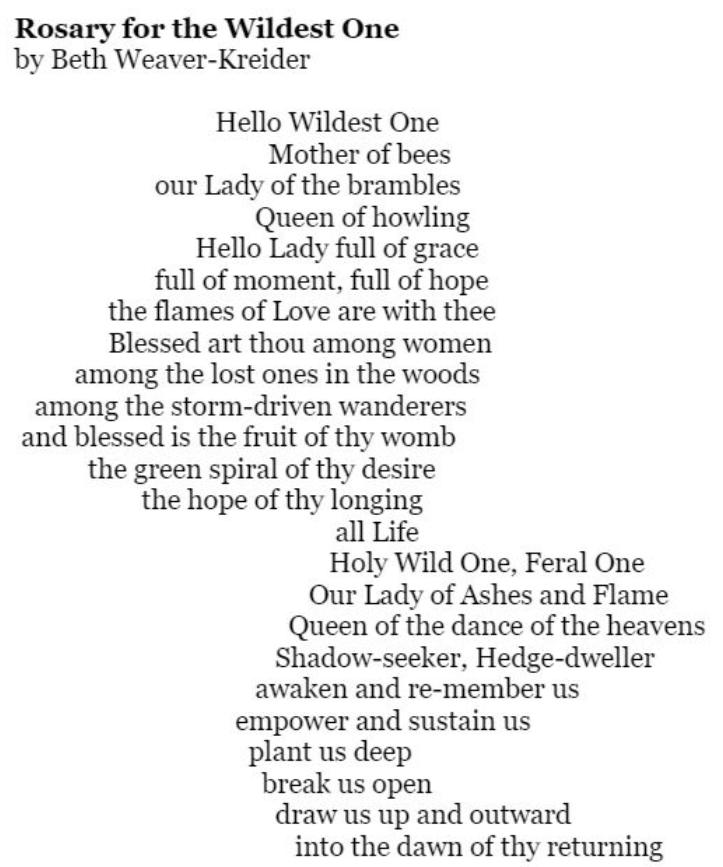
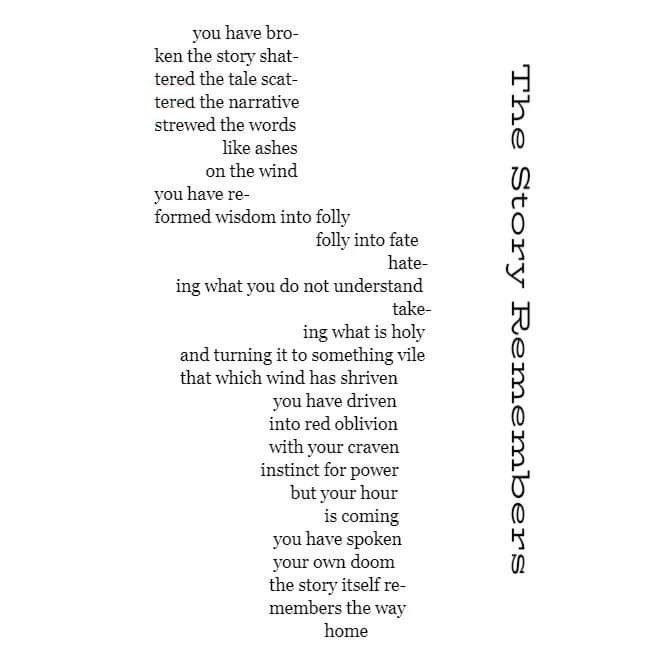
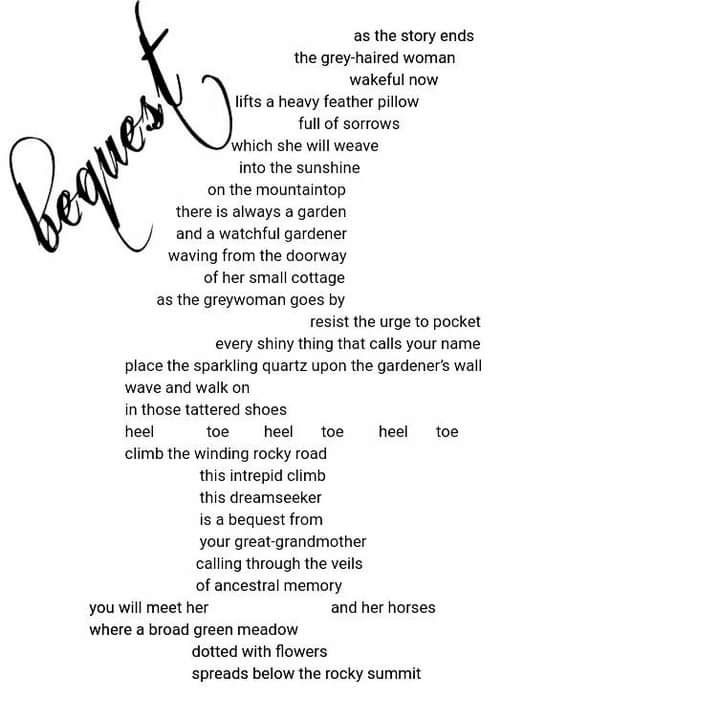
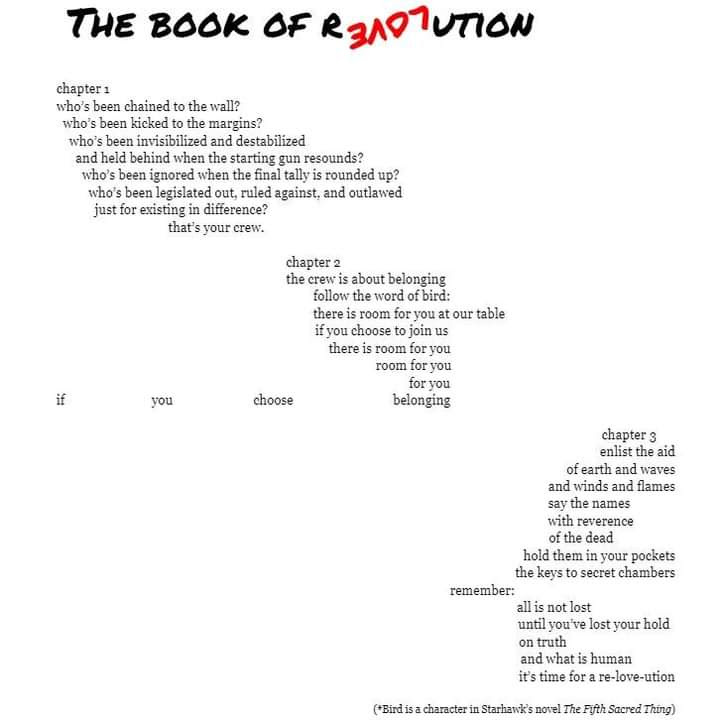
So it’s day 5 of National Poetry Month. Although I have not yet posted here, I have been writing a poem a day. Emily Dickinson wrote, “If I feel physically as if the top of my head were taken off, I know that is poetry.” a week or so ago, I read my first batch of CAConrad poems, and I knew exactly what she meant. It was like a total revelation. CAConrad makes poems that are sculptures on the page, and I have begun playing with making my poems more sculptural, not with the physical-representation of a typical concrete poem, but with a sense of abstract structure. Some of these are attempts at poetic sculptures.

Let the Women Come

I keep re-writing this sentence, and deleting it. There is no prose to say it, even to frame the context of the poem, which is the local news from Columbia, PA. Only, this is grief and horror and outrage because men keep harming women and children, keep killing women and children, because patriarchy makes of us commodities, makes of our children tools, makes the not-man a disposable object for a men to use as they please.

Let the Women Come
by Beth Weaver-Kreider

Let the women come.
Let the young women come
pounding drums and rattling spears.
Let the mothers come, bearing bowls to hold the tears,
and blankets to wrap her in.
Let the old women come, with sharpened knives and with cauldrons
holding coals, and feathered fans to call the coals to flame.

Let them come.
Let them come.

Let the bone women come, and the bear women,
Let the dragon women come, women of fang and flame.
Let the falcon women come, and the vulture women.
The lion women. The mighty swan women.

Let them come.
Let them come.

See, our hair is wild, and tangled in the branches of moonlight.
See, our heads are shorn, and our skulls reflect the heat of the noon sun.
See, we emerge from the darkest hidden places of the forests,
from the caves, from the fields, from the mountains.
See how we rise from the seas and the rivers.
See us circling in great wheeling flocks above your towns and cities.
We step from the shadows of your nightmares.
We dance forth from the spiraling hallways of memory,
which you carry from long before you were born.

Let the others come and stand, each behind a woman.
Hear our keening and wailing.
Hear us gnashing our teeth, hear us howling, hear us screaming.
Hear the cacophony of our grief and our rage.

We form a circle around our sisters.
We form a circle around our daughter, around all our children.
We form a circle around our elders.

See, our eyes are shining in the moonlight.
See, our teeth are bared, and our nails are sharp.
See, our bodies are painted with the signs that ward off evil.

We are chanting the blessing for the dead,
that she may find welcome on the other side.
We are chanting the healing runes for our wounded sisters,
for our lost children.
We are calling out a warning to the ones who do the harm.
We are weaving spells to trip and to bind them,
to strip them of power, to grip their souls
with the ice of their own deeds.

In the moonlight, we form our circle.
In the heat of the noon sun, our circle is cast.
In the fullness of day and under the rich cloak of night,
our words go forth to protect and to ward,
to bind, and to turn the evil back upon itself.

Let the women come.
Let them come.


In lieu of a gratitude list today as I am processing my grief and outrage at the horror of recent local (Columbia, PA) news, I offer my version of the Hail Holy Queen Rosary Prayer:

Hail, Holy Queen!
Hail, Mother of Mercy.
Hail, our life, our sweetness, and our hope.
To thee do we cry, we poor lost children of Eve.
To thee do we lift up our sighs and petitions,
our ardent longings, our earnest devotion, and our great gratitude.
Then turn, Most Gracious Advocate, thine eyes of mercy upon us,
and after this our long exile,
show unto us the blessed fruit of thy womb.
O clement! O wise! O sweet, loving Mother!
Pray for us, Queen of Heaven,
that we may be always returning home
to the promises of love.

Blessed Be!


Sunday’s Words:
“Do not be dismayed by the brokenness of the world. All things break. And all things can be mended. Not with time, as they say, but with intention. So go. Love intentionally, extravagantly, unconditionally. The broken world waits in darkness for the light that is you.” —L.R. Knost


“When a foreigner lives with you in your land, don’t take advantage of him. Treat the foreigner the same as a native. Love him like one of your own. Remember that you were once foreigners in Egypt. I am God, your God.” —Leviticus, 19:33


“In keeping silent about evil, in burying it so deep within us that no sign of it appears on the surface, we are implanting it, and it will rise up a thousand fold in the future. When we neither punish nor reproach evildoers, we are not simply protecting their trivial old age, we are thereby ripping the foundations of justice from beneath new generations.” ―Aleksandr I. Solzhenitsyn, The Gulag Archipelago 1918–2008


“In times of uncertainty, the most difficult thing to do is to stop searching for detours. It can be tempting to act from the desperation one feels when an abyss opens around you, but all of the ego’s equipment is useless in these dark regions. Instead, consider this an invitation to deepen your trust – to renew your committed heart to its course. After all, every creation was first seeded in an absence.” —Dreamwork with Toko-pa


“We delight in the beauty of the butterfly, but rarely admit the changes it has gone through to achieve that beauty.” —Maya Angelou


“When we enter this world with waking consciousness we put on our earthly suit of clothes. We move slower, but the principles are the same. Sometimes I like to move through this conscious realm as if I were dreaming. In dreaming we are more in touch with how our thoughts create immediately and dynamically. If I think myself into the heart of the song, there I am, or a plant, or a knot of pain that is asking for forgiveness, there I am. So much knowing opens up then. We are all part of each other.” —Joy Harjo


“Clouds come floating into my life, no longer to carry rain or usher storm, but to add color to my sunset sky.” ―Rabindranath Tagore


“I really only love God as much as I love the person I love the least.” ―Dorothy Day


“Franciscan alternative orthodoxy doesn’t bother fighting popes, bishops, Scriptures, or dogmas. It just quietly but firmly pays attention to different things—like simplicity, humility, non-violence, contemplation, solitude and silence, earth care, nature and other creatures, and the ‘least of the brothers and sisters.'” —Richard Rohr


“Go deeper than love, for the soul has greater depths,
love is like the grass, but the heart is deep wild rock
molten, yet dense and permanent.
Go down to your deep old heart, and lose sight of yourself.
And lose sight of me, the me whom you turbulently loved.
Let us lose sight of ourselves, and break the mirrors.
For the fierce curve of our lives is moving again to the depths
out of sight, in the deep living heart.
But say, in the dark wild metal of your heart
is there a gem, which came into being between us?
is there a sapphire of mutual trust, a blue spark?
Is there a ruby of fused being, mine and yours, an inward glint?”
—D. H. Lawrence

Good Words to Begin the Year

One of my beloveds nearly died this past summer. I’m not being over-dramatic about that. It was touch and go with his first treatment for his lymphoma, whether his failing liver and kidney function could support the clean-up work of the immunotherapy and chemo. I felt Death hovering in the corners of the room, thought I could see the shadowy and bright forms of his escorts from realm to realm.

Today, the oncologist gave us some glorious words: “complete remission” and “probably a cure.” I still don’t know how to articulate the joy of this. It’s a moment to pause in the glorious rays of morning sun and whisper hallelujah.


Gratitude List:
1. Those miracle words of such great relief: “complete remission,” “probably a cure”
2. Trusting that excellent substitutes can take my classes for two days while I finish my Covid isolation
3. A warm house
4. Patty Griffin’s song, “Mary”
5. Words! So many words!
May we walk in Beauty!


“Brew me a cup for a winter’s night.
For the wind howls loud and the furies fight;
Spice it with love and stir it with care,
And I’ll toast our bright eyes,
my sweetheart fair.” —Minna Thomas Antrim


“How do we go on living, when every day our hearts break anew? Whether your beloved are red-legged frogs, coho salmon, black terns, Sumatran tigers, or fat Guam partulas, or entire forests, mountains, rivers, lakes, or oceans, or the entire planet, the story is the same, the story of the murder of one’s beloved, the murder of one’s beloved, the murder of one’s beloved.” —Derrick Jensen


“The Work. I am learning, slowly and in tiny little ways, to stop asking myself what I can get from each moment, but instead what my Work is here in the moment. And realizing, ever so dimly, that when I am really doing my Work (really doing my Work), I am also receiving what I need.” —Beth Weaver-Kreider


“And now we welcome the new year, full of things that have never been.” ―Rainer Maria Rilke


“The best way to predict the future is to create it.” —Peter Drucker


“There is nothing in a caterpillar that tells you it will be a butterfly.” —Margaret Fuller


“For last year’s words belong to last year’s language. And next year’s words await another voice. And to make an end is to make a beginning.” —T.S. Eliot


“So my mind keeps coming back to the question: what is wrong with us? What is really preventing us from putting out the fire that is threatening to burn down our collective house? I think the answer is far more simple than many have led us to believe: we have not done the things that are necessary to lower emissions because those things fundamentally conflict with deregulated capitalism, the reigning ideology for the entire period we have been struggling to find a way out of this crisis. We are stuck because the actions that would give us the best chance of averting catastrophe—and would benefit the vast majority—are extremely threatening to an elite minority that has a stranglehold over our economy, our political process, and most of our major media outlets.”
― Naomi Klein

WORDHOARD

I said I wasn’t going to choose a specific word or theme for this year because I had so many words I wanted to work with, and that in itself became a word and a process. Of course. So my word for 2023 will be WORDHOARD. In the past week, I’ve been foraging for words (and hoarding them) to make into little cards to represent lots of ideas and themes that have lingered in my inner rooms.

I’ve been painting the insides of cereal and food boxes with gesso, then cutting them into 4×5 cards, then painting and collaging and drawing on them, and pasting a word from my wordhoard–these are the words that I have already foraged and printed from a document. I really like the Courier New font for a project like this. I already have several dozen words in my hoard. I have lots of little cards to make!

After all the recent years of metaphors and symbols and inspirations that I have chosen for my Word of The Year, it feels a little strange to move to something so nearly concrete. It’s my hoard of words. But it has also been–already–a really energizing creative process, both linguistically and visually. I’m including the animal symbols that have been meaningful to me, and words that have been previous Word of The Year words. I’m studying Swahili, so instead of Bridge, I will make a Daraja Card. And Spider will be Buibui.

It’s going to be a chance for me to do some experimental work with artistic processes. I find myself thinking about different ideas I want to try for laying on paint or embellishing.

We usually tend to celebrate New Years Eve at home, and with three of the four of us down with Covid this year, we aren’t going anywhere. Some of us will probably be going to bed in a couple of hours.


Gratitude List:
1. The challenges. I don’t want to do this year again. But I am grateful for the things I have learned through the challenging times.
2. The sighs of relief. I know that good news does not always follow bad, but this year’s run of bad news was frequently followed by sighs of relief.
3. Making things, coming up with ideas and then making them happen.
4. Moments in time when we look backward and forward, like the god Janus, who sees both past and future, and integrates them into the work of the now. New years, new months, new eras in our lives. How the future reflects the past.
5. You. All my Beloveds. I can’t imagine how I would have moved forward this year without the amazing community of people who surround me. I am grateful. Sometimes it’s just a nod or a little word of encouragement or commiseration that makes the difference.
May we walk ever in Beauty!


Honoring Kwanzaa with those who celebrate it: Today’s Principle in the Kwanzaa celebration is Kuumba: Creativity.


“I think it’s one of the most useless questions an adult can ask a child—What do you want to be when you grow up? As if growing up is finite. As if at some point you become something and that’s the end.” —Michelle Obama, Becoming


“The great affair, the love affair with life, is to live as variously as possible, to groom one’s curiosity like a high-spirited thoroughbred, climb aboard, and gallop over the thick, sun-struck hills every day. Where there is no risk, the emotional terrain is flat and unyielding, and, despite all its dimensions, valleys, pinnacles, and detours, life will seem to have none of its magnificent geography, only a length. It began in mystery, and it will end in mystery, but what a savage and beautiful country lies in between.” —Diane Ackerman


A string of beads has a thread running through all the beads, keeping them together. What we need is a thread too—of sanity and stability. Because when you have a thread, even though each bead is separate, they hang together.” —Sogyal Rinpoche


“Do not be daunted by the enormity of the world’s grief. Do justly, now. Love mercy, now. Walk humbly, now. You are not obligated to complete the work, but neither are you free to abandon it.” (From the Talmud)


“The earth has music for those who listen.” —George Santayana


“By our love and our need for love we become for one another midwives of the true self.” —James Finley


“Civility will not overturn the patriarchy.” —Mona Eltahawy


“The opposite of poverty is not wealth. The opposite of poverty is justice.” —Bryan Stevenson


“Aging is an extraordinary process whereby you become the person you always should have been.” ―David Bowie


“In a political culture of managed spectacles and passive spectators, poetry appears as a rift, a peculiar lapse, in the prevailing mode. The reading of a poem, a poetry reading, is not a spectacle, nor can it be passively received. It’s an exchange of electrical currents through language.” ―Adrienne Rich, 1993


“A revolutionary poem will not tell you who or when to kill, what and when to burn, or even how to theorize. It reminds you… where and when and how you are living and might live, it is a wick of desire.” ―Adrienne Rich


“More firebrand women. More dragon spirited women. More loud women. More angry women. More hard women. More intimidating women. More history-making women. More rebel women. More rebel women. More rebel women.” ―Nikita Gill


“In the teaching of history, there should be no undue emphasis upon one’s own country. The history of wars should be a small part of what is taught. Much the more important part should be concerned with progress in the arts of civilisation. War should be treated as murder is treated. It should be regarded with equal horror and with equal aversion. It will be said that boys under such a regimen will be soft and effeminate. It will be said that they will lose the manly virtues and will be destitute of courage. And all this will be said by Christians in spite of Christ’s teaching.

But, dreadful as it may appear, boys brought up in the old way will grow into quarrelsome men who will find a world without war unbearably tame. Only a new kind of education, inculcating a new set of moral values, will make it possible to keep a peaceful world in existence. In the future there will, after all, be plenty of opportunity for adventure, even dangerous adventure. Boys can go to the Antarctic for their holidays, and young men can go to the moon. There are many ways of showing courage without having to kill other people, and it is such ways that should be encouraged.” ―Bertrand Russell,


“Democracy is not a state. It is an act, and each generation must do its part.” ―John Lewis


“The web of life both cradles us and calls us to weave it further.” —Joanna Macy


New Year Poem
by May Sarton

Let us step outside for a moment
As the sun breaks through clouds
And shines on wet new fallen snow,
And breathe the new air.
So much has died that had to die this year.
We are dying away from things.
It is a necessity—we have to do it
Or we shall be buried under the magazines,
The too many clothes, the too much food.
We have dragged it all around
Like dung beetles
Who drag piles of dung
Behind them on which to feed,
In which to lay their eggs.
Let us step outside for a moment
Among ocean, clouds, a white field,
Islands floating in the distance.
They have always been there.
But we have not been there.
We are going to drive slowly
And see the small poor farms,
The lovely shapes of leafless trees
Their shadows blue on the snow.
We are going to learn the sharp edge
Of perception after a day’s fast.
There is nothing to fear.
About this revolution…
Though it will change our minds.
Aggression, violence, machismo
Are fading from us
Like old photographs
Faintly ridiculous
(Did a man actually step like a goose
To instill fear?
Does a boy have to kill
To become a man?)
Already there are signs.
Young people plant gardens.
Fathers change their babies’ diapers
And are learning to cook.
Let us step outside for a moment.
It is all there
Only we have been slow to arrive
At a way of seeing it.
Unless the gentle inherit the earth
There will be no earth.


Someone Should Start Laughing
A Poem by Hafiz (Ladinsky)

I have a thousand brilliant lies
For the question:
How are you?
I have a thousand brilliant lies
For the question:
What is God?
If you think that the Truth can be known
From words,
If you think that the Sun and the Ocean
Can pass through that tiny opening
Called the mouth,
O someone should start laughing!
Someone should start wildly Laughing—Now!


Mary Oliver:

The poem is not the world.
It isn’t even the first page of the world.
But the poem wants to flower, like a flower.
It knows that much.
It wants to open itself,
like the door of a little temple,
so that you might step inside and be cooled and refreshed,
and less yourself than part of everything.

Harvesting from the Dreamtime

The Dreamtime this year has been. . .dreamy. We have Covid in the house, so we cancelled all our plans to attend family holiday gatherings this year. It was definitely sad, and yet we’re all homebodies, so we’re fine, other than feeling like we missed out, and missing our families.

And although it has been dreamy, we have been getting stuff done. I’ve been knitting and crocheting, painting, organizing, learning a lot of Swahili. Jon’s been spackling and painting and fixing stuff. Josiah has been getting his room ready to repaint.

Yesterday, I finished going through files from my previous job: I let that be a ritual of release. Whoosh! It’s out the door, into the trash, out of my life. I kept a few things–poems, articles, notes of encouragement. So, of course last night in the dreamtime, I was finding space for myself in buildings, and trying to negotiate what my feelings should be in the context of other people.

Here’s the dream: I am going to a funeral with a friend. I think that she was probably closer to the one who died than I was, so when she decides to wait in the hall before our group goes in to sing, I wait out there with her. But she looks bored, like she doesn’t really care about what is happening. I long to be in the service, so I leave her with some others in the hall and go in. When we get up to sing our special music, the man who is holding the hymnal for a couple of us in the singing group keeps shifting it away so I can’t see it. I keep shuffling to get a better view and he shifts it away again. I think we must look ridiculous to the people in the audience, so I just shift into the back row and ignore hymnal-guy. He’s left standing awkwardly alone in the front row.

In the second half of the dream, I am finding office/living space in the basement of the church where the funeral was. There’s a lovely big heavy curtain walling off my personal area from the rest of the basement, giving me privacy. Someone is concerned about the smell of shrimp. We discover five or six large (lobster-sized) peeled shrimp lying around my space. They smell strongly–not rotten, just shrimpy. The dog has been chewing on them, but doesn’t really like them. I think maybe we can clean this stuff up, and hope the odor doesn’t last.

Perhaps I am hoping that the “odor” of the really negative energy that still remains will not mar my new experiences. I not only have to rid myself of the old files and things, I still need to deal with the lingering bad energy. In the early morning, I found myself dreaming–again–of explaining carefully to someone why I was forced to resign my job.

I’m glad that I made decisions during the funeral part of the dream to do what I needed to do instead of being led by others’ notions, to let myself be emotionally involved in letting go instead of sitting outside, to step out of the dance of someone else’s manipulations.

This year, I am not feeling the desire to choose a single word or theme for the year. Usually I end up with layers of themes anyway. A week ago, I had a moment with a friend when the words Curious / Cure / Curator came into focus together. I’ve been playing also with the connection between Curative and Creative. And there’s another one to add: Connective.

So maybe this year does have an overarching theme after all: Harvesting and Foraging for words and ideas that suit. It’s a free association process, following the bright trail of words and images, expanding the dreamtime from the high holy days of late December and early January to the whole year. I’ve started painting cards with some of the words. Perhaps I’ll stop after ten or fifteen. Perhaps I’ll do a word a day for the whole year. Maybe I’ll end up with my own personal oracle deck.

Curious curiosity cure curator curative creative creator envision vision embolden bold badass connective secret spaces wonder welcome belonging wildness winsome wisdom widen spiral. . .


Gratitude List:

  1. Holding a little house finch in my hand as it came back to awareness and life after hitting the window. How its heart beat against my fingers. How its eye shifted around to find me. How it settled into the warmth of my hand. How it suddenly lifted and flew off. Such perfect feathers. Such lightness of being.
  2. Rumination time
  3. How prayer and magic connect us
  4. Zoom. Even though Covid kept us from family, we could still participate in some important conversation
  5. Dreaming myself into the cure
    May we walk in Beauty!

“Beauty is not a luxury but a strategy for survival.” —Terry Tempest Williams


“Your suffering needs to be respected. Don’t try to ignore the hurt, because it is real. Just let the hurt soften you instead of hardening you. Let the hurt open you instead of closing you. Let the hurt send you looking for those who will accept you instead of hiding from those who reject you.” —Bryant McGill


“Contrary to what we may have been taught to think, unnecessary and unchosen suffering wounds us but need not scar us for life. It does mark us. What we allow the mark of our suffering to become is in our own hands.” —bell hooks


“I came from a family of repairers. The spider is a repairer. If you bash into the web of a spider, she doesn’t get mad. She weaves and repairs it.” —Louise Bourgeois


“When you have an ancient heart and childlike spirit you must feel deeply, but go lightly. To trace and learn the language of waves. How all the seas carry secrets, yet still move freely. I am still learning how to be water.” —Victoria Erickson


“Between stimulus and response there is a space. In that space is our power to choose our response. In our response lies our growth and our freedom.” —Viktor E. Frankl


“We were made to enjoy music, to enjoy beautiful sunsets, to enjoy looking at the billows of the sea and to be thrilled with a rose that is bedecked with dew… Human beings are actually created for the transcendent, for the sublime, for the beautiful, for the truthful… and all of us are given the task of trying to make this world a little more hospitable to these beautiful things.” —Desmond Tutu
*:
“I’m restless. Things are calling me away. My hair is being pulled by the stars again.” ―Anaïs Nin


Leave your windows and go out, people of the world,
go into the streets, go into the fields, go into the woods
and along the streams. Go together, go alone.
Say no to the Lords of War which is Money
which is Fire. Say no by saying yes
to the air, to the earth, to the trees,
yes to the grasses, to the rivers, to the birds
and the animals and every living thing, yes
to the small houses, yes to the children. Yes.
―Wendell Berry


“If we surrendered
to earth’s intelligence
we could rise up rooted, like trees.

Instead we entangle ourselves
in knots of our own making
and struggle, lonely and confused.

So like children, we begin again…

to fall,
patiently to trust our heaviness.
Even a bird has to do that
before he can fly.”
―Rainer Maria Rilke


Martha Beck: “The important thing is to tell yourself a life story in which you, the hero, are primarily a problem solver rather than a helpless victim. This is well within your power, whatever fate might have dealt you.”


“We do not think ourselves into new ways of living. We live ourselves into new ways of thinking.

It seems that we Christians have been worshiping Jesus’ journey instead of doing his journey. The worshiping feels very religious; the latter just feels human and ordinary. We are not human beings on a journey toward Spirit, we are already spiritual beings on a journey toward becoming fully human, which for some reason seems harder precisely because it is so ordinary.” ―Richard Rohr


“What if nostalgia is not a fruitless dwelling on those irretrievable moments of the past, as we are taught, but an attempt by sweetness to reach you again?

What if nostalgia is really located in the present, like a scent or ambience which is gathering around you should you avail yourself to it.

As anyone who has been heartbroken knows, there comes a time when, long after loss has been well-lived with, a small melody of love always returns. And to your surprise, you may recognise the tone of that love as the very same love you believed you lost.

It’s then that you know that your love was always your love. And if you let yourself be unguarded to it, nostalgia may find its way back into the generosity of your presence.” ―Dreamwork with Toko-pa


“We often cause ourselves suffering by wanting only to live in a world of valleys, a world without struggle and difficulty, a world that is flat, plain, consistent.” —bell hooks

Following the Dream-Keeper

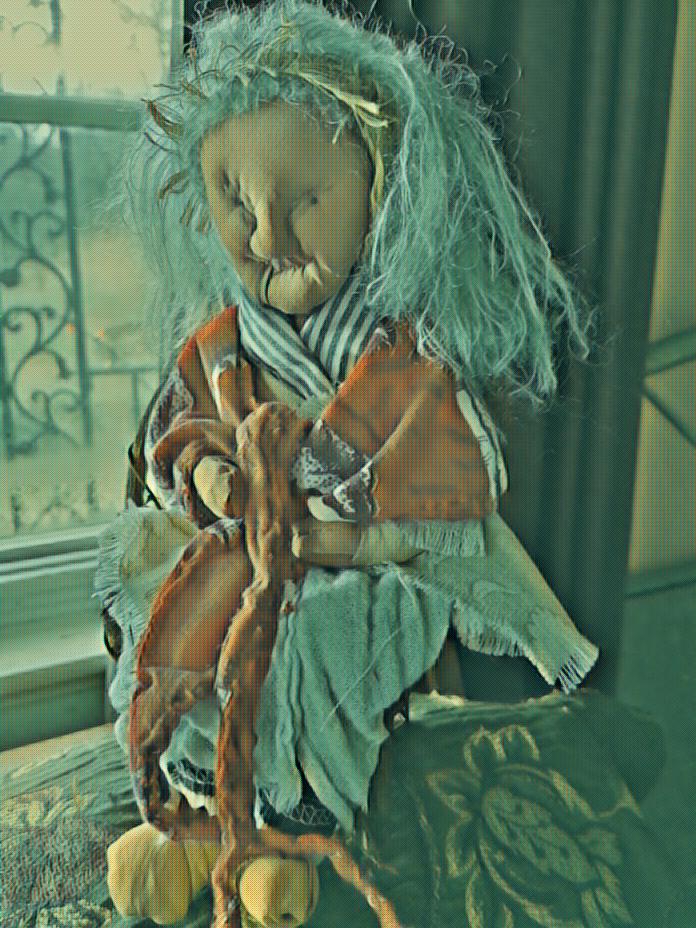
The Dreamkeeper, doll by Beth Weaver-Kreider

Every year at Solstice, I begin to watch my dreams very closely for images and ideas that might coalesce around a word or image that might become my theme for the coming year. This year’s theme was Embodiment, Magic, and Creativity, focusing on the word Embodiment. This year of Embodiment has been a doozy. I was attacked by parents at my school and ended up losing my job. My parents were both diagnosed with cancer and we nearly lost my dad. I got a new and incredibly satisfying job. I’ve learned to speak up for myself. My parents survived, my father almost miraculously. I’ve begun a new daily prayer practice which is fulfilling and connecting.

Part of me wants to kick 2022 out the door while yelling obscenities. Part of me wants to thank it for being a great teacher. Here I am on the first full day of a generous winter break with a little time to settle into the beginning of the process of year-end self-reflection, and looking forward to the future.

I am heading out soon for an over-due eye exam, perhaps my first word to put into the basket of consideration for the coming year should be Vision. Suddenly I have remembered that in last night’s dream, someone hands me a sheet of paper covered with exquisite drawings of eyes. I’m particularly caught by one eye with dark eye shadow and little white moons and stars along the upper lid.

In so many dreams throughout my life, I find hidden rooms in a house. I’ve always felt like it’s my Deep Self telling me that I am developing new inner capacity, or that I have inner resources that are not visible to everyone.

In Saturday night’s dream, I have been desperately trying to escape from people from a former job. A kind friend has been driving me all around the island, and we have managed to stay several minutes ahead of them, but they keep almost catching me.

Finally, I tell my friend to drop me off at my grandmother’s house. I grab my handful of special rings and quartz crystals and head through the first secret door. It’s in plain sight, but nobody ever seems to notice or go in there. Door after door, and stair after stair. Some moments when I’m almost discovered, but even then, there are more secret ways.

At one point, I accidentally come out of the secret part of the house into a library. I check out a book and tell the librarian to look out the window. When my pursuers ask where I went, he can honestly say he didn’t see where I went. I slip through a secret panel and back to safety.

I was so incredibly bothered when I woke up with how derelict the hidden rooms were. Sometimes when I dream secret rooms, they’re richly colored, with beds and couches and pillows, curtains and sparkling sun coming in the windows. The rooms in this dream were unfinished, filled with abandoned construction materials: wood and nails and broken things. Piled up by many of the doors were piles of filthy rags which people had dumped in there. There was a time this spring when I felt that someone had breached my spiritual spaces and dumped their garbage there. I have been expanding the safe zones inside myself since then, but perhaps this dream suggests that I need to get rid of the garbage that was dumped on me, create livable internal spaces, not just safe zones.

So I add Safe Space, Self-Preservation, and Moving In To My Self to the basket.


Gratitude List:
1. A generous break
2. Walking with a friend
3. Making all the appointments–catching up with the self-care
4. Moving In To My Self
5. Vision
May we walk in Beauty!


“Never miss an opportunity of noticing anything of beauty …” —Ralph Waldo Emerson


“The incredible gift of the ordinary! Glory comes streaming from the table of daily life.” —Macrina Wiederkehr


Never Broken

I am my own Home, now.
Wherever I move
the Light –
It moves with me.
I open all of the windows and the doors
so that God can come and go easily.
I don’t know why God takes such delight
in this House I call “Me.”
This place
where hearts come to be broken.
At the end of the Long Day I always ask.
“God? Why, hearts to be broken?”
And God always replies,
“Never broken, dear Lover—
only Opened.”
—Em Claire


“Find the antidote in the venom.” —Rumi


“Only two more days of the walk into the darkness. I am so grateful for the way the light kept finding me today. I’m not really on the edge, and I am not losing it, but I feel the edges of the panic, the sense of claustrophobia. I like the darkness. I love the inward-turn of winter, but always, at the edge, there’s the. . .well, the edge. So. There’s the Sun. And Stars and a growing Moon. And Mother Darkness. Comfort me. Disturb me.” —Beth Weaver-Kreider (from several years ago)


“I wonder what Piglet is doing,“ thought Pooh.
“I wish I were there to be doing it, too.” ―A.A. Milne


“People make meaning like bees make honey. Gathering experiences and images like bits of nectar and synthesizing it into something new, rich, and uniquely ours. Respect the meaning you make. The family you choose. The wisdom you craft, sweet and golden on your tongue.” —Jarod K. Anderson, The Cryptonaturalist

The Marker

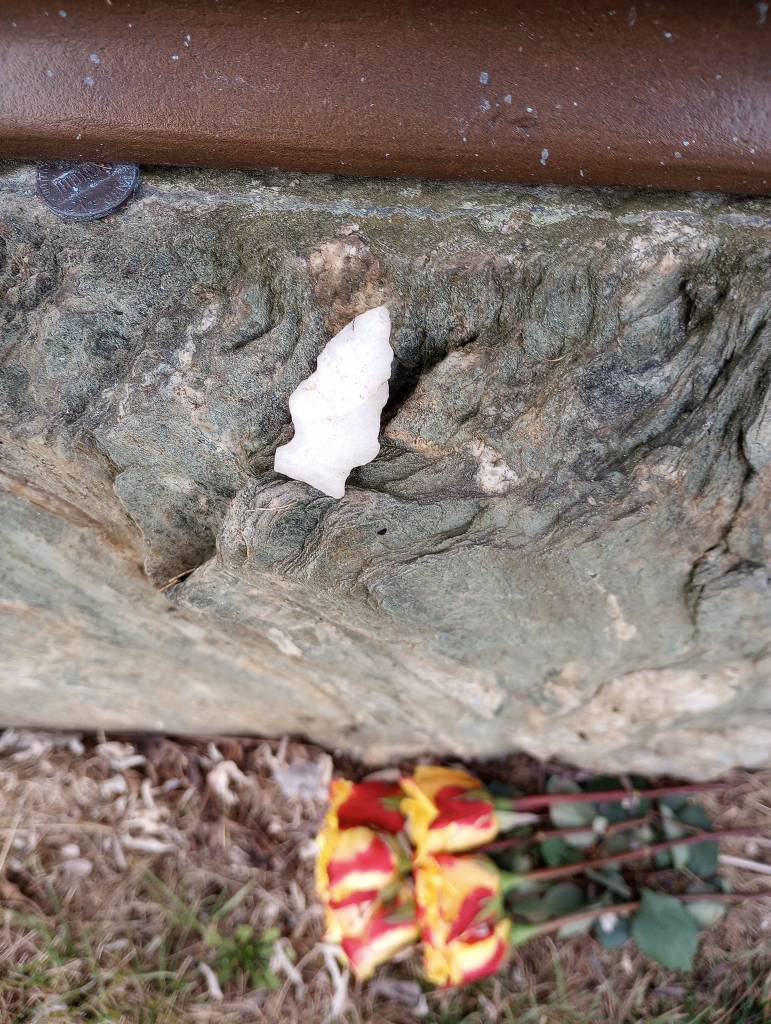
At the T, where Indian Marker Road meets River Road, is a Plaque that commemorates the site of Conestoga Indian Town, where the last of the Conestogas lived–the Conestogas, who were the last of the Susquehannocks, a large and prosperous people at the time of the European invasion, tall of stature, who fished and farmed and traded and hunted and built large settlement-towns along the Susquehanna River. By 1763, their numbers were so greatly reduced by war, illness, attacks by colonists, and forced repatriation, that only this small village remained.

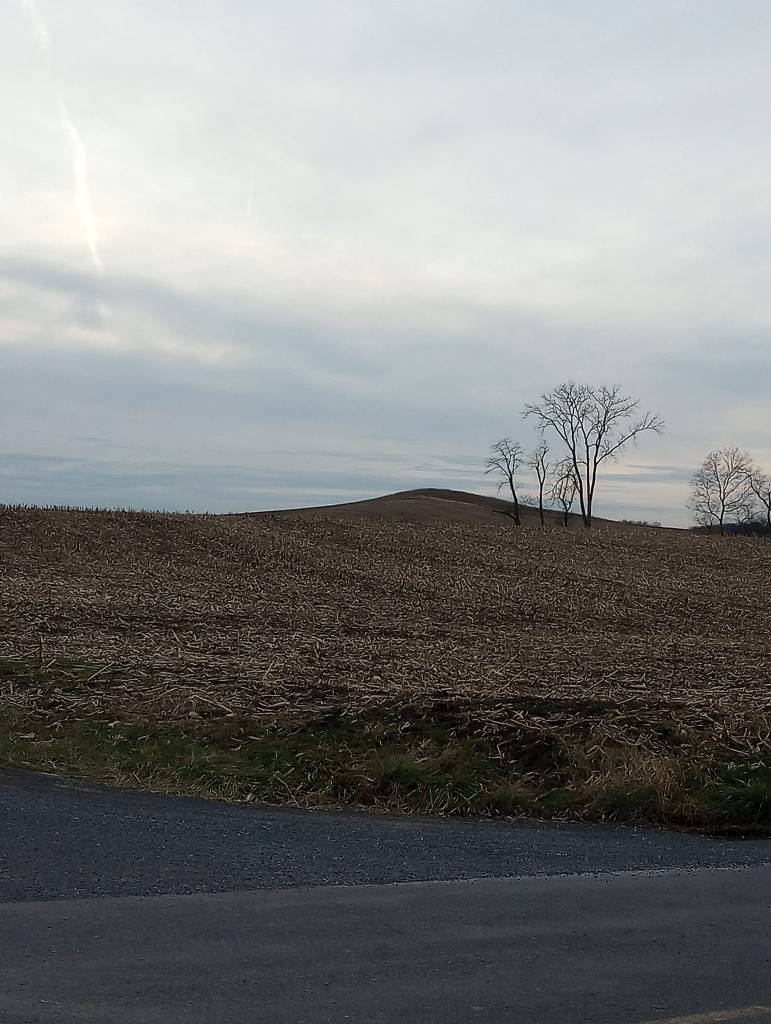
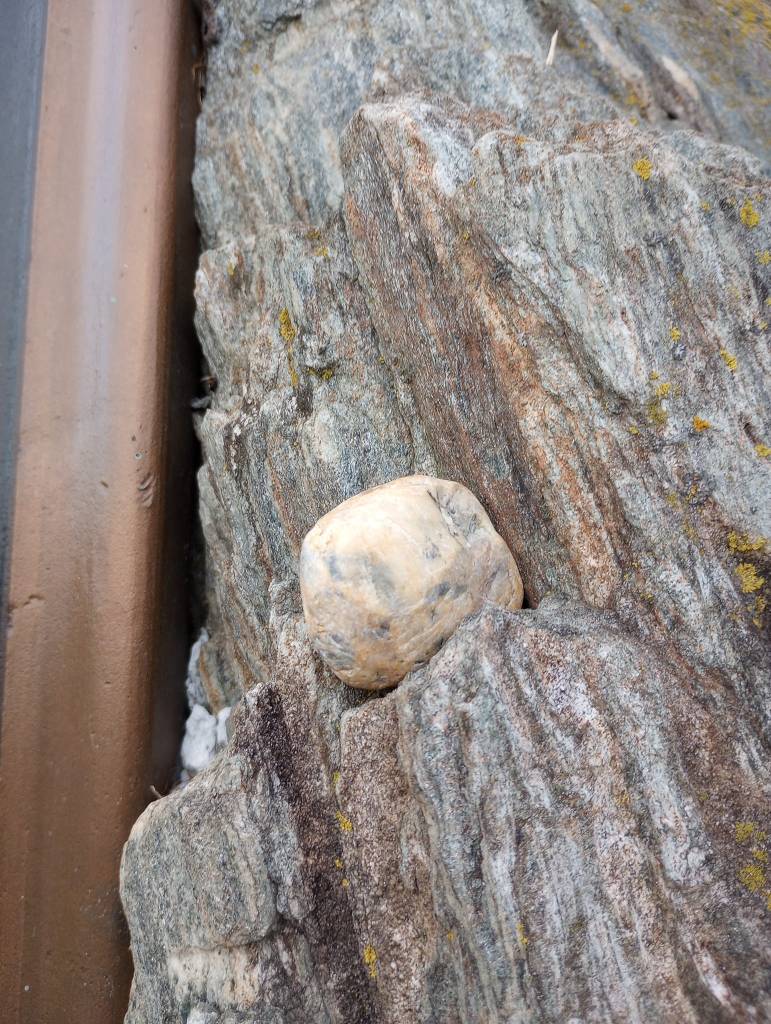
Yesterday I visited the marker again, on the 259th year since the genocidal ride of the Paxtang Boys murdered six of the remaining inhabitants of the tiny town. Someone had been there before me. A bundle of dried sage hung from the marker on a red string, new feathers were tucked into the crevices, and fresh roses were laid at the base of the marker. I added my stone, and turned to the east, where Chief’s Hill rises into the winter-grey sky.

Sheehays
Wa-a-shen,
Tee-kau-ley
Ess-canesh
Tea-wonsha-i-ong
Kannenquas

Several years ago, I memorized their names, feeling the new combinations of vowel and consonant slide up my throat and across my tongue, clicking my throat closed at those interruptive hyphens, wondering how close I was getting to the sounds they used for themselves. Then, a year or more after I had memorized their names, I woke up one morning, aware that I had been chanting them in a dream.

Today, in a pouch I often wear around my neck, I carry the list of their names, and of the final fourteen who were murdered on December 27th of that year, when the Paxtang Boys rode again.

I have no doubt that people were shocked and aggrieved and outraged at the murderous acts of the Paxtang Boys. Still, none of them were brought to justice. The murders of the Conestogas, the final act of genocide, went unavenged. Though Benjamin Franklin himself called out for justice upon them, justice was never done.

And today? What does justice look like, for the Conestogas? For other First Nations people here?

And who are the Paxtang Boys of today? Are we stopping them? Are we putting ourselves between them and the vulnerable people they would destroy? Who will speak out and stand up for the ones who stand in the path of the riders?

For more detailed information about the Susquehannocks, their origins, and this story, please buy a copy of Ghost River, a graphic novel with extensive interpretive text. From the web page: “Written by Lee Francis 4 (Sixkiller, Tales of the Mighty Code Talkers), illustrated by the incomparable Weshoyot Alvitre (Deer Woman: An Anthology, Sixkiller) and edited by Will Fenton (The Library Company of Philadelphia), this new graphic novel from Red Planet Books and Comics chronicles the last days of the Conestoga People and brings their story to light; a story of despair and hope, loss and love, ancestors and the ghosts of history that are always with us.”


Gratitude List:
1. Snow Day! (Ice Day, actually) My school does not do Remote learning during snow days, so I am resting and writing and folding clothes and reading. . .
2. The people who work for justice, who truly care about restoration, who believe that people are more important than institutions and structures
3. Boundaries. Good, strong, solid, clear boundaries
4. That one scarlet leaf up there in that bush
5. Fairy ice along every twig of the tiny Japanese maple on the hill.
May we walk in Beauty and Justice!


“We are the nurturers, the encouragers of all the dreams, all the seeds deep in all the hearts where the future of a redeemed and rescued land now dwells. So we hold fast and see beneath the snow, always calling others to recognize their own magnificent possibilities, to see and plant and join our hope with theirs.” —Vincent Harding, Hope and History


“How does a woman know? She listens. She listens in. Like light on waves.” —Margaret Atwood


“Every moment is a gift of life.” —Thich Nhat Hanh


“Only a fool knows everything.” —African proverb


“Note to self: If you want to have loving feelings, do loving things.” —Anne Lamott


“If you are not in the arena getting your ass kicked on occasion, I am not interested in or open to your feedback. There are a million cheap seats in the world today filled with people who will never be brave with their own lives, but will spend every ounce of energy they have hurling advice and judgement at those of us trying to dare greatly. Their only contributions are criticism, cynicism, and fear-mongering. If you’re criticizing from a place where you’re not also putting yourself on the line, I’m not interested in your feedback.” —Brené Brown


“God made mud. God got lonesome. So God said to some of the mud, “Sit up. See all I’ve made….the hills, the sea, the blue sky, the stars.” And I was some of the mud that got to sit up and look around. Lucky me. Lucky mud.” —Kurt Vonnegut


“‪The fact that feathers are naturally occurring objects is beyond awe inspiring.‬” —Jarod K. Anderson, The Cryptonaturalist


“‪The best poems are owls. A reflection of the landscape, but singular and strange. Smooth and effortless as smoke. A trick of the eye that scatters bones in the underbrush, hard and real.‬” —Jarod K. Anderson, The Cryptonaturalist

Definition

I’m trying to get at the idea that women and others who refer to themselves as witches very often do so because in the first place they have been marginalized because they cannot be pinned down in the rigid categories of the religious establishment. The label or identity of witch does not necessarily mean that one situates herself outside the bounds of church or religion, but that her spiritual practices or ways of seeing the world and the holy are threatening to the religious status quo. Witch may be a chosen identity marker, but it may also be an identity conferred by religious dogmatists. Although I have been revising and re-revising, it still feels to me as though this is a poem in process.

Witch (noun) wich,
SEE ALSO HERETIC,
a word used by the spiritual gatekeepers
within religious and social establishments
(no matter how nominal their own piety)
to denote those who cross the hedge
between the status quo and the wildlands
of spiritual inquiry.

the witch is an excuse
the witch is a scapegoat
the witch cannot be catalogued
the witch will not denounce her truth
the witch disrupts the proceedings
the witch does not offer herself up
to be easily understood

What they do not understand,
they call the Devil,
and banish and punish and shun.

When difference is disciplined,
how do the tamed ones
manage their sameness?

What they do not understand
is that they will snare themselves
in their own rules of order.

For when one question is proscribed,
who knows which questions
will lead to the mine field?
Better to eliminate questions altogether.

the witch is feral and free
the witch is both/and
the witch is a shapeshifter
the witch will ask a thousand questions
and expect more questions in response
the witch has already given herself a name


Gratitude List:
1. A winter-bare tree filled with crows in a drizzling mist
2. People who trust my essential goodness and don’t require me to prove my piety
3. Lunch and good conversations with beloveds
4. The joy of the last week of school before vacation
5. Clean windows. (It’s been a while. Don’t judge.)
May we walk in Beauty!


“The wrong shall fail, the right prevail, with peace on earth, goodwill to all.” —Henry Wadsworth Longfellow


“Organic images are destroyed if we subject them to linear thinking. How often we judge them as “bizarre” or “weird.” They need to be allowed to grow like plants in a spiraling movement. They carry emotional and imaginative energy as well as intellectual meaning, and as they spiral they are illumined with nuances of feeling. Hence their power to bring wholeness.” —Marion Woodman


“We need beauty because it makes us ache to be worthy of it.” —Mary Oliver


“Beauty is not a luxury but a strategy for survival.” —Terry Tempest Williams


“The insects and birds and animals are singing themselves into being; this autumn land is dreaming and I am part of that dreaming.” -Sharon Blackie


“I am out with lanterns, looking for myself.” —Emily Dickinson