What Do You Break Down? What Do You Build?

A week ago, I came across the call for an economic blackout from September 16-20. Someone made the suggestion that the real impact would be for as many people as possible to stop using social media for the duration because Facebook and Instagram and their ilk are also owned by the big-money folks, so I stepped off social media for the week as well. Yesterday, I talked with my friend and mentor Sarah Preston about boycotts and protest and change. Here are some of my thoughts in response to our conversation and this past week:

  • I’m not sure this particular economic boycott had much effect. Probably the more affective economic protest this week was the Disney+ cancellations in the wake of the Jimmy Kimmel suspension.
  • Sarah pointed out that writing to the company/ies you are boycotting to explain what you are doing ought to be part of the boycott. Write to Disney-ABC Home Entertainment and Television Distribution, 500 S. Buena Vista St., Burbank, CA 91521-3515. Perhaps those of us who can’t really boycott because we don’t have Disney/ABC ties can write letters anyway.
  • What do we want from boycotts? Is it just to force the billionaire bros to notice how they hurt the people by supporting an authoritarian regime? If we want to make lasting change, will a short-term boycott of the soulless corporations do that work? Likely not. They might have some excellent short-term effects, but in the long run, we have to have other tools in our basket.
  • Audre Lorde said, “The master’s tools will never dismantle the master’s house.” Let’s get to thinking outside of the master’s toolbox.
  • The billionaires are definitely part of the problem. Also, their fortunes are made on speculative economies, of stocks and bonds and “imaginary” wealth. That imaginary and speculative wealth is certainly powerful in the world today, but what if we move more and more to economies that work outside their paradigm? That seems to be at least part of the intention of a boycott. But what if we began functioning more completely and permanently within our local economies? What if we did more barter? More gift economy? More sharing? More creating and growing and making? It’s all well and good to refuse to go to Walmart for a week or to temporarily stop ordering from Amazon, but what if we refused, en masse, to ever buy from them again?
  • Ugh. That means I have to find the will and the creativity to republish my books of poetry in some other format, instead of the Amazon-adjacent KDP. (Here’s another reason to join temporary boycotts, even if you don’t think they’re going to do much to actually change anything: they change you. I need to follow up on this.)
  • Also, when there is an economic boycott or a buy nothing week, consider local impacts. Instead of simply refusing to take part in any economy, use times of boycotting the billionaire bros to flood the local economy. Buy from local stores, local farmer’s markets, local businesses. Strategize more permanent change to working within the local economies. Let these experiments in shifting economic power become permanent shifts in your buying habits.
  • That brings me to my title: Yes, a lot of our work in these days is about breaking down. Breaking the power of the billionaire class, breaking the power of the authoritarians and the theocrats and the demagogues, smashing the patriarchy. But what are we creating to replace those structures? What can you and I do right now to begin developing the just and safe community-based world we envision? This has been a time of great network-forming, such marvelous web-building. How can we look to these webs as the basis for the future?
  • I admit, the networking and community-building can often be exhausting for me. I am realizing that I can be a part of creating and supporting and participating in the webs without it feeling like I have to attend every potluck and party and teach-in.
  • The social media fast for the past week has been good for my mental health.
  • Also, I have missed that web of community. I feel like my social media connections have been an important part of building the community webs I have been talking about here. But they’re all on platforms owned by the billionaire bros, and they support those very structures I want to tear down. I’m not sure how to shift this. I know lots of people have abandoned FB for Substack and others. I totally get it. AND–I am also hesitant to make that shift complete. I don’t do social media because of the amount of influence I can build, but because of the particular people I have connected to there. If I leave FB or IG, I may develop connections on another platform, but I lose the particular (and meaningful) connections on those sites.

I’ve been attending Menno Action’s Tuesday evening Zoom meetings called Courage School for the past few weeks. One of the images they keep referring to is the idea that we think of the power structures as a pyramid with a strong, wide base, impossible to break down. In reality, it’s more like an inverted pyramid, propped up by church, community organizations, schools, businesses, corporations. If we can begin to very deliberately pull out the support of those struts, the structure will collapse. So yes, I think boycotts can be at least a temporary part of influencing those props to shift away from supporting the empire. And also, we need to be strategic about pulling out those props, and using them to build the world we envision.

Let’s keep staying grounded, keep breathing, keep loving, keep checking in with each other, keep reaching out, keep building, keep nurturing, keep protesting. . . Breathe, ground, dance, hug, write, sing, hum, hold babies, paint, remember, tell stories–whatever you need to do to stay with the process, to hold onto hope and truth and peace and your sense of your truest self.

Dream Passenger

In last night’s dream, a woman commandeered my car to drive somewhere way out into Nowheresville. This is the second time in two weeks that I’ve had a dream about someone taking over the wheel of my car so they could drive to their destination out in the middle of nowhere. It’s not a carjacking, because they fully intended in both cases to get out and leave my car to me when we reached our destination, but still, it’s uncomfortable to me to find myself a passenger in my own car. 

In the dream, a woman motions me into a parking lot at a convenience store, and I pull in, sort of catty-cornered, so I can hear her question. She starts talking even before I get the window open, asking me if I know the way to Lizard Point.

She has a sort of shopping cart filled with all sorts of things, including a baby seat with a baby climbing out of it. She just opens the door of my car and starts putting the baby seat into the back seat, so I grab the baby who is sweet and cooing, and I clean up the vomit baby has spit up all over itself. Before I know it, the woman is in the car getting ready to back out of the parking lot on the way to Lizard Point. 

I don’t remember the trip in the dream, but when we get to the building where she wanted to go, while the woman unloads her things, I go to get the baby out of the car seat. The baby has thrown up all over again, this time much worse, and there’s nothing in the car or anywhere to clean up the mess. The baby’s face is ashy white and I’m afraid the child has died or will die. 

At this point lucid brain kicks in, and I realize that I’m in a dream, that this baby is a symbol or metaphor for something instead of a living (dying) child, and that I can pull myself out of the dream so I don’t have to keep experiencing the horror of this image. It’s 3:00 in the morning. 


A note about Lizard Point: this is the name of a geography game that I sometimes play but haven’t for a while. If you like geography, and want to learn more, I recommend it or Seterra. Globle and Worldle (notice the extra L) are also fun. Especially in times like these when there’s lots of news of places around the world, I like that my brain can now see where on a map Ukraine or Yemen or Myanmar is. It helps me feel connected. 

One of my beloveds recently mentioned that they thought I’m a little too deferential, that I don’t speak up enough for what I really want. While I am working on saying things like, “I want,” “I need,” “I desire,” I’m also a Seven on the Enneagram, which means that pretty much anything can make me feel happy and content. So if I say, “Hey, let’s do this!” And you say, “Sure, but what about this instead?” I’m probably going to agree with the thing you suggest because both things will make me happy just being with you is what makes me happy. Still, I do want to take this person’s point seriously, and I wonder at these dreams in which someone commandeers my car, whether there is a message that I need to start saying, “No, I really want to do this.”

These dreams about someone else driving my car might also relate to the fact that we have a driver with a learner’s permit in the family right now. I am now mostly in the passenger seat, so that’s an image my brain would likely latch onto.

I could wake myself up from the horror dream of a dying child, but I wake into a world where children are dying, and it seems that people are too distracted, like the mother in my dream, to notice the constant crisis. And I feel utterly helpless.

Syncretism

The “Flammarian Engraving.” Artist unknown

Well, here’s a fun etymology! Syn- means together, as in synchronize, synonym, synapse, sync. But that second part is harder. It could, according to etymologyonline.com, come from the old Greek word kerannynai, or the word krasis, which both carry the meaning of a mixture or blending. To blend together. Probably the appropriate linguistic trail.

But eymologyonline.com also explains that the cretism could also refer to Crete, and an old adage about “lying like a Cretan.” To bring the liars together? Hmmm.

The word took on specific meaning during the German Reformation, when people with varying ideas of religion were fracturing into sects, and theologians were working to “bring together” or syncretize their theological systems. As often happens when people try to stitch varying ideas together, the sects became even more fractured, and syncretism became a bad word, taking on the meaning of trying to put together things which absolutely should not be put together.

Which is how I learned it, in a Religion class in my Mennonite High School. Syncretists, we learned, see religious experience as a smorgasbord, taking a little of this and a little of that, whatever shiny ideas their ignorant or heretical minds find appetizing. We were told that they don’t commit to a single path, so they are less enlightened, less spiritually mature, than the creedal religions, like Islam, Judaism, and especially Christianity.

While I certainly, and to my shame, felt the superiority and pity required by the fervent evangelical system of my Religion class regarding the syncretists, something in me started singing then–perhaps it was the budding poet: “Not everyone feels compelled to fit the boxes! Some people choose their path.” Perhaps that was when I first began to give myself just a little permission to look at my spiritual story from a lens other than the steel-sided theological boxes I was handed by church and school.

I love the old Catholic women who pray to Mary and also read tarot cards, the devout Mennonite grandmothers of my own lineage who may have been practitioners of the German sympathetic magical tradition of powwow, the indigenous people who honor the ancestral truths passed on to them while weaving them into faith traditions they’ve known from other lines of ancestry, the witches who follow the path of the Earth Goddess and maintain their heritage faiths in whatever way seems best to them.

Today, I often call myself a Universalist, which applies, and yet that label takes me out of the specific realms where I find my spiritual buffet. I am an Anabaptist Mennonite, steeped in the peace tradition and the yieldedness and the opposition to Empire that my Mennonite ancestors experienced. Faith without works is dead, they said, and the priesthood belongs to all believers. I no longer accept the moniker Christian because of the way that term has been drained of its life-force and turned vampirical by the blood-sucking life-denying forces of the modern US evangelical movement. But I am dedicated to the teachings of Jesus. And, like the old Catholic women, I pray to his mother in all her forms.

And I am a witch, a word I wore quietly in private until it was given me as a public accusation and I chose to wear it proudly and publicly. A witch is one who trusts her own connection to the life-giving force of the Earth, of the Goddess who is the spiritual expression of Earth. One who believes in being her own priestess (like the Mennonites and their egalitarian priesthood). One who believes in finding Truth in her embodied experience. One who believes that magic is, as Dion Fortune wrote, “changing consciousness at will,” beginning with my own consciousness. I honor the rich traditions of indigenous spirituality here in the US and in Africa and elsewhere in the world, not choosing to assimilate their beliefs into my own, but allowing them to inform and enrich my personal practices and beliefs, which are grounded in my own heritage.

Mostly I am a poet, finding significance in metaphor and symbol, in the way words and ideas and images and people weave together to create a tapestry of meaning.

I recently watched The Truman Show again with one of my high school classes, and afterward we compared the image of Truman Burbank standing at the top of the staircase at the edge of the sky at the border of his world with the image of the “Flammarian Engraving” of the man peeking under the veil of the visible world into the deeper reality of the workings of the universe. I want to be always finding my way to the next doorway, the next veil, ready to face my fears and stand in awe at the new discoveries to be made. Ready to syncretize new ideas and revelations with my current limited understanding.

What’s Your Little Thing?

Near the top of my list of People to Emulate is Wangari Maathai, the biologist and environmental and women’s rights activist who started the Green Belt Movement in Kenya in 1977 to build communities–particularly among women–that would work together to address erosion and to plant trees. Over time, the GBM began to advocate with the Kenyan government for more democratic leadership, for the release of political prisoners, and for an end to land grabs that were destroying Kenya’s rich ecological systems.

“It’s the little things citizens do. That’s what will make the difference. My little thing is planting trees,” she said. And that little thing turned into a big thing, a major project of change and conservation and stability for human rights in Kenya. It didn’t end the struggles. But it has made, and continues to make (years after her death), positive and sustainable change for good.

If you live in the United States in these days of national instability and cruelty, what is your little thing? What is the thing you will do to hold back the tides of cruelty? Can you find a local refugee family and be a friend and guide, someone to help them feel safe? Can you print out Red Cards–Know Your Rights Cards–and pass them out to people in your communities? Can you write letters to the editor? Call your reps? Make art that challenges the cruelty? Go to protests? Make signs for protests? Boost the signal on your social media? Join a local group that is organizing to create safe spaces? Speak up in a school board meeting? Run for office? Can you pray?

That last one, though. Some people say prayer changes things. Other people say it’s a way to get out of doing anything “real.” I pray believing that at the very least, prayer changes me. These days, in my rosary prayers, I am calling on Our Lady of Guadalupe, who is also Tonantzin, and to Ix Chel, who was the Lady long ago in regions of Central America, and to Hekate of ancient Greece who guided wanderers through the darkness. I imagine I am praying with the captives who were shipped to that mega-prison in El Salvador without due process, with the mothers and children (at least one who is in desperate need of medical treatment) who were deported to Honduras, with the university students who are experiencing the cruelty of US prisons as they wait to be released or deported. I know the Lady hears me, hears us, and I feel Her working on me, giving me confidence and courage, nudging me to act and to love more deeply. The prayer is changing me.

The Contrarian journalist Jennifer Rubin calls this administration’s barrage of destruction the “cruelty train.”

How do we stop a cruelty train? Not by sending our own cruel train after it. But by turning all our little things into sand that clogs the gears, into wrenches that break the cogs–our prayers, our signs,
our public songs, our letters, our calls, our knowledge, our commitment to democracy, to due process, to checks and balances, to separation of church and state, to the Constitution, to basic human rights, to the power of Love.

What will be your little thing? Small person that I am, I cannot stop the cruelty train simply by standing in its way with my little thing, or praying that it will derail. But together, all our little things–all our prayers, all our will, our shouting, our fierce Love–become a barrier that just might stop the train. Perhaps Wangari Maathai didn’t know that helping women to plant trees would build into a movement that would slow the train of ecological destruction in East Africa, or perhaps she guessed, but her movement is doing so.

Blessed be.


Here are some little things to try:
1. Make a list of your own People to Emulate. What got them moving? How did they step into their sense of their ability to change the world?
2. Pray. Daily. Or if prayer is not your thing, make a mantra of Courage and Confidence that you can say every day to build you up for the tasks ahead. Be ready for it to change you.
3. Make art and poetry and songs. Sing and dance.
4. Laugh together with others. Joy is Resistance. Laughter–real, deep, heartfelt, soulful laughter–frightens fascists.
5. Join a group or two–get the emails from Indivisible (your local groups), or 50501, or other local initiatives that are dedicated to science and human rights and safety for immigrants and refugees and brave spaces for trans and other LGBTQ people.
6. Call your reps. Start with once a week, if you’re anxious. Pat yourself on the back when you make the calls. Take a deep breath, and get ready to make more calls the next week, or the next day.
7. Write letters to the editors. Write op-eds.
8. Join a rally, or convene your own. Get out in the streets with signs and make some noise.
9. Love your neighbor.
10. Stay curious, even in the midst of your rage. Perhaps that aunt who repeats your uncle’s MAGA talking points is really beginning to wonder whether she’s on the wrong side. Ask her what she believes, believe in her goodness, be curious about her. Remind her that she can change her mind when she learns new information.

Is Love Really the Answer?

Perhaps you’ve been reading my posts since I began writing this blog. In that case, you may be wondering if my title suggests that I am having an existential crisis, wondering if I think I need to change my essential character in order to fight the powers that be. The answer is probably a bit of yes and no. I hope that in times of great political and social upheaval we all do the powerful soul-work of existential renovation, exploring whether our inner lives have what it takes to meet the challenges of the times. Are my core values and principles strong enough to carry me into these perilous days with courage and conviction to stand up to the soul-rending cruelty of the powermongers?

Yes, at some level, I have not changed my basic orientation–that Love is the answer, that the universe is held together by Love, that we are born of Love and borne on the wings of Love. I believe with Rhiannon Giddens that our work is to change the song of hate into a song of Love.

And. . . And I also find myself more frequently using the martial language I have long eschewed as I look at the work ahead of us. I will unapologetically speak of doing battle with hatred, of being a warrior for justice and due process and human rights. Of fighting for those who have no one to fight for them.

This feels a little too close to the Spiritual Warfare stuff I long ago turned my back on from those evangelical youth conferences of my teenaged years, so I step gingerly on this ground. Still, I feel like we are battling forces of cruelty and greed, power and hatred–psychopathic forces that have taken root in certain segments of our culture (perhaps not ironically in that very evangelical setting where I first heard the words Spiritual Warfare). So yes, these days my prayer to the Mother is that I may be one of the Luminous Warriors, courageous and confident and ready to step in and harbor those who are vulnerable to these waves of hatred and cruelty, to fight for their safety and protection with whatever means are given to me.

Don’t worry. I’m not going to start punching Nazis. But I might not be actively judging a new acquaintance who apparently did so. I’m not ready to start fire-bombing Teslas, but something in me might celebrate when I read of the ones who do. I’m not getting a gun. I’m not plotting violence. But I am also not going to sit quietly and say that Love is the Answer without putting my heart and my head and my hands and feet into the struggle to make it so.

Some people I know cringe at the words nonresistance and pacifism which have long been part of my identity, and rightly so–under certain definitions. My approach to Love as the Answer is akin to my understanding of the deep meaning of these words: Nonresistance is about actively bringing our moral truth to bear on the situation, not becoming like the hatemongers in a tit-for-tat exchange, but standing strong on the high ground, courageously ready to stand in the gap and be a witness and an example. Pacifism, likewise, is a commitment to being Present in the conflict, not turning to violence, but not cringing away either. My Anabaptist Ancestors called this a Third Way. I want to take that third path, neither reacting in violence nor reacting in fear, but intentionally bringing my Presence to the conflict.

I also believe that there are people out there who are beginning to ask questions, people who may have always been close to the fence, who are wondering how they ever got into the position where they’re defending Nazis, who are beginning to see with a little more nuance and compassion, and who need us to come at them with curiosity and questions and understanding rather than judgement and pitchforks. It’s not just Us and Them, but also the Ones Between, who may need to know it’s safe to leap the fence. How can I bring my soul force, my Love, to conversations with such people when I am burning with rage at the willingness they had to ignore the racism and homophobia and misogyny and colonialism and imperialism and authoritarianism. . .?

Yes, my MO will always be Love. It would feel like spiritual amputation to try to shift that as my grounding. And also, I need to train and strengthen my soul force, my moral force, my love force, my Mama Bear force, and get out into the fray in whatever way I am personally able to do that.

So if what you do is pray, pray fiercely and with Love. If what you do is fight, fight with honor and with Love. If what you do is stand up and speak out, do so with courage, with fervor, with fortitude, grounded in Love. If what you do is support others, bring your full Loving Presence to the act.

No, I’m not going to call for a hopeful loving that believes that if we love hard enough, the cruel people will simply change their hearts. I will call on the Lady to change their hearts, to break them utterly open with compassion. And also, I will take Love to the fight. Too many people are losing their freedom and their livelihoods and their lives for me to sit quietly by, muttering sweet words. I want to call us to a fierce and fearsome Love that puts its boots on, stands in the square, raises its voice (and probably its fist), and says, “Not on my watch!”

Free the Captives!

I don’t understand. I don’t understand. Forty percent of Americans think the US administration should keep deporting people to El Salvadorian hellhole prisons despite the court order to stop. Despite the utter lack of due process. Despite the obvious inhumanity. Who are these cruel people? That’s more than a third of us! Heather Cox Richardson, trying to express the idea that poll numbers supporting the administration’s illegal kidnapping and deportation of immigrants were actually falling, said that “only 40%” are in favor of the deportations! ONLY?!? Only almost half of us? Doesn’t anyone remember history? Does no one remember reading Elie Wiesel or Anne Frank in school?

And, for what it’s worth, a truly compassionate and empathetic heart won’t be looking for that last stanza of the poem. When you see them coming for the immigrants, your heart should break, not in fear for your lonely future self, but for the inhumanity and cruelty being perpetrated by your representative government.

Feel free to post the images here on all social media, as widely and freely as you want.

Halfway Through Poetry Month

I have been writing. Really! I just haven’t been posting here. This season, I have gotten myself into a little bit of a bind with the artistic disciplines. I’m doing #The100DayProject, making a book a day, and I’m writing a poem a day in April. These are the things that keep my mind alive and questing during the stress of the spring season at school. The quick publish/post for daily poem and book has been Instagram and Substack, and so I will post a catalogue of some of my favorite poems and books here today.

Free to Fly Again

I know this now: It was a dangerous choice to go there in the first place. I was in danger of losing so much, constricting myself into the tiny little boxes required of those who existed in that place.

I went in with my eyes open, knowing of the claustrophobic boxes, how the language pulled toward dogma and creed. I went in with my own language, my own protective wards, kept secret in my pockets. I went, tethered to those who stood outside, who could watch for me, who could pull me back if I got stuck in the tiny places, injured by the sharp corners, the barbed words, and the lack of fresh air to breathe.

I can view my time in that place as a setback, a wrong choice, a misstep. Or I can look at how it changed me and transformed me, how it prepared me for this moment, gave me courage, made me fierce. Although it left me with wounds, it did not take my essential Self from me: I am always new, always a dragon shedding her skin to become fresh and reborn again, but always the same essential me, growing and changing and developing.

I don’t want to give those eight years power by saying I should not have taken that journey, that the breach of Self was too destructive. Because although my ego took its hits, I didn’t lose my Self. And there were gifts in this journey too. The young people who were there with me taught me so much, so much that I bring with me now that I’m out in the outer world again. Those eight years were a necessary phase of my development. They changed me forever in good and powerful ways. They too were initiation, difficult initiation. Not a break in my line of learning, not a backward step–or if a backwards step, only part of the dance.

Anytime we willingly submit to the claustrophobia of a religious institution, we put ourselves in danger of either taking on the rules for ourselves, or of losing some essential confidence and courage and forcefulness as we make ourselves smaller in order to fit inside the boxes. Me, I’m so grateful now for the ones who tethered me while I was in the land of boxes, those who held the lamps for me to see my way out when I reached the point of banishment.

I called myself an exile when I left that place.
As though it had ever been my true home.
I can laugh now looking back,
and see how even though the lines that draw my past
(for a couple generations)
ran straight through that place,
it was never my home.
I have always been my home.

And I look back today with gratitude for the expansiveness of the escape, for the fact that I can breathe, and run and explore, and call myself by my real name, and not have to look over my shoulder.

So many sacred journeys happen in three days. My sojourn was eight years. And now three years more have passed and finally I feel the new wings stretching out behind me. I am ready to fly again. Blessed be!

Bōchord: The Art of Book(mak)ing

Book. Proposal

For #The100DayProject, artists choose an artful activity and do it every day for 100 days, recording their work, and posting about it every day. The project begins on February 23, and I decided to begin my Substack life by posting my daily creations here.

What is a book?

Is it words on pages between covers?
Is it a box, a basket, a vessel of words and images?
Is it a kit for your imagination?
What makes a book a book?
And what is the line between book and not/book?
Or is there even a line?

One of my students, when I posed the question to a class, said,

Perhaps a definition isn’t so much about
what a thing is as about how it is used.”

Wise young person.

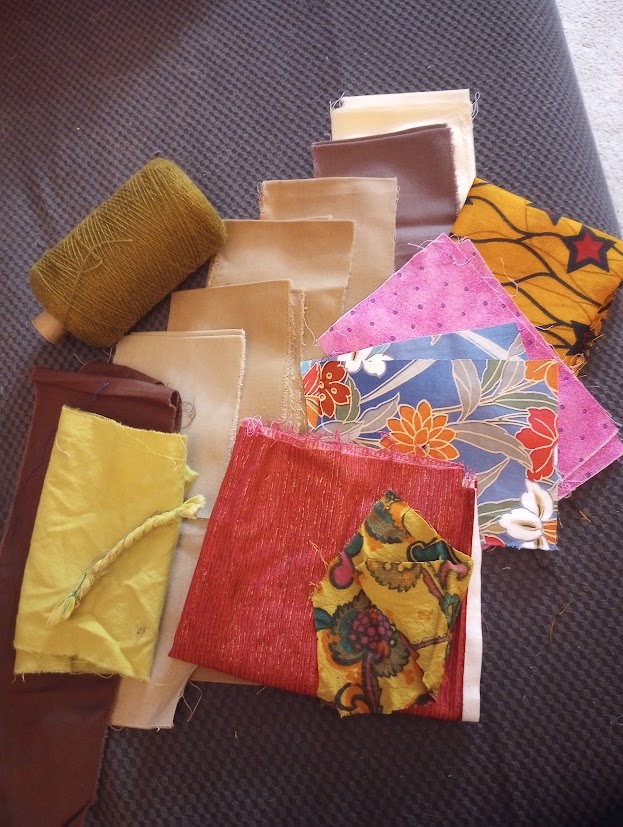
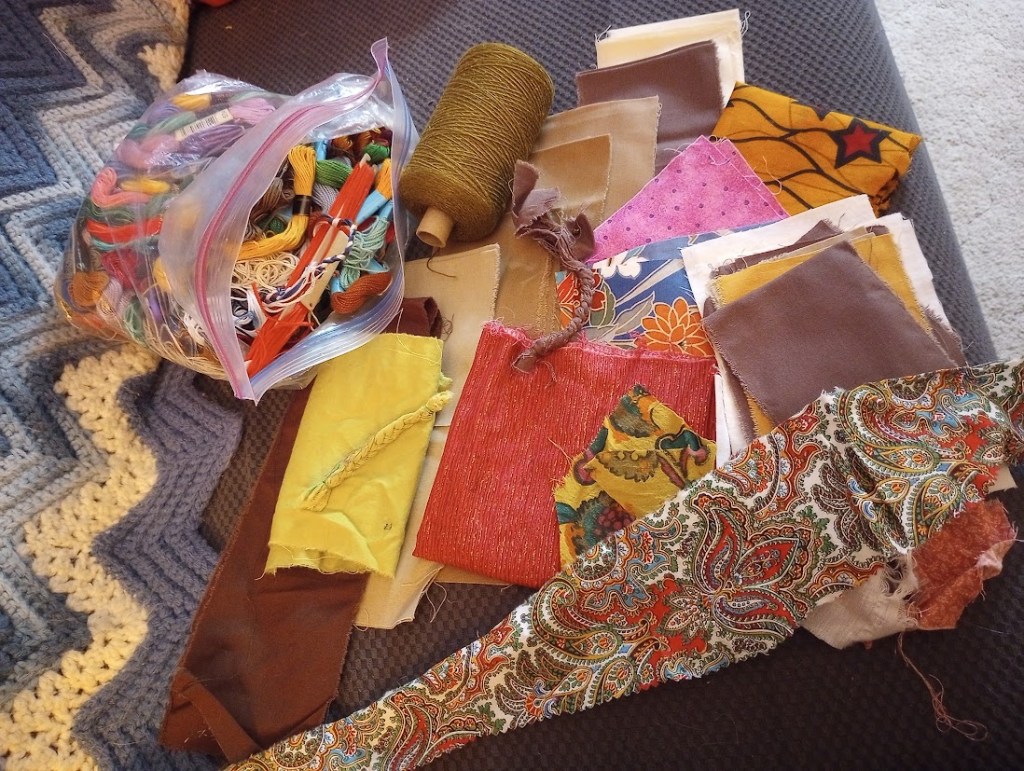
My aim for #The100DayProject is to explore the spaces between what is “book” and “not/book.” I aim to make some traditional (though whimsical) books in the form of pages between covers, and some boxes, baskets, vessels of words and images, photographs, to expand the definition of what a book is, and explore how it may be used. . .

Can I create one book a day for 100 days? Perhaps I will have some days when I record the process of making one book over several days. I cannot let this work interfere with my daily work, so I give myself permission to make quick little zines on busy days, to call anything a book, and to create junk.

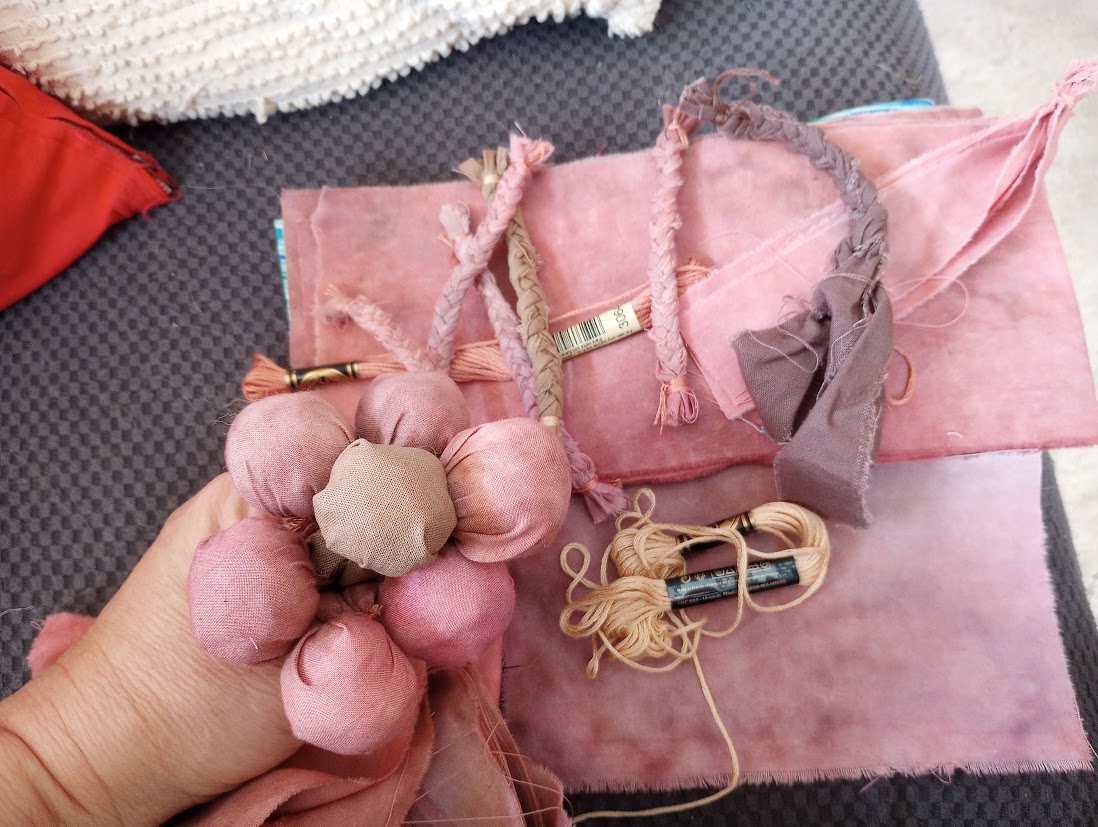
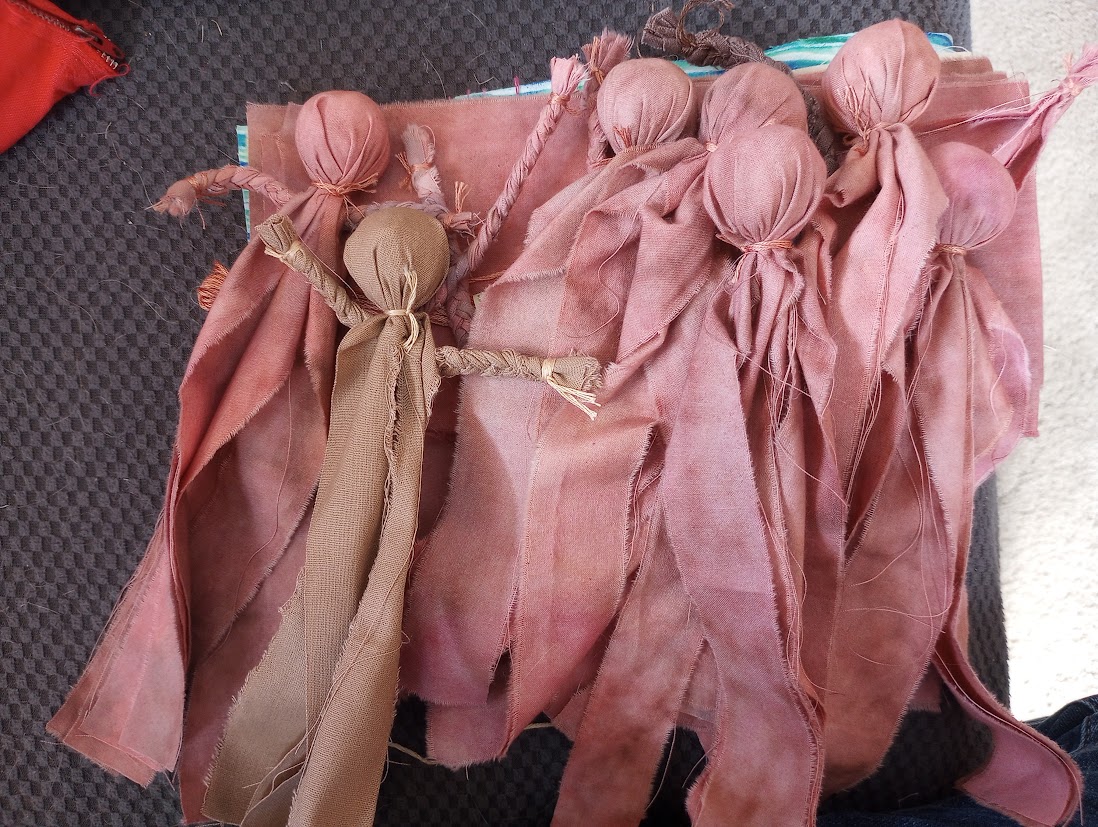
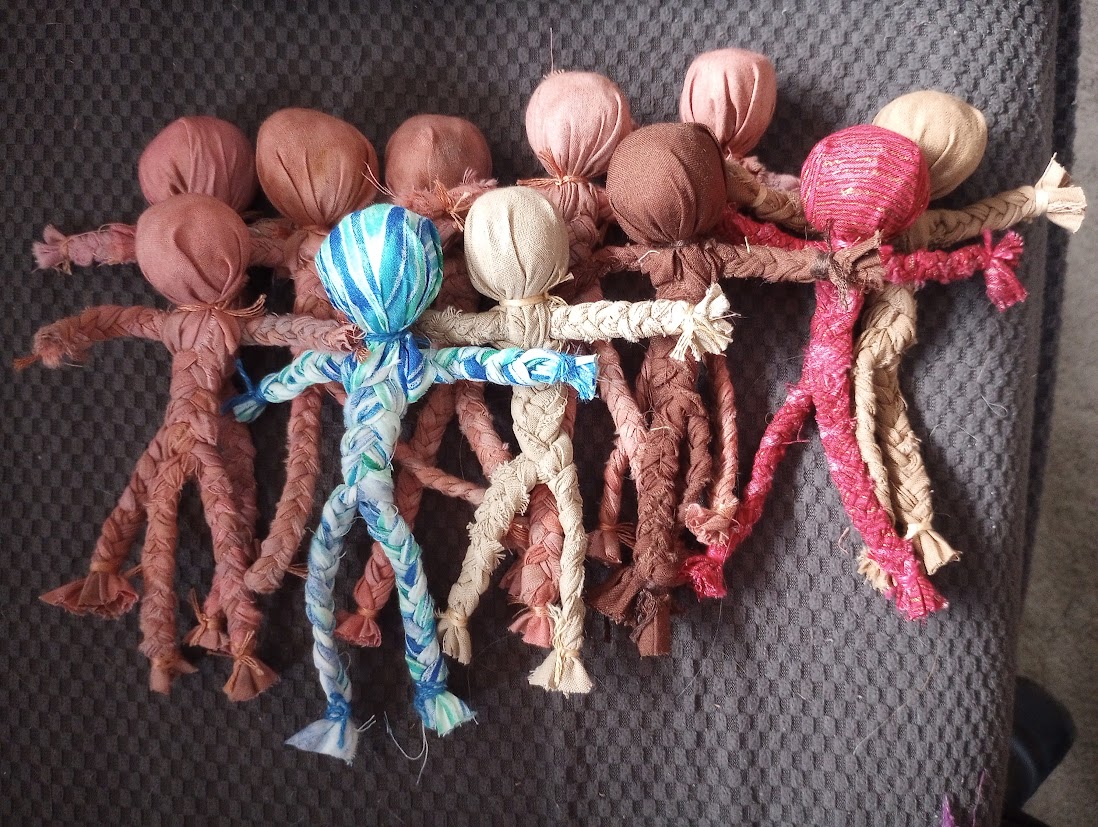
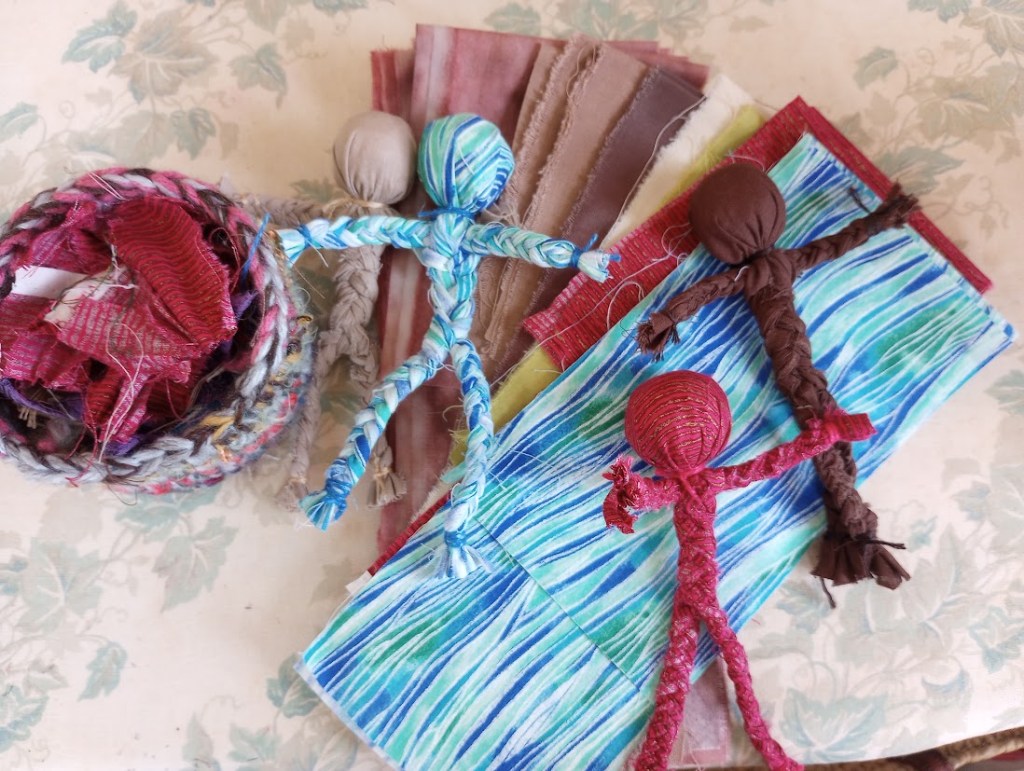
I will make a bōchord (library in the old English), a BOOK HOARD, a library of sorts.

bōc as Vessel
by Beth Weaver-Kreider

The leaves of the beech
quiver in the winter wind,
rustling whispers,
so many stories to tell,

Etymology: bokiz or bece
to bōc, to book.
Bark and leaves, cover and spine,
the line of words across a page.

It is written in the trees, you see,
not just cellulose and pulp,
but in the very essence of the word:
seeds of ideas, leaves, and bark.

Not only Goths but Gauls too
saw forest as library.
Livre from librum, the tender
inner bark of the tree.

When he was a child,
my father carved his name
into the soft grey
of the household beech.
I found the letters there,
the book of his childhood,
the story of branches
shading the quiet balcony,
the pious lives, the quiet joy,
the industrious aunts,
and some words allowed to be spoken
only by the whispering leaves.

Once there was a guardian beech
watching over the river and the valley,
serpent branches
spreading shadows across the hill.
But insects burrowed her barky pages
until the book of her began to die.
We honored her story, you and I,
the best we could; we read
the book of her until the end.

Here in the pages of my palms
I cup this small wooden bowl
you turned from the branch
of the serpent-beech,
a new vessel to contain magic
much as the tree herself
held her secrets, the livre,
the living library,
still here, alive.

Happy 500th Anniversary, Anabaptists!

Art Credit: “In the home of Felix Manz’s mother”/Plain Values Magazine

On the wintry evening of January 21, 1525, as a group of religious resisters gathered in a home in Canton Zurich, Georg Blaurock decided to commit himself to the path that he and his friends had been discussing for some time, the idea that baptism ought to be a choice instead of something done to infants, automatically making the child a member of the state church. Blaurock turned to his friend Conrad Grebel and asked him to baptize him, and the circle proceeded to baptize each friend in turn.

This wasn’t just a spiritual whim. The act of baptizing adults was a statement that they no longer saw their allegiance to the church, which was an arm of the state. They knew that to take this bold step would make them enemies of the state, and being discovered could mean imprisonment, exile, or torture and death. But they went ahead, following the dictates of their consciences.

May we today be as willing to resist Christian Empire and follow our consciences over unjust and harmful laws.