Antidotes

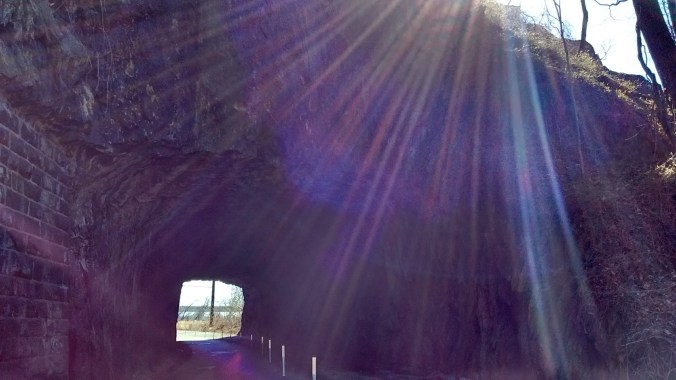
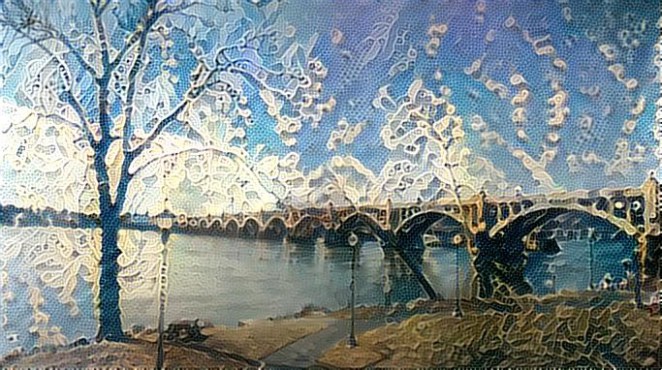
lightreturnYes. It’s the same photo as yesterday, melded with a different filter. I like this one, because it emphasizes the interplay of light and darkness.

In his blog post of last Thursday, Robert Reich lists The 4 Dangerous Signs of Passivity in the Face of Trump Tyranny: Normalizer Syndrome, Outrage Numbness Syndrome, Cynical Syndrome, and Helpless Syndrome.  I’ve been thinking about what the antidotes might be, because other than the Normalizer one, I have fallen victim to the others, and to their sister, Outright Despair Syndrome.

Here are some Antidotes to the Four Dangerous Signs of Passivity:
1. Practice Deliberate Kindness: You don’t have to look far to see the acts and words of meanness that have erupted in the wake of the election. In such a climate, deliberate and pointed acts of kindness are revolutionary, a way to say, “We will not be party to this.”
2. Be an ally: To everyone. When you witness meanness, stand in the gap. Be the one who asks if you can help. Be canny. When you think someone is being bullied, become Present in the situation. Make sure the bullies know they are being watched and held accountable for their behavior. Make it clear that bullying will not be tolerated.
3. Speak Up. Tell the stories of kindness that you witness. Share the stories of meanness, too, and strategize how to better respond the next time.
4. Laugh. A lot. And not just at the cynical things. Find good healthy things that make you laugh. Try to make other people laugh. Share delight.
5. Believe in the Goodness. The last few weeks have made it harder than ever to believe in the basic goodness in people. How could so many people not let the racism and xenophobia and misogyny NOT be a deal-breaker? It’s tempting to make the next sentence be something about how people really are selfish and racist and xenphobic and misogynistic. Maybe some of them are, but most people also have a lot of goodness in them. Even Anne Frank, in hiding from the Nazis, said, “Despite everything, I still believe that people are really good at heart.” If she can see it, maybe I can at least try.
6. Gratitude. It’s been really hard for me lately to do this particular spiritual job. Everything seems the same. I feel as though I have run out of gratitude lately. Still, it’s a muscle I want to keep flexing, especially when it’s hard. And I think it’s a powerful antidote to despair and her passive sisters.

What other Antidotes do you suggest?

Gratitude List:
1. People who help to talk things through.
2. Joyful is the Dark--I think this is my favorite song in church, especially the second verse, about the Raven. Every year we sing it at Advent, and it always comes just I have begun to lose hope that the light will return. The Dark is important. As Jan Richardson says, “Darkness is where Incarnation begins.
3. Antidotes
4. Visualizing the best things
5. Loving and Being Loved. Belovedness. Remember, always, that you are Beloved.

May we walk in Beauty!

Depleted

in-prints

I did not write yesterday. This flu/cold/encroaching darkness has been a little soul-sapping. I’m not suffering, not falling apart. Just extremely weary. The last days before Winter Solstice are always harder. It’s like the cave in the dream–you know that for every step you take inward, you’ll have that many more steps to take to get you out again. And in this one, you don’t get to choose–you just have to keep going into the darkness, one more step each day until you get there. I managed it last year, and the year before that. I will manage the final week this year, too. Somehow this year seems grayer, darker, more menacing. My physical malaise of the past week is just a perfect metaphor for the psychological/spiritual/political malaise of the moment.

Goodness. I should re-iterate that I am not falling apart here–just living the season. I love the lights and the songs and the way the children anticipate the holiday. I love peppermint things and the extra chocolate and lots of citrus. The sky is still beautiful many mornings and lots of evenings. My colors are still rich. People are still working for justice, still letting their hearts break for the pain of others, still trying to make the world a better place. All of that is intact and hopeful. It’s just that I’ve seen the nastiness more closely and clearly this year, too, so the need to find the balance is ever dearer.

I want to get back to writing my story, but it will probably be a few days before my head settles out of the fog of flu and winter. I need to be extra careful with where I place my energies in the coming week or two.

Gratitude List:
1. Full moon in the morning, setting over the ridge.
2. Warm cat on my lap
3. Peppermint things
4. New snuggly dresses
5. Hot lemon tea with honey

May we walk in Beauty!

The Secret Ways of Hi’Story

wolf

Gratitude List:
1. Help with the tale
2. Feeling better every day
3. Getting work done
4. Crusty bread, toasted and buttered
5. Hot chocolate

May we walk in Beauty!

*****
These stories are becoming something of a family project. I read a few at a time to the children, and then they ask what will happen next, and what bits of the story I will reveal next. Or they make suggestions about how to unpack something in the next bit of story. I don’t quite know where all this is going. Perhaps if they come together into some sort of form, I will edit and revise them and try to publish them some day, but for now, it’s a pleasant thread to follow.

I think I will continue to spell it “hi’story,” to emphasize the story piece of it. Because Chinngis Djin tried to erase the Wolf Queens, the era of the Wolf Queens has become legend, and Story is a crucial part of keeping them alive.

While I have chosen to separate my story from the real Samarkand by changing its name a little, and placing it in something of a fantasy realm, I found the story of the sack of the city by Genghis Khan in 1220 to be rather compelling, and so I have kept him in the parallel. Several sources call him the Blue Wolf, and in one source, he is spelled Chinngis Khan.  At this point in the process, I do not intend to do the careful research necessary to make this an academically accurate historical/cultural novel. I just want to follow the thread of this hi’story, and see where it takes me.

The Secret Ways of Hi’Story

The hi’story of Zammarqand seemed to begin with the coming of Chinngis Djin, the Blue Wolf of the North. In the year 1220, the Blue Wolf and his hordes had ridden down the steppes like a mighty wind, conquering the villages and cities in their path, setting up fierce and brutal warriors to control the lands they overthrew. In the city of Zammarqand and it surrounding villages, the subjugation included an overthrow of hi’story. The great library was burned, the temples torn down, and the sacred groves were uprooted and laid waste. The Wolf Mother shrines that lined the inner walls of the city were simply plastered over, along with the dozens of small shops that were built right into the city walls.

The Wolf-Queen, daughter in a line of a thousand queens before her, was deposed and slain publicly in the market square, her children dragged off as slaves with Chinngis Djin’s southward-surging army, never to be seen in Zammarqand again. The peaceful rule of the mothers was ended, and a new day of military might and harsh rule began.

In the days of Leeta the Storymaker, three hundred years after the coming of the Blue Wolf, the governance of the city had settled into a patriarchal rhythm that had a great deal less surface brutality than it had in the first century following the coming of the Blue Wolf, though its deep reality was one of repression of the city’s daughters, and a near-complete erasure of the city’s hi’story prior to the coming of Chinngis Djin.

But hi’story has a way of making itself found. Images of the tender-eyed Wolf Mother proliferated in secret places in the city, for those who had the eyes to see. Grandmothers faithfully remembered the fairy tales and stories, passing them on to daughters and granddaughters. Young women would dream dreams of a great and watchful She-wolf sitting in the gateway to the city. Travelers would come upon wild groves of trees growing in near-perfect circles. And in the city, in houses that were built right up against the city walls, occasionally a plaster wall would give way, and a little room would open up, a small chamber holding a statue of a nursing wolf or a bust of the Wolf Mother.

When she was eight, in her sleeping room at the back of the little shop of Bilhah the Baker, Bilhah’s daughter Leeta one day discovered a crack in the wall. She had been ill for three days, and boredom was beginning to grow greater than the illness that kept her to her room. The child began to pick at the crack. Her mother, pulling a large tray of mooncakes from the ovens, heard a rumble and a crash. Racing back to her daughter’s room, she discovered Leeta unhurt, but covered in plaster dust, standing awed in the entrance to a newly opened chamber into the city wall behind the house.

The walls of the chamber were lined with shelves and each shelf was filled with scrolls, perfectly preserved through the centuries. The plastered walls that had been intended to erase the city’s hi’Story had instead preserved it perfectly for distant generations.  A plaque on one wall read “ElSheba Hi’Storian.”

Gormlek the Mourner had taught his daughter and then his granddaughter to read, a minimally revolutionary act in a city where only boys attended school, and the education of girls was frowned on or scoffed at.  Leeta and her mother wasted no time in reading and cataloging their new treasures.

The Wolves of Zammarqand

Gratitude List:
1. Rays of crows flying out from the trees in front of a magenta sunset cloud
2. The way stories come when you call them
3. Finding center, finding balance
4. Light. There’s always light somewhere.
5. The dark. There’s comfort in the dark when I move past the panic of losing light.

May we walk in Beauty!

zammarqand

I woke in the wee hours this morning with this phrase in my head:
The wolves of Samarkand have greenish eyes.

I looked up Samarkand, thinking I was going to be telling a story of the far north, where snow blows around the city walls, only to discover that Samarkand is a city in Uzbekistan, a much warmer place than my mind had conjured. But there are wolves. In fact, Genghis Khan, who conquered Samarkand in 1220, was known as the Blue Wolf. I don’t think I have it in me to write anything so epic as a Genghis Khan story at this point in time. In fact, not being familiar with the words and ways of Uzbekistan, I will change the spelling of my city to make it more mine, though I think I will keep it in the steppes of a place similar to central Asia.

The Wolves of Zammarqand

The wolves of Zammarqand have greenish eyes. At night, when the sheep and the children of the city have been safely enclosed within the walls, Leeta the Storymaker stands on the high wall overlooking the valley and watches for the green glow of their eyes in the starlight, the shadowy forms moving restlessly in moonlight. She hears their singing from the high ridge across the river.

Legends live long in these hills. Leeta is the Storymaker charged with remembering, with telling the ancient tales. Leeta remembers the hi’Story of the ancient Wolf-Queens, when the strong looked after the weak, the powerful encircled the vulnerable, when the city’s power was determined by the strength of its ability to care for all of its members.

Centuries have passed since the times of the Wolf-Queens, since the good of the pack gave way to might and ferocity, since power over others became the rule. The Wolf is still the city’s symbol, a snarling face with bared teeth and angry eyes. But when Leeta wanders the streets, she can find the ancient face of the mother wolf–eyes watchful, patient–carved into the stones of pillars and temples, painted above doorways. As the city was repeatedly re-built upon itself over centuries, it covertly remembered its mothers in quietly lupine statuary and artwork. Anyone with eyes to see–and half a desire to do so–could find them.

On moonlit nights, Leeta goes by secret ways, out of the city, returning in the hushed moments before dawn, leaving a trail of footprints in the dew.

The daughters of Leeta the hi’Storian all have green eyes.

Leave a Trail

my-heart-edited
Heart of Stone. It doesn’t always mean what the song-writers say it means.

“I want to be a mermaid. I’m half-mermaid already. The human half.”  ~~my friend Liza

“I am always aware, when I am trailing an idea–it may be a god in disguise.”  ~~Dr. Martin Shaw, Westcountry School of Myth

I have been thinking of shape-shifting lately, and of myth, and of magic. I have been pondering art and poetry and activism. Pondering hysteria and alarm, contemplation and calm. I have been considering how we can leave a trail for our children and grandchildren, so that when the people of the future look back upon us, they will be able to see the webs of resistance that we created against the tides of hate and insult and discrimination and injustice.

heartstone

She appeared at dawn, her skin shining in the water, the color of the sun rising over the ridge, a tangerine carp-fish large as my thigh, her head breaking the surface for a hush of a moment. Bubbles broke the surface. Fish and womanfish, she spoke: “Leave a trail for them to follow.” And she was gone in a whisk of orange fin, water roiling behind her, the tiny sunfish and polliwogs scattering to the shallows.

A glinting of sunlight shafted through maples, and the air around the pond’s edge filled with sudden electricity. The pond waters boiled forth and a golden bird erupted from the surface. Sunlight lanced and ricocheted through the glade, and I lost the trail of shining feathers in the glare.

The surface of the pond became a still and silent mirror once again, a capricious breeze skuthered a cloud across the sun’s face, and a single golden feather floated lazily out of the hole of sky between treetops.

Later, I climbed the hill to the high fields, pausing to search the pathway for shining quartzite, or the gaze into the blue sky for signs of the bird. Reaching for a shining stone in the path, my fingers found a silky feather, one side golden, one side blue. My ears pricked at a whistle and a calling over the crest of the hill. I topped the ridge, and the golden bird fluttered out of the trees to earth before me. “Leave a trail,” she called. “Something for them to follow.”

Again, she was gone, this time a whisk of a tail into grasses and brambles, ginger-furred fox, fleetfoot. A phantom. Eyes could not avail, but for slight shimmering movements ahead in the meadow, yet scent drew me onward to follow her trail. Down the steep hill of the orchard she led me, up over the hill to the field of the winds.

Two trees stand at the field edge, one tall and graceful, losing its last leaves in the autumn wind, the other broken and twisted, dead for long years. The trees of life and death. Again the sun was shining, a shaft glowed between the trees, and for one brief moment I saw the pointed nose of the fox, and heard one last time, “Leave a trail for others to follow.”

stonehear

Gratitude List:
1. The annual tree-hunt at McPherson’s Tree Farm. Setting up and decorating for the holidays.
2. Exploring the cycle of the coming year with a dear friend, an old soul with a young heart.
3. These webs–sometimes I read or hear a thing that resonates with what has been happening in my head, and suddenly, I see the webs of the idea everywhere. Mindweb synchronicity.
4. I really like our new neighbors.
5. Saturday evening games of Sorry and Farkle.

May we walk in Beauty!

Spirit Animal: Hyena

hyena1

Today’s poetry prompt is to write a Spirit Animal Poem.  I have spent some time over the years thinking about my connections to certain animals. Hyena is only one of many in my meditations, but she is perhaps rarely spoken of as a spirit animal. It’s time she gets her due:

Hyena
by Beth Weaver-Kreider

Elusive as mist I slip
through the village
at midnight.

Eyes moon-bright,
I lope in the shadows
down the starry path
toward the river.

My night-song will wake you
with a tingle in your spine:
a bark, a laugh, a warning.

I defend your door from danger,
standing at the gates,
in the liminal spaces
between the village of your heart
and the river of your living.

Listen for the padding of my paws
in the darkness outside your window.
Watch for my shadow
to cross the moonlight
in your doorway.

Gratitude List:
1. The way a line of mist hung low over the River on our way home from school this afternoon.
2. Chocolate. I’m so glad the gods decided to share their food. I know dark chocolate is supposed to be the best, but I am really savoring Equal Exchange’s milk chocolate right now.
3. On All Souls Day, my blood ancestors, who put their lives and homes on the line for what they believed to be right.
4. The ancestors of this land where we live and walk and farm. The souls who hunted here, who traveled through, who may have lived on these hills.
5. The ones we’ve loved and lost, who’ve gone on before us.  May their memories bring comfort. May the stones of grief we carry turn light as bright and shining leaves.

May we walk in Beauty!

I Come, I Go

floerstones
A quick trick rock stack.

For the month of November, I have decided to move my writing time to the time before bed. I will use my more wakeful mornings for the tasks of grading, use my more reflective evenings for writing and gratitude lists, and use the whole day to consider the poetry prompts at Robert Lee Brewer’s blog for the Writer’s Digest.

Today’s prompt is to write either a come or a go poem, or both.  Here’s my attempt, trying to get at some of the tension I feel when overwhelmed by lots of work, and unable to give the rest of my life the attention it requires. Composed in the shower.

I go, I come.
I’m gone, then home.

I’m home, My Dear!
Not there, not here.

My restless soul
is everywhere.

I try to rhyme.
The words won’t come.
There isn’t time.
My brain is numb.

I want to stay.
I want to roam.

I come, I’m gone.
I go, I’m home.

Gratitude List:
1. All the colors of the maples. The fires of autumn.
2. Shifting habits and rhythms and rituals. Changing it up to shake it up.
3. That sandalwood soap, so richly-scented and lathery and heartening.
4. Blessings. The real kind that people pass to each other.
5. Clear water from the spring, with lemon and lime.

May we walk in Beauty!

All Saints Day

imag2208
Experimenting: I took this with my phone, through a magnifying glass.

All Saints Day is dawning. Every year, I take this day to consider the people who inspire me, whose lives have given me the courage and determination to live my own life with more integrity and compassion and hope.  I don’t usually put family members and close friends on the list, because they are sort of a given. But I don’t stick to the Catholic list of saints either, though many of the saints that I carry around with myself as models and examples of reflective life are Catholic saints.

These are only five of my saints–this day’s saints. It feels odd to write the list and not include Harriet Tubman or Hildegarde of Bingen or Julian of Norwich–they’ve been on the lists before. Off the top of my head, and from the center of my heart, here is this year’s list:

Gratitude List:
1. The Water Protectors. This year, the people who stand in North Dakota to protest the pipeline that would run through their sacred land and under their sacred waters are some of my greatest inspiration. Their example of peaceful, prayerful protest encourages me to walk with justice.
2. Rachel Carson, biologist and author of Silent Spring, because she reminds me to watch and listen and draw conclusions, and to to be afraid to speak up.
3. Mary Oliver, because I know that whenever I feel lost within myself, I can turn to her poems and find my way through the forest. Because she teaches me to pay attention.
4. St. Benedict, because he reminds me of the importance of order and rhythm in my life, of the power of radical hospitality, of the need to stay fresh–always beginning again.
5. Maya Angelou, because of her incredible strength and her enormous heart.

May we walk in Beauty!

The Doorway of the Dark

young

Now we enter the doorway of the dark, step across the threshold of the year into the dreaming time, the time of release and letting go, the time of journeying to the underworld.

In spiritual and community traditions across the globe, this is the season of remembering, of bringing to mind the ones we have loved who are no longer with us. It is a time to hold to our griefs close to our hearts, and to release them to the winds, like leaves. Some say that these are the days when the veil between worlds is thin, when our connection to those we’ve loved and lost may we stronger, more real.

Yesterday in my church, this took the form of a ritual of memory and grief. We came together and we spoke of loss, and we remembered together. We lit candles and we heard story and we sang.

For the past couple weeks, the robins having been settling in at the dusk each evening here in the hollow. There’s a wild chattering in the treetops, and the wingfolk draw a complex web of lines across the hollow, sailing short distances from tree to tree, tree to tree. It’s like a playground full of excitable children.

What would our webs look like, were they all made visible? Connecting point to connecting point–what lines are drawn between ourselves and those who have gone before, between ourselves and others in the world today?

I draw a line between myself and my first immigrant ancestors, the Weavers leaving persecution in Germany and settling on farms in the Weaverland Valley, invited to grow crops and flourish in this good soil, the Schlabachs making a similar move to Ohio’s fertile plains. What did they know of the ones who had farmed the land before them?

I draw a line between myself and the Water Protectors on the Dakota plains, from the Susquehanna, river of my heart, to the Missouri, whose waters are endangered by the black oil snake that approaches nearer with every passing day. I draw the line to their ancestors, the First People on these lands. This line travels through broken treaties, through colonial suppression, through Wounded Knee, through Little Big Horn. Their work today looks oh-so-frighteningly similar.

What does it mean to come from a persecuted people? To identify as the descendant of those who were forced to leave their homeland in search of safety? That is the story I live by.

What does it mean that those very travelers, those refugee wanderers seeking safety and freedom to baptize as they believed–what does it mean that they settled land where others had lived and hunted and wandered?  Did they have words or concepts to explain Manifest Destiny, Doctrine of Discovery?

Today as I stand on this threshold of the season’s darkness, I will remember back before my memory. I will hold the connection between myself and those hopeful refugees from the pain and trial of the old world to the new. I will not excuse or explain away their settlement of fertile valleys, their claim of land which had once been free.  I will neither take one the shame nor dismiss it. I am their distant daughter, as the ones who stand for Water in the Dakotas are the distant children of those who moved across these lands, belonging to the land rather than claiming it for themselves.  Today we draw new lines. We make new patterns, new webs firmly anchored to the old ones. We wing our way into the dusk, like those robins, connecting point to point, idea to idea, memory to memory, grief to grief, until we have a web that will hold us as we move into the season that approaches.

Gratitude List:
1. Tears of joy and relief
2. Tears of sorrow and release
3. How the trees are letting go
4. Circles and webs of caring
5. Community rituals

May we walk in Beauty!

A Little Confession

new-doll
Yesterday’s dollie as interpreted by the Dreamscope app.

Here’s a little confession: I haven’t been such a good monk-in-the-world lately. I keep letting my equilibrium get thrown. I tell myself and others that it’s the election. I tell us that it is because I am so terribly busy. I tell us that it is the season for a different sort of looking at the world.

I still write my gratitude lists, and I still try to pay attention, but I have let myself sharpen up the edges. I know, I know. No one is perfect. No one can be balanced and thoughtful all the time. Monks get angry, too. Sure, I will give myself a break. Still, I think the whole point of living this examined life is to examine–non-judgmentally–how we have been living and responding to the world.

Perhaps it was making that little corn dollie that reminded me. I have walked quietly away from my intuitive self. Finding a moment to make some art, to let my hands and heart lead the way into a process, has given me a chance to bring myself back into reflection.

Here’s to St. Benedict and beginning again. Always. Every day. Every morning.

Gratitude List:
1. One of my former teachers was walking the halls yesterday–Janet Gehman, who lit the literature fires for me. It was a treasure to see her and to invite her into my classroom, to tell my students that this was MY teacher.
2. Macaroni and cheese. Comfort food.
3. Warm layers on a blustery day.
4. Long weekend coming.
5. Small person on my lap.

May we walk in Beauty!