Today’s prompts were massive and road. I was watching the clouds on the way to do one final clean-up task in my classroom at school, and this poem spilled out.
Thunder and Her Children by Beth Weaver-Kreider
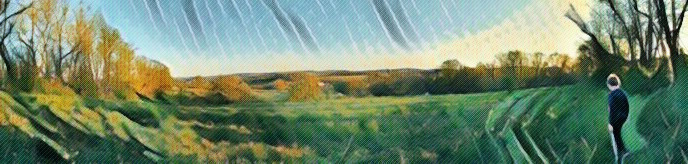
When Thunder’s Children walked the cloud-road over the rim of the world, massive mountains arched their backs to touch the children’s feet.
When the children raced each other back up the ribbons of sky into the arms of their mother, the earth sighed into hollows and water pooled in the valleys.
WhenThunder sang her sleepy brood to sleep, trees sprang from the hillsides, raising their joyful branches, shaking their leafy crowns and humming with her song.
And while the children slept, Thunder curled herself around them, and dreamed meadows into being, and birds flying, and small animals burrowing into the earth, and all that is Became while Thunder rested.
Today’s prompts are Noodle, and Change. I couldn’t figure out how to add the noodle. Maybe the poem itself is something if a noodle. . . .
Change Surreal by Beth Weaver-Kreider
Step by step, prepare. Spare a stare, don’t glare but glance, this instance, an instrument of intent, bent on being, on seeing, seeming seamless, streaming, steeling steady, ready for reasons, for seasons. The horizon not so horrible, not the terrible terminal, only an internal intersection, new direction derelict. Any edict an educated editorial, tutorial surreal. Real deal delivered.
Today’s prompts were to write a poem that includes cloud words, and to do a re-mix of a poem from the month. I realized I have sort of been writing one long poem all month. Oy. I did a bit of a mash-up, and it holds together rather startlingly.
Re-Mix, With Clouds by Beth Weaver-Kreider
It seems that there is nothing now that is not this: the spiral unravels the lions of jazz are dying the World Snake sheds her skin the tides turn In the burning rooms of time, we wait for the new world to appear.
Our feet take the rocky trail away from the village to follow where blossoms may lead. All we have seen before is somehow new now, more verdant. Fronds unfurl where dragonflies hover above, large as dragons. But I know of two who nearly lost the trail, wandering far into the shadows.
Coyote is a fixture in the myth of this lonely landscape. A howl echoes within the embrace of wildness and winsome, where we bump against our own internal resolve
Plague Doctor! Plague Doctor! Whither shall we wander? Only to the garden gate—no further. The egg and the seed are the medicine. Grief is the egg of the moment, just before you hear your name.
We’re trapped in the strata, the cumulus, the haloed nimbus, hallowed cumulostratus, beneath the blue robes of the Beloved, draped over us like a veil, beneath Fortune’s shifting skirts: like winter, she will come again, trailing a net behind her to rescue the words she has lost. Could she have stayed within the boundaries? She has folded her heart into an origami bird, ready for flying.
We must relinquish our control. This now is a narrowing funnel, thinning the potent possibilities to this stretched limbo of waiting. I listen for your trilling whistle, clear and bright.
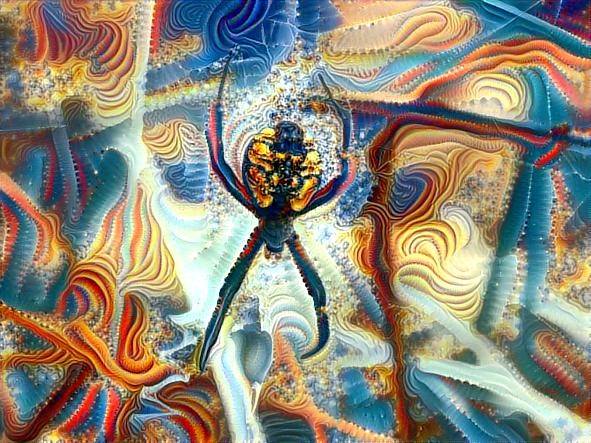
In the ending was Spider: What has once been will be again. Close the door on your way out.
Tendrils of thought whisper through ether, through thin air, through wires which fire like synapses, brain waves. The medium notices, raises awareness, opens her notebook, types in a rhythm, a patter of notes, of letters on keyboards. She knows the byways of platforms and scaffolds in digital apps and media, and touches the stories of others through digital narratives, traces the pain she reads back to its sources. She wanders through doorways of future possibilities, opens new pathways for potential. She sees you through the mirror of your screen and knows the appropriate application to help you find your direction.
The prompts today were Quirk and Earth–lovely little sound play there! This happened while I was out walking:
Sentience by Beth Weaver-Kreider
What is this being human, but the quirk of birth into this form of organism here on Earth? Are you more person than the plants who daily give you grateful breath, receiving yours in sacred reciprocity? Am I more being than the stones made of the minerals that map my own bones and blood?
What is sentience, but knowing oneself within one’s place? And that flat rock up on the hillside does it with much more grace than either you or I. Rocks and rivers, ibises and spiders, fish and fox— all inhabit their beingness with as much instinct and awareness as you or I could hope to muster.
What is the human drive to settle always at the top, to strive for dominance, defining us as something always more complete, more comprehensive, more masterfully apt, than ape or aster?
Hasn’t this been the root of our disaster, the lines we draw between ourselves and the living, breathing world around us? Thus we place ourselves outside of place, when we refuse to acknowledge other knowing, other forms of growing into personhood and being.
Better we should recognize the neighborhood of beings who surround us, each with their own song and story, each with their own wisdom, if we knew only how to notice.
Today’s prompts were Galaxy (or galaxy-type things) and love/anti-love:
Sometimes by Beth Weaver-Kreider
Sometimes when I say I am seeking the Beloved, it is your wise eyes I see, your expectant face, your eloquent and tender hands.
Sometimes when I listen for the humming of the stars, it’s your voice my ears remember, your quiet murmur, your trilling whistle, clear and bright.
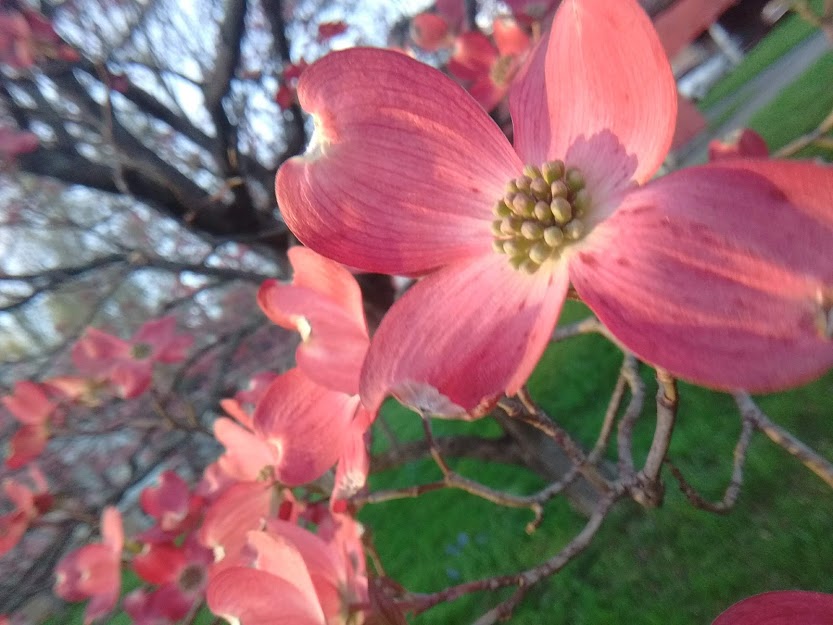
Sometimes when I pause in the middle of the trail and catch the aroma of lilac or hyacinth sifting into the clearing, it’s your scent I’m sensing, and I am held in your arms as surely as if you were here.
In honor of Earth Day tomorrow, I have recorded Jane Yolen’s “Earth Day.”
Isolation and the Seven Sins by Beth Weaver-Kreider
The first one is coughing, right? Or. . .coughing without covering your mouth, or coughing into your hand instead of your elbow. Does sneezing belong here, too, or is it just a matter of degree: an uncovered cough goes ten feet while a sneeze blasts twenty-seven.
The second is touching your face. Don’t touch your face! Don’t scratch your nose! Don’t rub your eyes!
Then there’s forgetting to wash your hands, or not using soap, or not singing Happy Birthday twice through while you wash. I’m having a whole lot of birthdays lately.
Getting too close to people who don’t live in your house, that’s the fourth one— sidling up to strangers in stores, saying, “Is this the line?” while they edge away from you as politely as they dare.
Three more? Okay. Here’s one: Not wearing a mask in public. Don’t go to the bank unless you look you’re going to rob the bank. You’ve got to learn how to smile with your eyes.
Number six is definitely hoarding. Nobody needs that much toilet paper, hon.
And the seventh. Sloth? Is that one? I’m pretty sure I heard that one, but maybe that’s a deadly sin. Aren’t these deadly sins, too?
One of today’s Prompts is Month. The other is to use these six words in a sentence: bump, embrace, fixture, howl, lonely, resolve (all created by Shakespeare).
Song for a New Way a sestina of Shakespearean words by Beth Weaver-Kreider
Coyote is something of a fixture in the myth of the landscape, a lonely figure trotting atop the ridge. A howl echoes into the hollow, an embrace of wildness and winsome, where we bump against our own internal resolve
to enter wildness, our stout resolve to live less burdened by the fixtures of modern existence, in the bump and whirl of the rat race, this lonely place in the crowd. Today we embrace our freedom from form with a wild howl.
Set free from the commute, the howl of the markets that weakened our resolve to fight the forces that tempted us to embrace acquisition and consumerism, that fixture of capitalism that is the root of our lonely longing for stuff that stops us, a bump
on the road to enlightenment. We bump into the stuff, the stuff, the stuff. We howl with the frustration, knowing we’d be less lonely if we could only find our inner resolve and let our inner existence be the fixture that would lead us to a stronger embrace
of what matters. For example, we would embrace kindness and empathy, the places where we bump against each other would be the fixture of our ideals. We’d learn to how to howl our deep longings and we would resolve to make each other less lonely.
Only in the search for connection will our lonely lust for power be ended. When we embrace all beings as siblings, and resolve to avoid the stumble and bump of collecting more trophies. The howl of lost enchantment no longer a fixture.
We can resolve that we will no longer be lonely. The fixture of our new story will be the embrace. We’ll bump fists and hips, and howl.
Today’s poem prompts were “train” and “message.” I was wandering through the long grasses of the long A sound in train, and ended up at the Amazingville Station. One day, years ago, when the poetry was so heady and giddy I could hardly keep from floating away, someone wrote on someone else’s poem, “You are sleeping with everyone in Amazingville,” and Mara wrote a poem beginning with that phrase. I have wanted so terribly to travel again to Amazingville, so I figured out today that perhaps you need to take the train.
Someone in one of my groups said he likes this poem, but he doesn’t really understand it, which it exactly how I feel, too. I responded with this, and maybe it makes a little more sense to me now: “I’m not sure I understand it, actually. My seven and seven is the final two lines that turn the haiku to tanka, so the haiku is perhaps a summoning spell, a way to bring me back to Amazingville, too, and I will finish the incantation with my two lines of sevens.”
Here’s the weirdness, and then a video of last year’s Easter Magdalene poem:
Taking the Train to Amazingville by Beth Weaver-Kreider
When you get off the train at Amazingville Station, send me a message that you have arrived.
Make it a five seven five, American haiku, and let the cutting word be one that sets me free.
Then bring me around with the sweet music, the alluring scent of your season word.
Call me home with haiku and I’ll come to you on the next train, with my seven and seven.





 Mockingbird Chronicles