Sweetness

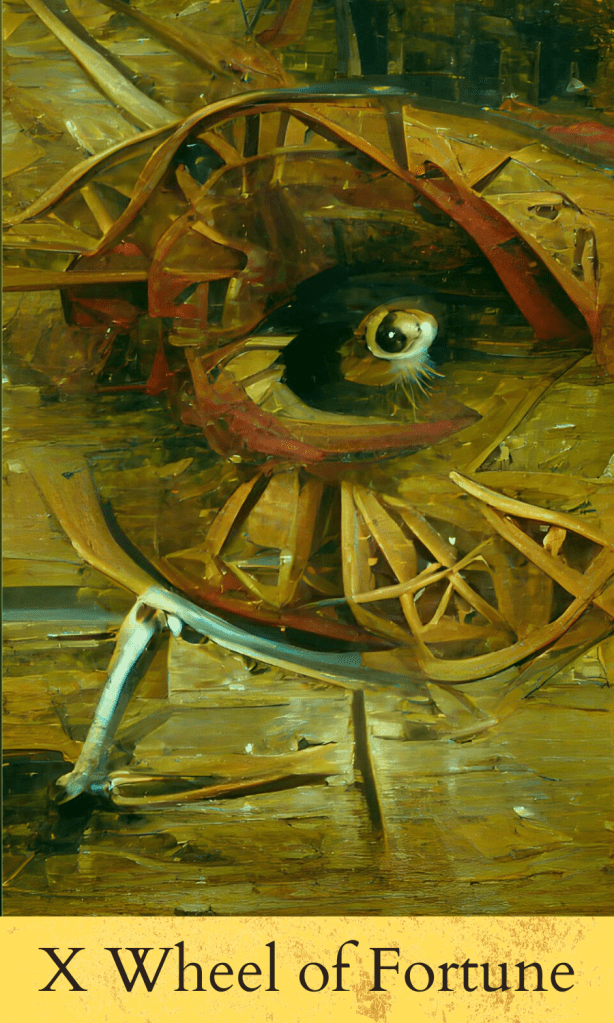
Day two of Poem a Day! Prompt (Sweetness) from Robert Lee Brewer at Writers Digest, and art from my own collaboration with Wombo Dream AI.

Birth of a Poem

A poem is not born
until it hits the air,
until you’ve tasted
its sugar on your tongue,
shaped it with your lips,
felt the hiss and slither
as the words meet the soft,
sweet curl of your ears,
those precious shells,
which yearn for music,
which long for golden truth.


Gratitude List for All Souls:
1. Lizzie and Lura and Marian and Mammy
2. Wangari and Rachel
3. Harriet and Sojourner and Dorothy
4. The Witches and Rebels and Heretics
5. Annwyn and Nathan and Merle and Carl
. . .and all those bright spirits gathered around
our remembering hearts.
May we walk in Bright Memory.


“No warmth, no cheerfulness, no healthful ease,
No comfortable feel in any member—
No shade, no shine, no butterflies, no bees,
No fruits, no flowers, no leaves, no birds—
November!”
—Thomas Hood, No!


“I could not be a poet without the natural world. Someone else could. But not me. For me the door to the woods is the door to the temple.” —Mary Oliver


“Nourish beginnings, let us nourish beginnings. Not all things are blest, but the seeds of all things are blest. The blessing is in the seed.” —Muriel Rukeyser


“We discover the Earth in the depths of our being through participation, not through isolation or exploitation. We are most ourselves when we are most intimate with the rivers and mountains and woodlands, with the sun and the moon and the stars in the heavens… We belong here. Our home is here. The excitement and fulfillment of our lives is here… Just as we are fulfilled in our communion with the larger community to which we belong, so too the universe itself and every being in the universe is fulfilled in us.” —Thomas Berry, The Sacred Universe


Words of Howard Zinn:
“We don’t have to engage in grand, heroic actions to participate in the process of change. Small acts, when multiplied by millions of people, can transform the world. Even when we don’t ‘win,’ there is fun and fulfillment in the fact that we have been involved, with other good people, in something worthwhile. We need hope.

“An optimist isn’t necessarily a blithe, slightly sappy whistler in the dark of our time. To be hopeful in bad times is not just foolishly romantic. It is based on the fact that human history is a history not only of cruelty, but also of compassion, sacrifice, courage, kindness. What we choose to emphasize in this complex history will determine our lives. If we see only the worst, it destroys our capacity to do something.

“If we remember those times and places—and there are so many—where people have behaved magnificently, this gives us the energy to act, and at least the possibility of sending this spinning top of a world in a different direction. And if we do act, in however small a way, we don’t have to wait for some grand utopian future. The future is an infinite succession of presents, and to live now as we think human beings should live, in defiance of all that is bad around us, is itself a marvelous victory.”


Bill Maher:
“Christians, I know, I’m sorry; I know you hate this and you want to square this circle, but you can’t. I’m not even judging you. I’m just saying, logically, if you ignore every single thing Jesus commanded you to do, you’re not a Christian. You’re just auditing. You’re not Christ’s followers. You’re just fans.”


“Come, come, whoever you are. Wanderer, worshiper, lover of leaving. It doesn’t matter. Ours is not a caravan of despair. Come, even if you have broken your vows a thousand times. Come, yet again, come, come.” ―Jelaluddin Rumi

Beginnings and Endings

It’s November! Time for a Poem a Day! I am following Robert Lee Brewer’s Prompts over at The Writer’s Digest. Today, he suggests a Beginnings/Endings poem (or one or the other). The art is a collaboration between me and the Wombo Dream AI.

Another Month to Feed
by Beth Weaver-Kreider

Perhaps it’s always rabbits
at the mouth of the month
because beginnings come
so often timidly, twitching noses
in the shadows, marking a small
moment in the never-ending
spiral of time, one birth in
an incandescent infinity
of new beginnings, yet
another meal for the wolf
of the month to come.


Gratitude List:
1. Poetry prompts
2. The two children who held my hands in the woods yesterday.
3. Social/emotional learning and teaching
4. Finding fresh purpose
5. Miracles
May we walk, oh so tenderly, in Beauty!


“I am passionate about everything in my life, first and foremost, passionate about ideas. And that’s a dangerous person to be in this society, not just because I’m a woman, but because it’s such a fundamentally anti-intellectual, anti-critical thinking society.” —bell hooks


“Bless the light and the darkness, the love and the fear.” —Rabbi Olivier BenHaim


“It doesn’t matter who you are or what you look like, so long as somebody loves you.” —Roald Dahl, The Witches


“For women who are tied to the moon, love alone is not enough. We insist each day wrap its knuckles through our heart strings and pull. The lows, the joy, the poetry. We dance at the edge of a cliff. You have fallen off. So it goes. You will climb up again.” —Anais Nin


“The creation of a thousand forests is in one acorn.” —Ralph Waldo Emerson


“In the morning I went out to pick dandelions and was drawn to the Echinacea patch where I found a honeybee clinging to one of the pink flowers. She seemed in distress, confused and weak. She kept falling off the flower and then catching herself in midair and flying dizzily back. She kept trying to get back to work, to collect her pollen and nectar to take home to the hive to make honey but she was getting weaker and weaker and then she fell into my hand. I knew she would never make it back to her hive. For the next half hour she rested in my palm, her life slowly ebbing away as a thunderstorm started to brew. I sat on the earth waiting for death with her. The lightning flashed over the mountains, a family of turkeys slowly walked the ridge, a wild dog keyed into what was happening circled past us. The trees appeared startlingly vivid and conscious as the wind blew up and the thunder cracked and then her death was finished. She was gone forever. But in her going she taught me to take every moment as my last flower, do what I could and make something sweet of it.” —Layne Redmond


“Let me seek, then, the gift of silence, and poverty, and solitude, where everything I touch is turned into prayer: where the sky is my prayer, the birds are my prayer, the wind in the trees is my prayer, for God is all in all.” —Thomas Merton


“Beware; for I am fearless, and therefore powerful.” —Mary Wollstonecraft Shelley, author of Frankenstein


Audre Lorde:
“For women, then, poetry is not a luxury. It is a vital necessity of our existence. It forms the quality of the light within which we predicate our hopes and dreams toward survival and change, first made into language, then into idea, then into more tangible action.
.
Poetry is the way we help give name to the nameless so it can be thought. The farthest external horizons of our hopes and fears are cobbled by our poems, carved from the rock experiences of our daily lives.
.
As they become known and accepted to ourselves, our feelings, and the honest exploration of them, become sanctuaries and fortresses and spawning grounds for the most radical and daring of ideas, the house of difference so necessary to change and the conceptualization of any meaningful action. Right now, I could name at least ten ideas I would have once found intolerable or incomprehensible and frightening, except as they came after dreams and poems. This is not idle fantasy, but the true meaning of “it feels right to me.” We can train ourselves to respect our feelings, and to discipline (transpose) them into a language that matches those feelings so they can be shared. And where that language does not yet exist, it is our poetry which helps to fashion it. Poetry is not only dream or vision, it is the skeleton architecture of our lives.”


“Wake at dawn with a winged heart and give thanks for another day of loving.” —Khalil Gibran

Justice

Since I began this project of creating a tarot deck cooperatively with an online AI generator, the AI itself has evolved so rapidly, and the creators of the generator itself have added so many new features that within the six months since I began, the initial artwork is beginning to feel clunky and old-fashioned. I realize that the work I did to create it was a helpful process, not only in terms of my ideas about the the inner journey and about the tarot, but also in terms of my sense of the artistic and poetic process of cooperating with an AI. I find myself wanting to begin again. Maybe this process will never have an end product, but will simply be a part of my own inner growth. Perhaps I will end up instead creating an oracle deck with the characters that inhabit my own inner meditations: The Psychopomp, the Witch, The Dreamer-Mother, the Two Elves, The Gnomes of Beautiful Vision and Music, The Companion, The Golden One, Death, The Bees, Eagle, Six Crows, The Dancing Fox, Running Deer, The Golden-Crowned Tree, The Lady of the Labyrinth, The Darkness. . . Or perhaps, even, they will merge in some inexplicable way.

So here, halfway through the Major Arcana of the Tarot, I will finish this series for now, with Justice.

What does Justice mean to you? Is it the blind goddess holding her scales and a sword? I find it really interesting that Cupid and Justice are both portrayed in blindfolds: Love and Justice–an odd cosmic balance there.

Is Justice a balance of vengeance? Eye for eye? You hurt me, so I get to extract my pound of flesh from your stony heart.

Is it about karma? The bad stuff we do will come back to haunt us, so we can all relax, knowing that our enemies will eventually get their cosmic comeuppance? I know karma is a lot more complicated and nuanced than that, but I think we sometimes reduce it to this little dance of joy over cosmic rebalancing, celebrating the downfall of the evil-doer.

I want the people who hurt people to be held accountable. I want the ones who are injured and harmed to be seen and heard and listened to, to receive apology or remuneration or recompense for their injury. I don’t need an eye for an eye, but I need the harm to stop. I need the tools of the narrative to be wrested from the hands of the ones who do the injury and handed to the ones who were injured.

Restorative Justice has become a bit of a catchword in institutions these days, especially church-based institutions. When understood and practiced with depth and skill, it’s a wonderful tool for healing and returning to balance, offering a circle of story-telling, where the injured party can speak of their pain and suffering, and the ones who caused harm listen, and take account of what they have done to cause harm. In the process, they, too, get to speak, to tell their own pieces of the experience. We enter restorative justice circles with a recognition that harm has been done, and that healing is possible, but only if we meet ourselves and each other at deep, deep levels of accountability can we hope to repair the breaches in relationships.

Saying that you practice restorative justice, but doing the work half-heartedly or simply to score social points only causes more harm in the long run. Institutions, clubs, churches, and organizations that claim to do restorative justice work but only implement the process when the most powerful members of the group want to exercise controls over less powerful members of the group is an abuse of power and is the antithesis of restorative justice.

The Justice card holds us to keep high moral and ethical codes that include ourselves as well as others. We hold ourselves to the standards we demand of others. We offer others the grace and mercy we would show ourselves. Sounds a little like the Golden Rule.


Tomorrow is November. I am hoping to do a poem a day for the month.


Gratitude List:
1. My compassionate and tender-hearted and fun-loving colleagues. They made Halloween so special and magical and fun for the kids (while also managing to keep things educational).
2. The turning of the wheel. We step into a new season. We can change, metamorphose, transform.
3. Presence. Accompaniment. Companionship.
4. Cats
5. Golden, golden, golden: light and leaves and hearts.
May we walk ever in Beauty!


The wheel turns.
The harvest is in.
The veil parts.
We walk into the dark time.
Dream well.
Bright Blessings.
—Beth WK


“The moon has awoken with the sleep of the sun, the light has been broken; the spell has begun.” —Midgard Morningstar


“A labyrinth is a symbolic journey . . . but it is a map we can really walk on, blurring the difference between map and world.” —Rebecca Solnit


“Turn inward: If you’re asking ‘why’, also ask why ‘why’? If your power is to question, also question the questioner in you.” —Shunya


“Everybody is trying to make their journey till death comfortable. In the process they are missing the moments that can open the door to immortality.” —Shunya


“Walk through the veil of the season.
Carry your own little light into the dark time.
Celebrate the inward spiral.” —Beth WK

The Wheel Turns

“Fortune, good night; smile once more, turn thy wheel.” –King Lear (2.2.169).

How is your fate determined? Are you destined to live a life decided by the vagaries of fate? Or are you, as William Ernest Henley declares in “Invictus,” the master of your fate? The Greeks wrestled mightily with the question in their ancient plays and poems. Do I bring my fate upon me by trying to avoid the fate the gods have ordained and the oracles have declared? Over and over again, humans in the ancient Greek tales, are playthings of the gods, unable to escape their fate, caught more inextricably within Fortune’s Wheel the more they try to escape.

The ancient Greek goddess Tyche (Fortuna to the Romans) was said to spin her Wheel capriciously, setting peasants and paupers in powerful positions, and kings and saints in the mud and the dust. The Wheel is the symbol of that which we cannot control: the accidents and diseases, the privilege we are born with or without, the world events that set the stage for the eras into which we are born.

And yet, this card reminds us, we are never without choices. We may not be able to control the Wheel’s turning, but we control our own responses. We make choices that affect the patterns of our lives within the larger framework of the fate that happens to us. Some people come to the tarot as they come to an oracle: Tell me what is going to happen to me so I can prepare myself for my fate. A healthier approach, and the one suggested by this card, is to use the cards to better understand ourselves so that we can respond in a wise and grounded manner when we seem to be wrenched out of our even keel by changes beyond our control.

In Shakespeare’s Julius Caesar, Cassius, trying to convince Brutus to help him assassinate Caesar, tells him, “The fault, dear Brutus, is not in our stars, but in ourselves that we are underlings.” And later, when the brutal deed is done, and Cassius begins to doubt that they can win the coming battle, Brutus acknowledges the role of fate in their destiny–“There is a tide in the affairs of men”–but urges Cassius again to action, to take that tide at the flood, which will lead them to their fortune, cautioning him that to refuse to take such a tide will lead them to ruin.

Sometimes, the Fool learns in the tarot journey, the wisest path is to be ready for the tide, like a surfer awaiting the perfect wave, to grab fortune as it approaches, and let it carry you to greater heights. And sometimes, it is helpful to sort out your story by remembering that not everything that happens to you is by choice, that you did the best you could with what you had. And mostly, it helps to know yourself well, so you can be equipped to make choices and to respond in healthy ways.

The Wheel of Fortune is one of the central motifs of Shakespeare’s great (greatest, in my opinion) play, The Tragedy of King Lear. As a teenager reading the play, I fell in love with the Fool, perhaps the play’s wisest character. Lear’s Fool seems to disappear out of the play, perhaps to surface in the tarot cards to gently advise us, as he did King Lear: “Let go thy hold when a great wheel runs down a hill,/lest it break thy neck with following it; but the great/one that goes upward, let him draw thee after” (2.4.71-73).


Gratitude List:
1. Cautiously good news on the cancer front for two of my best beloveds
2. The angels
3. The little screech owl who is calling in the dusk
4. These golden, perfect days
5. The ability to choose how to respond
May we walk in Grace and Beauty!


“Love the earth and sun and animals,
Despise riches, give alms to everyone that asks,
Stand up for the stupid and crazy,
Devote your income and labor to others…
Re-examine all you have been told at school or church or in any book;
Dismiss whatever insults your own soul;
And your very flesh shall be a great poem.”
—Walt Whitman


“To love. To be loved. To never forget your own insignificance. To never get used to the unspeakable violence and the vulgar disparity of life around you. To seek joy in the saddest places. To pursue beauty to its lair. To never simplify what is complicated or complicate what is simple. To respect strength, never power. Above all, to watch. To try and understand. To never look away. And never, never, to forget.” ―Arundhati Roy


“Be like a headland: the waves beat against it continuously, but it stands fast and around it the boiling water dies down. “It’s my rotten luck that this has happened to me.” On the contrary, “It’s my good luck that, although this has happened to me, I still feel no distress, since I’m unbruised by the present and unconcerned about the future.” What happened could have happened to anyone, but not everyone could have carried on without letting it distress him. So why regard the incident as a piece of bad luck rather than seeing your avoidance of distress as a piece of good luck?” —Marcus Aurelius

Inviting Your Enemies

I’m not Catholic, but I pray the rosary. I had been intending to learn the prayers and explore the process (very intellectualized, I know), and then my father got very sick. On the weekend that he was receiving a risky treatment simply to try to save his life, I picked up the rosary and my little booklet into which I had scribbled my versions of the rosary prayers, and I learned. In desperation and need of grounding and comfort, I began to say the Aves and the Love Prayer (the Our Father), holding desperately to the beads. When I had no words for the mix of terrible anxiety and holy presence I was feeling, I walked the path of the beads.

Perdita Finn and Clark Strand, in their book The Way of the Rose, speak about holding the beads as holding the hand of The Mother. Comfort and peace and tenderness upwelling in the midst of whatever life is bringing: crisis or joy, or the quotidian rhythms of the day.

Here is my version of the Our Father. It changes every once in a while, as praying it brings me new insights into what I mean when I say the words. I’ve gotten a little wordy on the sign-off, but that’s my own flourish. It feels right to me:

Oh Love, which imbues the cosmos, Holy is thy name.
May thy realm come. May thy will be done,
here on earth as it is in the heavens, and within the sacred circle.
Grant unto us this day what we need to survive,
and lead us ever into right relationship with you and with others and with the all.
Keep us from walking in paths of destruction, and deliver us from evil.
For thine is the Wisdom and the Vision and the Virtue,
the Promise and the Presence and the Peace,
the Glory and the Story and the Song,
both now and forever. Amen.

Lately, when I say the line, “Draw us ever closer into right relationship,” I see in my mind’s eye several of the people who have hurt me. Of course, I mean them when I pray that line–still, they intrude upon my peaceful prayers. Today, when it began to happen, I invited them in. I had also been thinking about how this is the day of the Archangels, the Feast of Michael, Gabriel, and Raphael. And so, instead of simply holding the idea of being drawn into right relationship with them, I asked the archangels to invite their angels to witness my prayers.

It feels really weird to write that, but it felt so right in the moment, and continues to feel right. My rosary prayers also became more lively, more awake, more focused. I felt safe (who doesn’t feel safe when surrounded by angels and Mother Mary?). It feels like the line in the Psalm: “Thou preparest a table before me in the presence of mine enemies.” I’ll admit, when I got to “Keep us from walking the paths of destruction,” I found myself talking very directly to their angels, and “Deliver us from evil” has a new sort of ring when you say it in presence of the angels of people who have harmed you.

I don’t know whether there will ever be reconciliations and restorations on this plane. I’ve walked away from that door. I won’t wait around for that to happen, and making it happen will take a great deal of work on someone else’s part at this point. But I might continue to invite their angels to the table of my prayers.


Gratitude List:
1. Angels
2. Art
3. The rosary
4. Always something new to learn, some new way to deepen
5. Celebrating thirty-two years with my soul-mate. Such a good, good man.
May we be draw ever into right relationships.


“My wish for you is that you continue. Continue to be who you are and how you are, to astonish a mean world with your acts of kindness.” —Maya Angelou


“Sometimes it seems as though the Wildest One (you might call her God, or the Universe, or Love) is actively meddling in the affairs of mortals, like I am given a thing to learn, and then immediately after am handed the situations necessary for practice and integration.” —Beth Weaver-Kreider


“You don’t need to attend every argument you are invited to.” —anonymous (possibly Zig Ziglar


“It’s hard to be mad at someone who misses you while you’re asleep.” —Calvin, of Hobbes (Bill Watterson)


i thank You God for most this amazing
day: for the leaping greenly spirits of trees
and a blue dream of sky;and for everything
which is natural which is infinite which is yes
(i who have died am alive again today,
and this is the sun’s birthday;this is the birth
day of life and love and wings;and of the gay
great happening illimitably earth)
how should tasting touching hearing seeing
breathing any– lifted from the no
of all nothing–human merely being
doubt unimaginable You?
(now the ears of my ears awake and
now the eyes of my eyes are opened)
―e. e. cummings, read by Anne Marie at our wedding on this day in 1990


“To live a creative life,
we must lose our fear of being wrong.”
―Joseph Chilton Pearce


“If music be the food of love, play on.” ―William Shakespeare


“At the still point, there the dance is.” ―T.S. Eliot


“To achieve great things, two things are needed: a plan and not quite enough time.” ―Leonard Bernstein


“To speak about that location from which work emerges, I choose familiar politicized language, old codes, words like ‘struggle, marginality, resistance.’ I choose these words knowing that they are no longer popular or ‘cool’ – hold onto them and the political legacies they evoke and affirm, even as I work to change what they say, to give them renewed and different meaning.
I am located in the margin. I make a definite distinction between that marginality which is imposed by oppressive structures and that marginality one chooses as site of resistance – as location of radical openness and possibility. This site of resistance is continually formed in that segregated culture of opposition that is our critical response to domination. We come to this space through suffering and pain, through struggle. We know struggle to be that which pleasures, delights, and fulfills desire. We are transformed, individually, collectively, as we make radical creative space which affirms and sustains our subjectivity, which gives us a new location from which to articulate our sense of the world.”
From the essay: ‘Choosing the Margin as a Space of Radical Openness;’ From the Book: “Yearnings: Race, Gender and Cultural Politics” (1989 ) by bell hooks

Grabbing the Throat

My apologies for the unsettling photo, but I’m using it to help me exorcise a dream.

In the dream, I and three friends are moving our things into a room where we’ll be staying. Our beds are laid out in a rectangular pattern, so there’s sort of a room within a room. Suddenly we realize that there are snakes under our beds: several really large and a couple small ones. Their bellies are creamy yellow, and their backs fade back and forth between blue and green, with some patches of orange in the lines between belly and back.

We leave the room and someone comes to get the snakes out. I remember in the dream telling myself (and this might be my conscious mind intruding) that snakes actually represent all sorts of good things and there’s no reason to be afraid of them, but I was. I was terrified. (And snakes ARE a powerful symbol, holding many different ideas. And even though I like snakes, I can’t ignore the startle factor.)

When we get back to the room, we check for the snakes, and they seem to be gone, but when I go to lift my stuff, the largest one rears out, fangs beared, and lunges for my throat. I manage to put up my hand to grab its throat, and then the image freezes.

Just before I woke up, the image was frozen for what seemed like seconds, with the snake lunging with immense fangs toward my throat, and me grabbing it by its throat.

The Dream-Mother speaks:
Who gets to tell your narrative? If you don’t actively cultivate your story, speak your truth, interpret for yourself the life you have been living, others may begin to control that narrative. There is danger in letting others control your story. It make take some active and powerful work to keep your own throat safe so you can interpret your story.

You cannot control how others see your story, but you need to take great care that you don’t let others’ interpret your story in such a way that you begin to believe their version.

Also, acknowledge your fears. Simply telling yourself and others that you aren’t afraid of snakes does not make it so.


Gratitude List:
1. My supportive colleagues. I’ve landed into a tender community.
2. Speaking my truth. Interpreting my own story instead of letting others tell me how it should be interpreted.
3. Cool fall weather.
4. All I am learning as I learn to pray the rosary.
5. How the world is alive. How everything speaks. Everything listens.
May we walk in Beauty!


“Self care is not an individual act; it is a collective act.” —Yara Sallam


“The enemy of a love is never outside, it’s not a man or a woman, it’s what we lack in ourselves.” —Anaïs Nin
***””
“Listen to your life. See it for the fathomless mystery it is. In the boredom and pain of it, no less than in the excitement and gladness: touch, taste, smell your way to the holy and hidden heart of it, because in the last analysis all moments are key moments, and life itself is grace.” —Frederick Buechner


“To live by a large river is to be kept in the heart of things. ” —John Haines


I haven’t yet read The Shack, but this passage makes me think I oughta:
“I,” she [the Holy Spirit] opened her hands to include Jesus and Papa, “I am a verb. I am that I am. I will be who I will be. I am a verb! I am alive, dynamic, ever active and moving. I am a being verb. And as my very essence is a verb, I am more attuned to verbs than nouns. Verbs such as confessing, repenting, living, loving, responding, growing, reaping, changing, sowing, running, dancing, singing, and on and on. Humans, on the other hand, have a knack for taking a verb that is alive and full of grace and turning it into a dead noun or principle that reeks of rules. Nouns exist because there is a created universe and physical reality, but the universe is only a mass of nouns, it is dead. Unless ‘I am’ there are no verbs and verbs are what makes the universe alive.” —Wm Paul Young, The Shack
****”
Thomas Merton:
“There is a pervasive form of modern violence to which the idealist. . .most easily succumbs: activism and overwork. The rush and pressure of modern life are a form, perhaps the most common form, of its innate violence.

To allow oneself to be carried away by a multitude of conflicting concerns, to surrender to too many demands, to commit oneself to too many projects, to want to help everyone in everything is to succumb to violence.

The frenzy of the activist neutralizes his (or her) work. . . . It destroys the fruitfulness of his (or her). . .work, because it kills the root of inner wisdom which makes work fruitful.”


“I can’t control the world, but I can control myself. And you are not going to coerce me into hating.” —Ruby Sales


“Ink runs from the corners of my mouth.
There is no happiness like mine.
I have been eating poetry.” —Mark Strand


“A characteristic of feminism is to think twice about what you know.” —Nobel laureate Shirin Ebadi


“Be soft. Do not let the world make you hard. Do not let the pain make you hate. Do not let the bitterness steal your sweetness. Take pride that even though the rest of the world may disagree, you still believe it to be a beautiful place.” ―Iain Thomas (not Vonnegut, as everyone says)

Hermit

The Hermit, from The Brightwing Tarot by Beth Weaver-Kreider and AI.

If you’re just joining me in these recent posts, I am taking a trip through the Fool’s Quest, the soulpath laid out in the stages of the Major Arcana of the tarot cards. I have been using the tarot as a tool for deep inner understanding and spiritual growth and development since 1992, and I thought it was time to do a public exploration of some of the ways in which this tool has helped me to learn more about myself and my connection to others and to the Holy One.

The way out is the way in.

Recently, I have begun praying the rosary. I’m in the middle of a 54-day novena, praying along with a group of others for our heart’s desire. I’ve been praying that I may live wildly and freely, unbound by others’ expectations and boxes. I can feel this prayer working and growing within me every day. The saint that we’ve been focusing on during this novena is St. Thecla, who listened to the apostle Paul and herself became an evangelist. Her story is told in the Apocryphal Acts of Paul and Thecla. Thecla was captivated by Paul’s preaching, particularly with his ideas of celibacy, which seemed to offer her freedom from an arranged marriage and the Roman ideas of respectability proscribed to young women of her day. Instead of being caged within her proscribed gender role, Thecla became a wandering preacher, wearing men’s clothes, and living on her own terms.

I’ve been thinking about St. Thecla quite a bit lately as I have been considering the tarot. The eighth card in the Major Arcana is Strength, which traditionally features a young woman closing the mouth of a lion. In St. Thecla’s story, when she refused the advances of a prince of the city, she was thrown to the lions, but they would not harm her, and one female lion actually protected her from the others. Thecla, like Strength, is portrayed in the company of lions, not dominating them, but quietly present with them.

Later in her life, having survived several attempts by powerful people to have her put to death, she withdrew from human society and lived in a desert cave, as many of the church’s early mothers and fathers did, where she ministered to people who came to visit her, and performed many miracles of healing.

So today’s Tarot character, the Hermit, is also reminiscent of St. Thecla. The Hermit withdraws from the hustle and bustle of society in order to focus and think, to pray and contemplate, to do inner work.

The way out, they say, is the way in.

The Hermit is a special kind of activist, an inner activist, who anchors and focuses the work that must be done through prayer, contemplation, generating healing energy, developing wisdom–not hoarding it. The Fool comes to the Hermit in the wilderness to learn to anchor and channel energy, to balance outward movement with inward contemplation. The Hermit is always portrayed carrying the light of their own inner wisdom in the wilderness. The Fool comes to the Hermit and learns to find the fount of Wisdom within.

One of the lessons I still carry from my college days was one a group of our professors worked hard to help us explore: that the work of the activist to create social justice must be balanced with inner work. Contemplation feeds action. Action enriches contemplation.

If you’re a Hermit, don’t give into feelings of shame that you aren’t doing more active work in the world. Do the work you’re called to do. Anchor energies. Pray. Find wisdom. Welcome the seekers. Be a refreshing fountain where your beloveds who are at the front lines of activism may come and receive your healing calm and wisdom.


Gratitude List:
1. Hummingbird
2. Holiness everywhere. In the Aenid of Virgil is the phrase: Incessu patuit dea. The Goddess is revealed as she passes. Everywhere you turn, She is there.
3. Wide and welcoming tables, and the people who work to create them.
4. My colleagues are so incredibly supportive and welcoming.
5. Cats
May we walk in Beauty!


“What is necessary, after all, is only this: solitude, vast inner solitude. To walk inside yourself and meet no one for hours—that is what you must be able to attain.”
―Rainer Maria Rilke


“Hope is a renewable option:
If you run out of it at the end of the day, you get to start over in the morning.” ―Barbara Kingsolver


“There is a voice that doesn’t use words.
Listen.”
―Rumi


“Who looks outside, dreams; who looks inside, awakes.”
―Carl Jung


“I don’t ask for the sights in front of me to change, only the depth of my seeing.”
―Mary Oliver


“We have come into this exquisite world to experience ever and ever more deeply our divine courage, freedom, and light.”
―Hafiz


“Our space was a home because we loved each other in it.” —Barbara Ehrenreich


“A lot of what we experience as strength comes from knowing what to do with weakness.” —Barbara Ehrenreich


“There is a vast difference between positive thinking and existential courage.” —Barbara Ehrenreich

New Poems

Inquisition
by Beth Weaver-Kreider

We require that you speak into your
misalignment with our doctrine.
Also, do you float when ducked, or drown?
Do you truck with Satan?
Or run naked in the moonlight?
Do you own a speckled hen?

Please tell us which of the following are true:
You commune with fairies.
You read people’s fortunes in the cards.
You talk to trees.
You have a one-eyed cat named Old Scratch.

Tell us about that wart on your chin.
Do you have a roving eye?
Do you claim to sweep the cobwebs
from the sky upon your broom?
Do you own a cauldron?

Your neighbor says you threatened him,
you killed his cow and fouled his well.
He says you are a danger to his children.

How combustible are you?
For instance,
how long will it take, we wonder,
for your life to go up in flames?

Will you renounce the path of inner knowledge?
Denounce your friends,
your unmentionable activities?
Will you use our chosen names for God?

Sign this confession,
this creed, this code,
this doctrine of belief.
Explain your heresies
and offer us an actionable plan
for self-correction.

This is an ambush.
The story is rigged.
We’ve seen you in our visions
when we kneel to pray,
flying free and far from here,
no longer troubling our status quo.

Again, we ask:
When we duck you,
will you float or drown?


What I Want to Tell the Bullies
by Beth Weaver-Kreider

You’ve made your god too small,
clothed him in your own cast-off suits,
put him in a little box
and now you claim to worship
the poor little thing.

But the one whose name you wear
had a thing or two to say
about your kind of sanctimony:
Brood of vipers.
White-washed sepulchres,
the hypocritical teeth of your Sunday smiles
hiding the mouldering flesh of your lies,
and the dust and dry bones of a faith
that should be lush and living,
but which you killed so you
could set yourself up as god-kings.

What you worship
is simply a reflection
of your own self-righteousness
and power.

You’ve taken the word of Love
and turned it into a purity prison,
a death cult, an excuse
for your own violence and greed.

Jesus never burned a witch,
refused aid to the ailing,
or excommunicated someone
for loving who they loved.

The Holy One will not be caged.
The god-bird you thought
you’d caught flies free,
inviting all who Love to follow.

You did not cage or break me.
I followed the Bird.


Gratitude List:

  • Cool weather
  • Tomorrow begins in-service for my new job!
  • All my beloveds
  • Hidden patterns
  • The Holy realm of the senses

May we walk in Beauty!


“What is freedom of expression? Without the freedom to offend, it ceases to exist.” —Salman Rushdie
*****
“I used to say, ‘There is a God-shaped hole in me.’ For a long time I stressed the absence, the hole. Now I find it is the shape which has become more important.” —Salman Rushdie
*****
“Run my dear,
From anything
That may not strengthen
Your precious budding wings.”
—Hafez
*****
“The Word is living, being, spirit, all verdant greening, all creativity. This Word manifests itself in every creature.” —Hildegard of Bingen
*****
“Dare to declare who you are. It is not far from the shores of silence to the boundaries of speech. The path is not long, but the way is deep. You must not only walk there, you must be prepared to leap.” —St. Hildegard of Bingen
*****
“The power of a bold idea uttered publicly in defiance of dominant opinion cannot be easily measured. Those special people who speak out in such a way as to shake up not only the self-assurance of their enemies, but the complacency of their friends, are precious catalysts for change.” —Howard Zinn
*****
“Dominance. Control. These things the unjust seek most of all. And so it is the duty of the just to defy dominance and to challenge control.” —Robert Fanney
*****
“No person is your friend who demands your silence, or denies your right to grow.” —Alice Walker
*****
“I think us here to wonder, myself. To wonder. To ask. And that in wondering bout the big things and asking bout the big things, you learn about the little ones, almost by accident. But you never know nothing more about the big things than you start out with. The more I wonder, the more I love.” —Alice Walker
*****
“I am an expression of the divine, just like a peach is, just like a fish is. I have a right to be this way…I can’t apologize for that, nor can I change it, nor do I want to… We will never have to be other than who we are in order to be successful…We realize that we are as ourselves unlimited and our experiences valid. It is for the rest of the world to recognize this, if they choose.” —Alice Walker

Fifty-Five

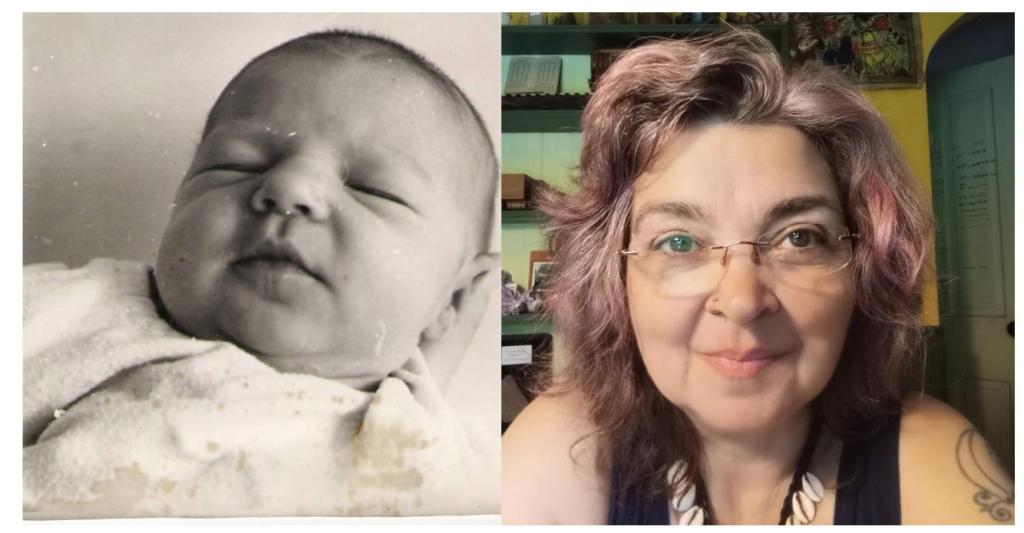
Today is my birthday. I’ve been here 55 years now (<–link),
beginning at a hospital in Nairobi, Kenya.
To Shirati, Tanzania, when I was ten days old, where I met my father for the first time.
To York PA, back to Shirati, to Philippi WV, to Ephrata PA, and then to the messy all-over-the-placeness of young adulthood, and now back in York County, PA, for 20 years.

Here are some 55 Facts and Notes:
The number given to asteroid Pandora is #55. I am Pandora’s progeny–I can never leave a box unopened.

The number 55 is apparently a lucky number for the astrological sign of Leo. Roar!

In Mathematics:

  • 55 is the product of the smallest sexy prime pair (although I do not know what this means, I too am small, and sexy, and in my prime.)
  • 55 is the largest triangular number in the Fibonacci sequence (again, I know not what this means, but I am large, and I like triangles.)

The element Caesium has the number 55 on the periodic table. According to Wikipedia, Caesium is “a soft, silvery-golden alkali metal with a melting point of 28.5 °C (83.3 °F), which makes it one of only five elemental metals that are liquid at or near room temperature.”

In Numerological terms, my soul number is 5 (add the digits in 8.10.1967, and keep adding digits together until you get a single digit), so 55 (five and five) feels like a good strong year for me. In the tarot, the fifth major arcanum card is The Hierophant, which symbolizes the passing on of knowledge and traditions—I like to think of that as the Teacher. So I am going to take that as my personal charge for the coming year and double my efforts to be an effective and compassionate teacher.

The number 5 breaks out of the stable solidity of the 4, offering new opportunities for growth, but also the potential for conflict and instability. I go into this double five year with my life shaken and stirred (boy howdy!), ready to find my new balance, eager to grow and change and Become more me.


Gratitude List:
1. My father’s relative health. July was a difficult month for our family. I am reminded to treasure every moment with the people I love.
2. Walking with a good friend on woodsy trails this morning: Hackberry trees, smell of fox (pervasive in those woods), teasel, wild mugwort, wild hibiscus, the Little Conestoga Creek, and dogbane. Mostly: good, easy conversation and companionship.
3. Monarchs. I know they’re heading onto the Endangered Species List. Grateful to see so many here where we live.
4. Scent of fox is a reminder of the story of Foxwoman, told by Martin Shaw. Reminder to know myself, to know my wildness, to trust my dreamingself.
5. So many delicious birthday blessings! I feel delight and strength and hope, and such a connection with so many people whom I have known, both in person and online. So much love!
May we walk in Beauty!


Even
after
all this time
the sun never says to the earth,

“You owe me.”

Look
what happens
with a love like that —

It lights the whole
world.
—Hafiz


“The Seven of Pentacles”
by Marge Piercy

Under a sky the color of pea soup
she is looking at her work growing away there
actively, thickly like grapevines or pole beans
as things grow in the real world, slowly enough.
If you tend them properly, if you mulch, if you water,
if you provide birds that eat insects a home and winter food,
if the sun shines and you pick off caterpillars,
if the praying mantis comes and the lady bugs and the bees,
then the plants flourish, but at their own internal clock.

Connections are made slowly, sometimes they grow underground.
You cannot tell always by looking what is happening.
More than half a tree is spread out in the soil under your feet.
Penetrate quietly as the earthworm that blows no trumpet.
Fight persistently as the creeper that brings down the tree.
Spread like the squash plant that overruns the garden.
Gnaw in the dark and use the sun to make sugar.

Weave real connections, create real nodes, build real houses.
Live a life you can endure: make love that is loving.
Keep tangling and interweaving and taking more in,
a thicket and bramble wilderness to the outside but to us
interconnected with rabbit runs and burrows and lairs.

Live as if you liked yourself, and it may happen:
reach out, keep reaching out, keep bringing in.
This is how we are going to live for a long time: not always,
for every gardener knows that after the digging, after the planting,
after the long season of tending and growth, the harvest comes.


“Life…is a wonder. It is a sky laden with clouds of contradictions.” —Naguib Mahfouz


“Nature gives you the face you have at twenty; it is up to you to merit the face you have at fifty.” —Coco Chanel


“By virtue of the Creation and, still more, of the Incarnation, nothing here below is profane for those who know how to see. On the contrary, everything is sacred.” —Teilhard de Chardin


“Soul of my soul … be water in this now-river.” —Rumi


“You are the Soul of the Soul of the Universe, and your name is Love.” —Rumi


“There is one masterpiece, the hexagonal cell, that touches perfection. No living creature, not even human, has achieved, in the centre of one’s sphere, what the bee has achieved on her own: and if intelligence from another world were to descend and ask of the earth the most perfect creation, I would offer the humble comb of honey.” —Maurice Maeterlinck, The Life Of The Bee, 1924


“It’s not only those who have succumbed to hate who have to change. We need to learn to love bigger, to bring them back.” —Alexandria Ocasio-Cortez


“If it is bread that you seek, you will have bread. If it is the soul you seek, you will find the soul. If you understand this secret, you know you are that which you seek.” —Rumi


“In these cataclysmic times, living in what Michael Meade calls the ‘slow apocalypse,’ despair can be dangerously seductive. Our lives may feel inadequate to the terrible momentum of our times, but it is in those moments that we must remember the difference between despair and grief.

“While despair traps us in the bog of despondency, grief carries us into life. Grief calls us into a deeper engagement with those things that we love. And even as we are losing them, grief wants to exalt their beauty.

“If we let grief move us into expression, it will sing the blood into our songs, colour the vividness into our paintings, and slip the poetry between our words.

“Rumi says, “All medicine wants is pain to cure.” And so we must cry out in our weakness, our ineptitude, our beautiful inadequacy and make of it an invitation that medicine might reach through and towards us.” —Toko-pa Turner

Season of the Witch

I read a lovely reflection this morning by someone who said the root word of crone is crown, the root of hag is hagio (wisdom), and the root of witch is wit.

I’m not sure where this author did her etymological research, but a cursory etymological study indicates these to be folk cognates rather than actual word lineages. I like folk cognates, a la Mary Daly. Folk cognates add layers of richness to the living nature of a word. Folk cognates help to deepen our personal internal associations with words. As I enter my own cronetime, I will go crowned by my white hair rather than as an old ewe fit only for carrion (the actual root, which gives us an historical glimpse into attitudes towards old women at the time the word began to be used to denote older women). Though even carrion is a holy mystery, giving life and well-being to the next generation, so I do carry that original etymology in the layers.

I also like some of the actual etymologies of the other two. Witch comes from the Old English “wicce” and “wicca,” sometimes defined as crooked. It seems to be associated with the Old English “wigle,” a term for divination. And now I want to go searching to see if witch and wiggle are associated at the root. Combining actual and folk etymologies, a witch is a crooked, witty, dancing diviner. Shimmy on, friends!

My favorite actual etymology in this group is hag, which comes from the Dutch and German words for witch: “heks” and “Hexe.” These, in turn, are related to the roots of the word hedge, which is the ancient boundary between the wilds and civilization. Midwives and healers would cross hedges into the wildlands to find herbs and remedies. Witches and hags straddle the space between the world of civilization and the world of the wild, threatening the patriarchal status quo and the rush to civilized progress (the same rush which is driving us toward planetary destruction). Witches and hags are marginal, fringe-workers, edgy. And, adding in the folk cognate with hagio, they’re wise women.

One more, since autocorrect keeps offering me “weird” when I type “word.” Weird, which we define as strange, and use to Other people, comes from the OE “wyrd” which means destiny. Shakespeare called his Macbeth witches “weird sisters,” suggesting that they were bound up in the fatalism of the play. Taking the folk etymology that my autocorrect keeps offering me, we can say that language, perhaps, is destiny, that words are weirds, that words have import and power (magical perhaps) in the effects they have on listeners and readers, writers and speakers.

Not long ago, someone used one of these very words to shift my weird, in a deliberate attack. I was publicly called a witch, as an attempt to shame and harm me. In the end, the accusation cost me my job at a Christian institution.

I knew many of these word lineages when I was victimized by the cyberbully, so the word did not hurt me–it was the way the attack played out. The word was used to harm, as these words and so many others are intended.

Perhaps I need to just as publicly claim the word for myself.
I’ll straddle that hedge between civilization and wildness.
I’ll wiggle my crooked dance, and keep an eye on the future.
I’ll claim my wit and my weird.
I’ll be crowned, and witty. Wise and holy.
I’ll even offer my croneself as nourishment for the coming generations.

You may call me a witch, a hag, a crone. Those words will not hurt me.