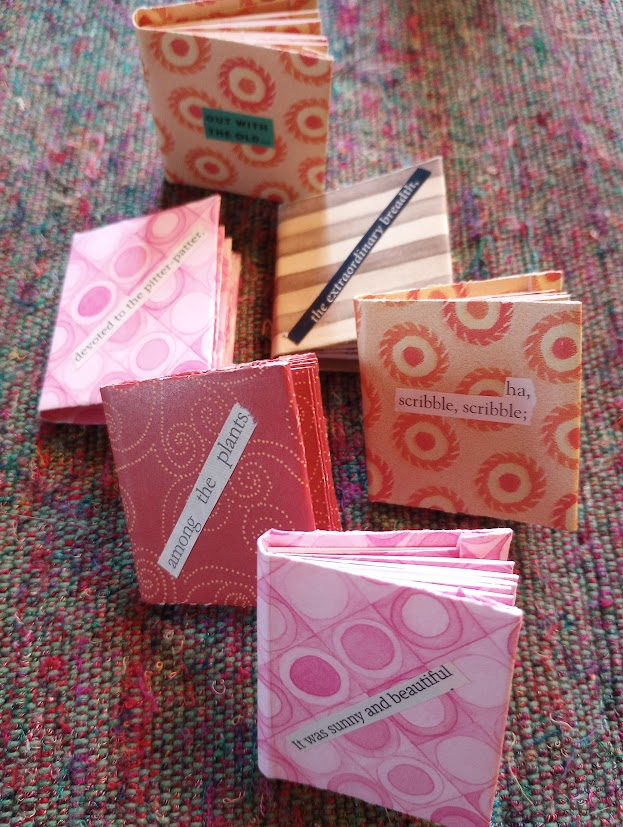
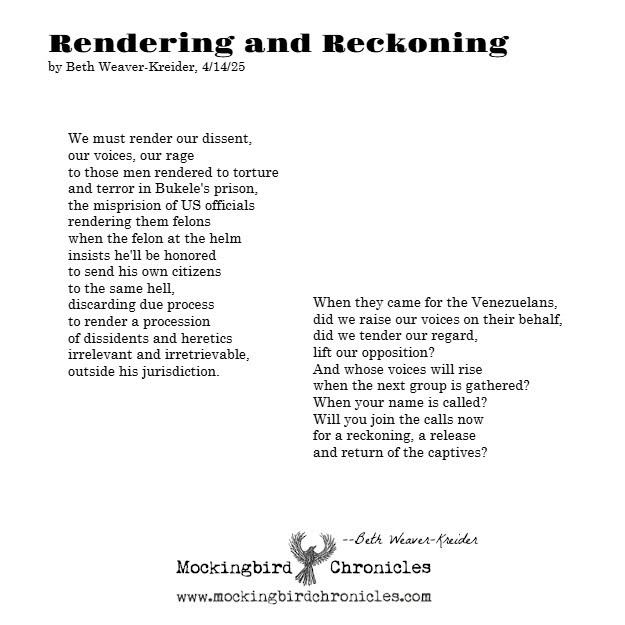
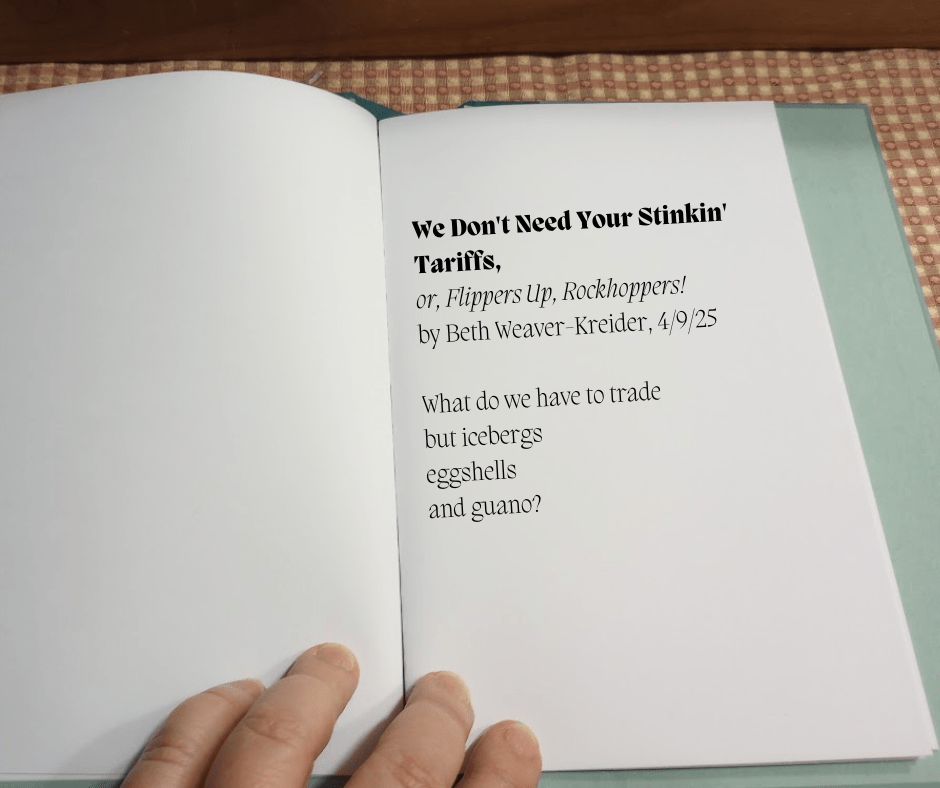
I have been writing. Really! I just haven’t been posting here. This season, I have gotten myself into a little bit of a bind with the artistic disciplines. I’m doing #The100DayProject, making a book a day, and I’m writing a poem a day in April. These are the things that keep my mind alive and questing during the stress of the spring season at school. The quick publish/post for daily poem and book has been Instagram and Substack, and so I will post a catalogue of some of my favorite poems and books here today.
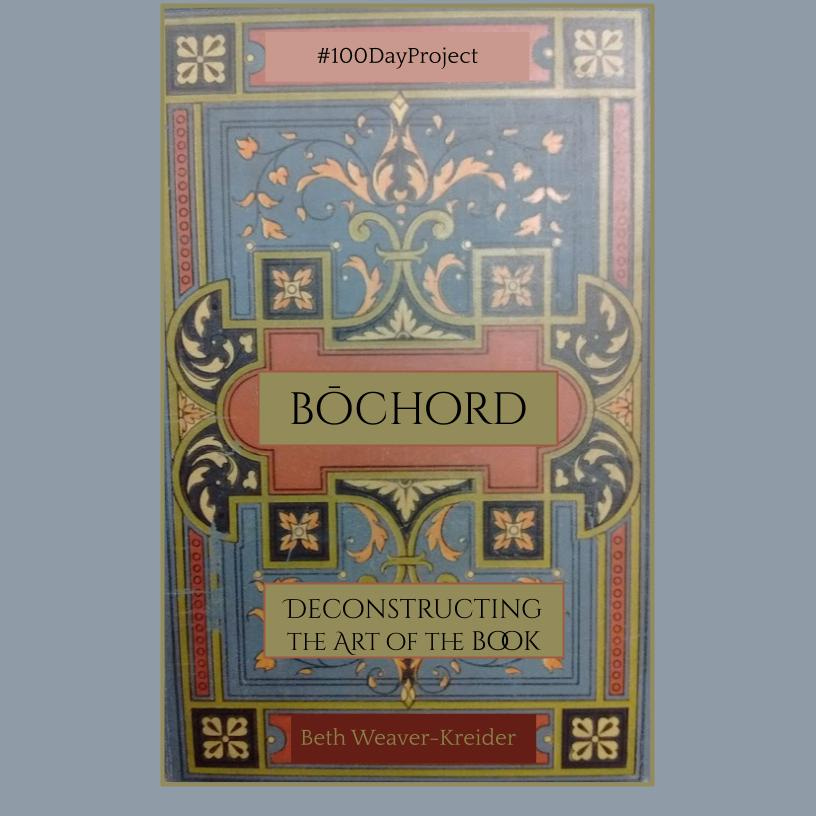
For #The100DayProject, artists choose an artful activity and do it every day for 100 days, recording their work, and posting about it every day. The project begins on February 23, and I decided to begin my Substack life by posting my daily creations here.
What is a book?
Is it words on pages between covers? Is it a box, a basket, a vessel of words and images? Is it a kit for your imagination? What makes a book a book? And what is the line between book and not/book? Or is there even a line?
One of my students, when I posed the question to a class, said,
Perhaps a definition isn’t so much about what a thing is as about how it is used.”
Wise young person.
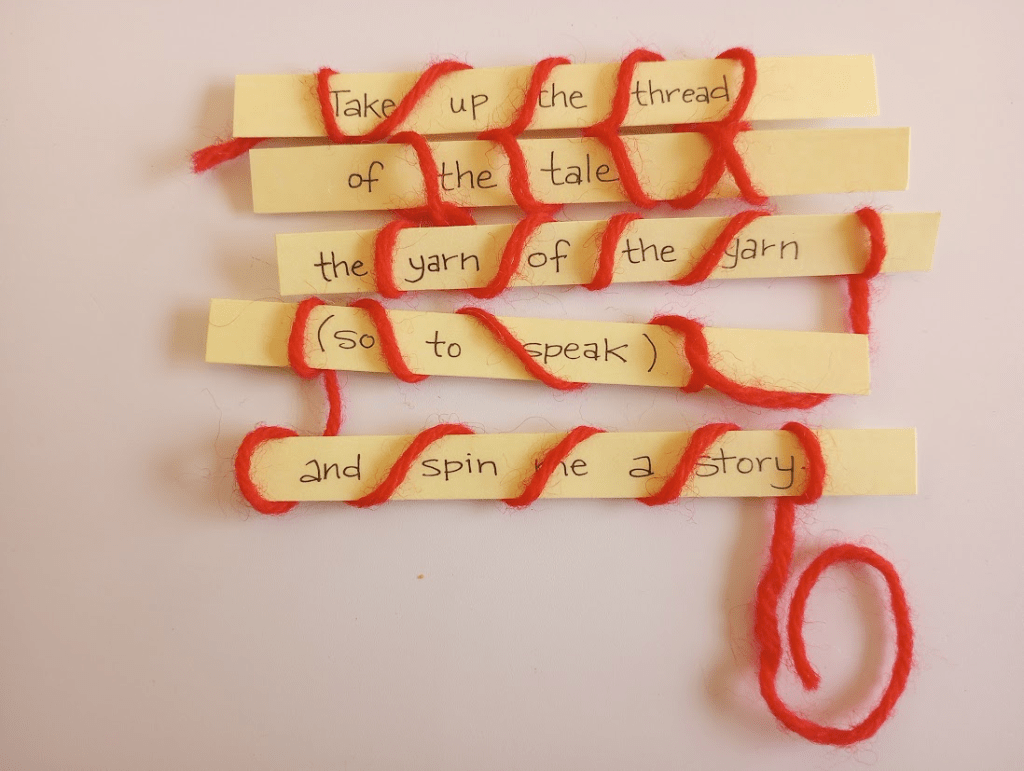
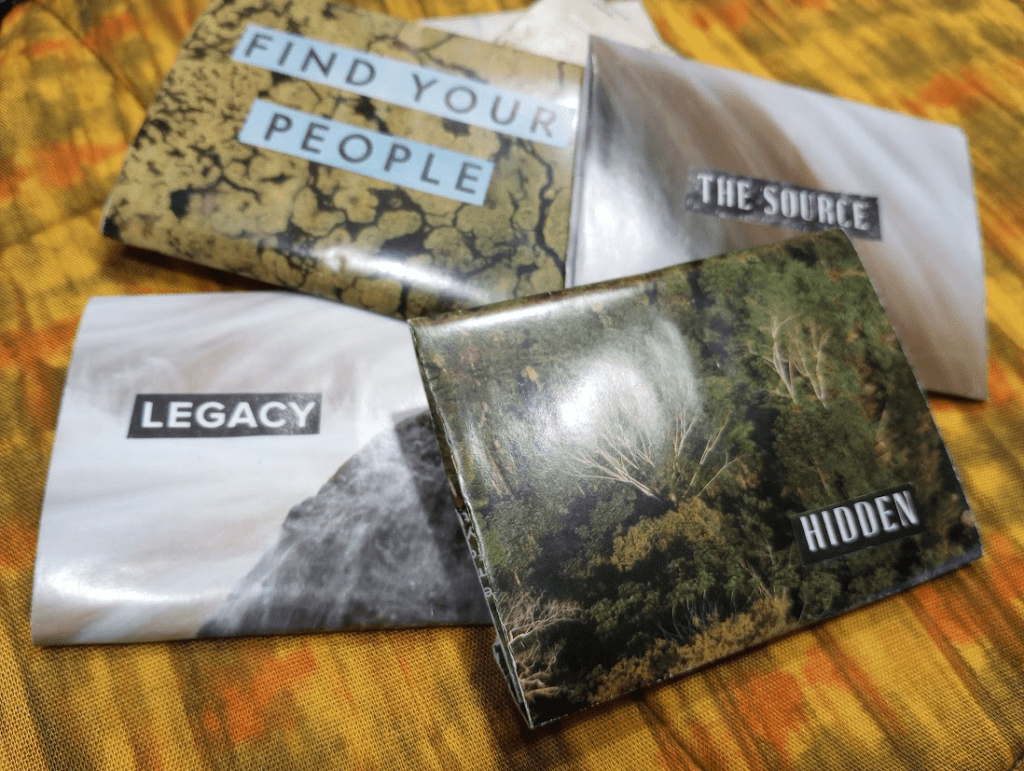
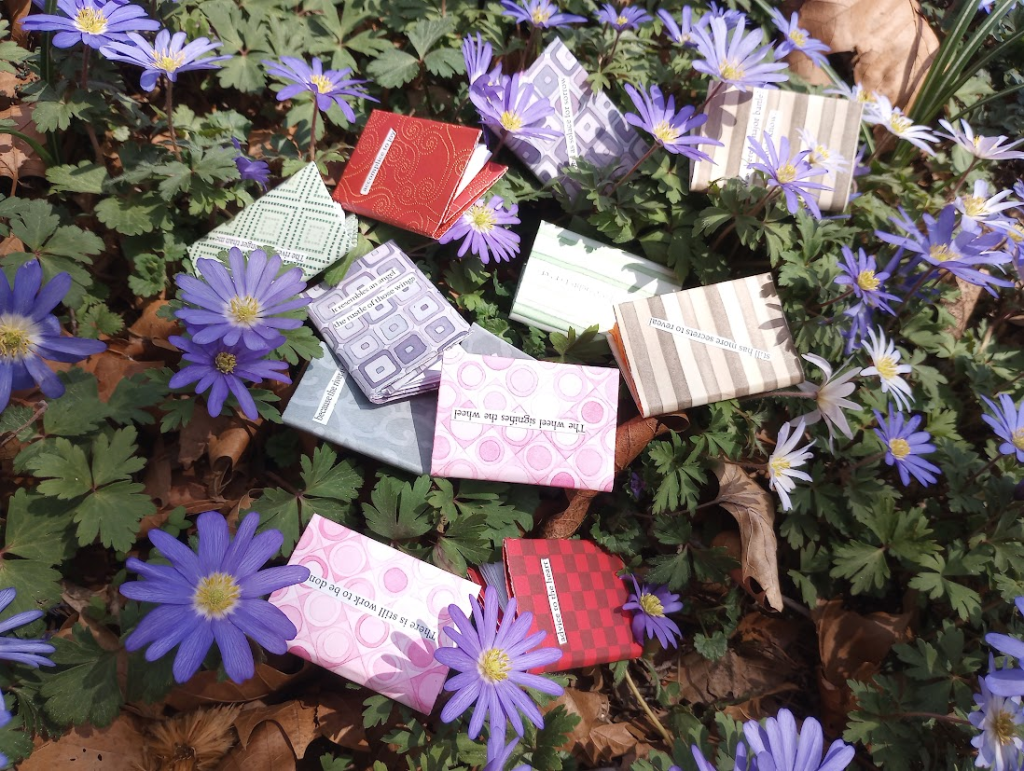
My aim for #The100DayProject is to explore the spaces between what is “book” and “not/book.” I aim to make some traditional (though whimsical) books in the form of pages between covers, and some boxes, baskets, vessels of words and images, photographs, to expand the definition of what a book is, and explore how it may be used. . .
Can I create one book a day for 100 days? Perhaps I will have some days when I record the process of making one book over several days. I cannot let this work interfere with my daily work, so I give myself permission to make quick little zines on busy days, to call anything a book, and to create junk.
I will make a bōchord (library in the old English), a BOOK HOARD, a library of sorts.
bōc as Vessel by Beth Weaver-Kreider
The leaves of the beech quiver in the winter wind, rustling whispers, so many stories to tell,
Etymology: bokiz or bece to bōc, to book. Bark and leaves, cover and spine, the line of words across a page.
It is written in the trees, you see, not just cellulose and pulp, but in the very essence of the word: seeds of ideas, leaves, and bark.
Not only Goths but Gauls too saw forest as library. Livre from librum, the tender inner bark of the tree.
When he was a child, my father carved his name into the soft grey of the household beech. I found the letters there, the book of his childhood, the story of branches shading the quiet balcony, the pious lives, the quiet joy, the industrious aunts, and some words allowed to be spoken only by the whispering leaves.
Once there was a guardian beech watching over the river and the valley, serpent branches spreading shadows across the hill. But insects burrowed her barky pages until the book of her began to die. We honored her story, you and I, the best we could; we read the book of her until the end.
Here in the pages of my palms I cup this small wooden bowl you turned from the branch of the serpent-beech, a new vessel to contain magic much as the tree herself held her secrets, the livre, the living library, still here, alive.



 Mockingbird Chronicles