O’er Rough and Smooth to Travel

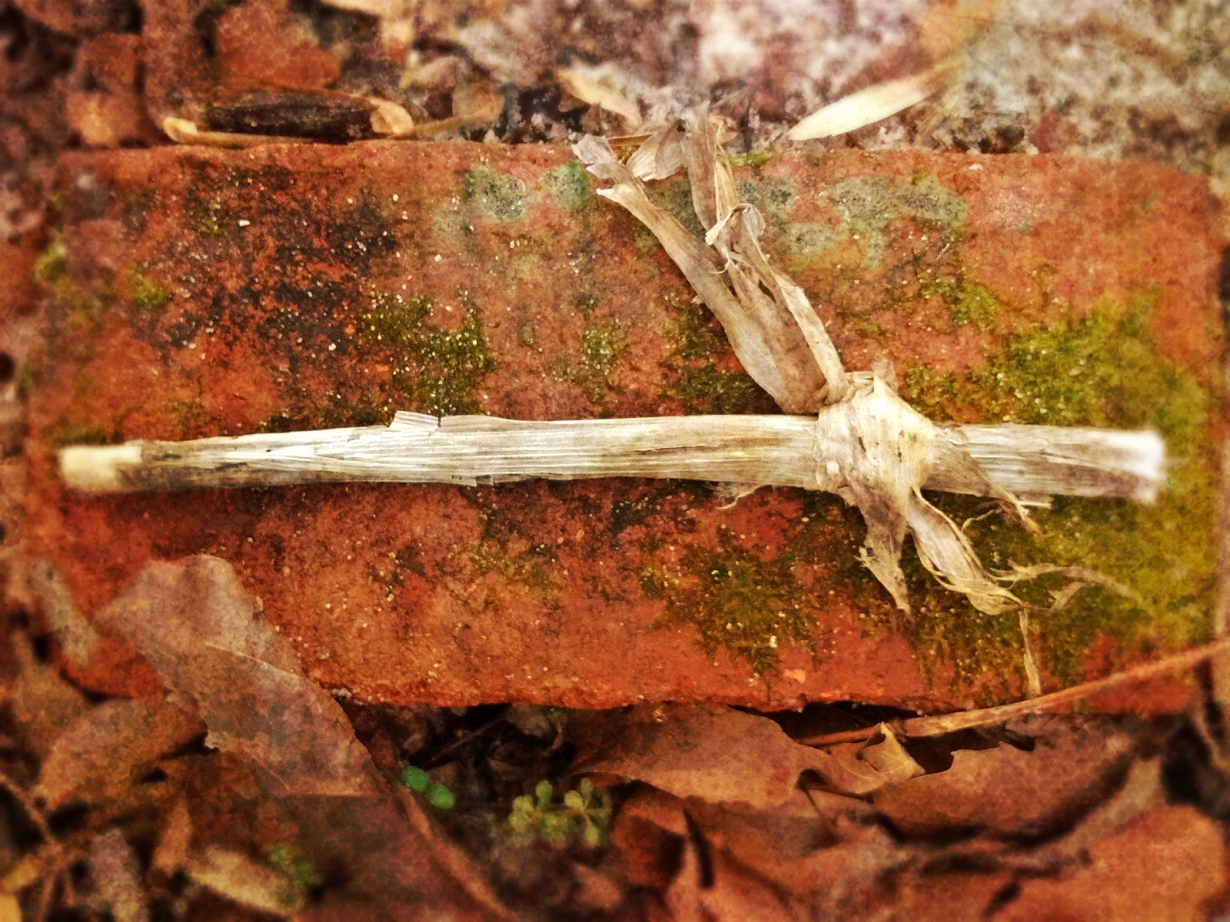
Jon found this bookplate in an old book he is selling at work. It was a thin volume, a sort of literary guide to Jerusalem. Because he is who he is, Jon had the idea to Google their names, and he found an image of their gravestone, near Philadelphia. Lincoln Cartledge died at age fifty, while Letty Merrell Shallcross Cartledge lived into her eighties. We became sort of melanchly considering how short their side-by-side travel actually was. Further searches find other old and rare books being sold online noting the Cartledges’ tender bookplate, and several references to, and a few images from, Lincoln Cartledge’s career as a photographer in the Philadelphia area.

At some point, in the very early 1900s, when this couple got married, they placed at least a few special personalized bookplates in their book collection. Over a century later, strangers are moved by the inscription–“O’er rough and smooth to travel side by side”–and left with an ache of knowing how short their side-by-side travel was. Make the most of the rough and smooth that you are traveling side by side with your beloveds. We never know how how short or long our time will be.

Ah. And I said that up there about Jon being the researcher he is, and now, of course, I see again how this is one of the elements that draws us together, because I can’t stop the researches this morning. The phrase comes from this poem:

Sonnet to a Friend
By Hartley Coleridge (1796–1849)

WE parted on the mountains, as two streams
From one clear spring pursue their several ways;
And thy fleet course hath been through many a maze
In foreign lands, where silvery Padus gleams
To that delicious sky, whose glowing beams
Brightened the tresses that old poets praise;
Where Petrarch’s patient love and artful lays,
And Ariosto’s song of many themes,
Moved the soft air. But I, a lazy brook,
As close pent up within my native dell,
Have crept along from nook to shady nook,
Where flow’rets blow, and whispering Naiads dwell.
Yet now we meet, that parted were so wide,
O’er rough and smooth to travel side by side.

Hartley Coleridge is, as you have guessed, the son of Samuel Taylor Coleridge. Wikipedia (the teacher’s favorite source to hate) says that his father even wrote about him in two poems: “Frost at Midnight” and “The Nightingale: A Conversation Poem.” You can follow those rabbit trails if you choose. Does the poem sound sort of Wordsworthian to you? No surprise there: He wrote the poem for Dorothy Wordsworth, William’s sister, also a writer. You can use The Google to find a book about their friendship: Dorothy Wordsworth and Hartley Coleridge: The Poetics of Relationship written by Nicola Healey.

Rabbit trails. May your trails be pleasant today, Soulkin, and bring you small delights of discovery, whatever trails you follow.


Gratitude List:
1. Research rabbit trails. On the Enneagram, I am a 7, which means that when we first studied the Enneagram together, I kept saying I thought I was this or that or another thing, probably all of them (7s want to experience EVERYTHING). Deep down, I thought I was probably a 7, but I didn’t feel like I was worthy of the number, not being adventurous enough. Everyone else said, “Duh, you’re a 7,” so I accepted it gladly. I think I have a pretty strong 6 wing, but I can fall with a thud into 8 when I am stressed. Eights are the people I am most likely to fight with, including my own stressy self. All that to preface the point that I adore my solid 5 of a husband, and I love to follow his researchy rabbit trails. I can’t wait for him to wake up today so I can show him the things I have discovered about the Cartledges and the source of the phrase on their bookplate.
2. People keeping the pressure on the system for change. Whatever you do to be part of that, keep doing it.
3. Time to READ! I’m finishing my half-read books so I can get working on the stack, which has grown even taller in recent days.
4. Soulkin. That’s us. I wish I had crafted that word myself. I discovered it somewhere online. It’s what we are, you and I on our parallel and mingled and divergent journeys.
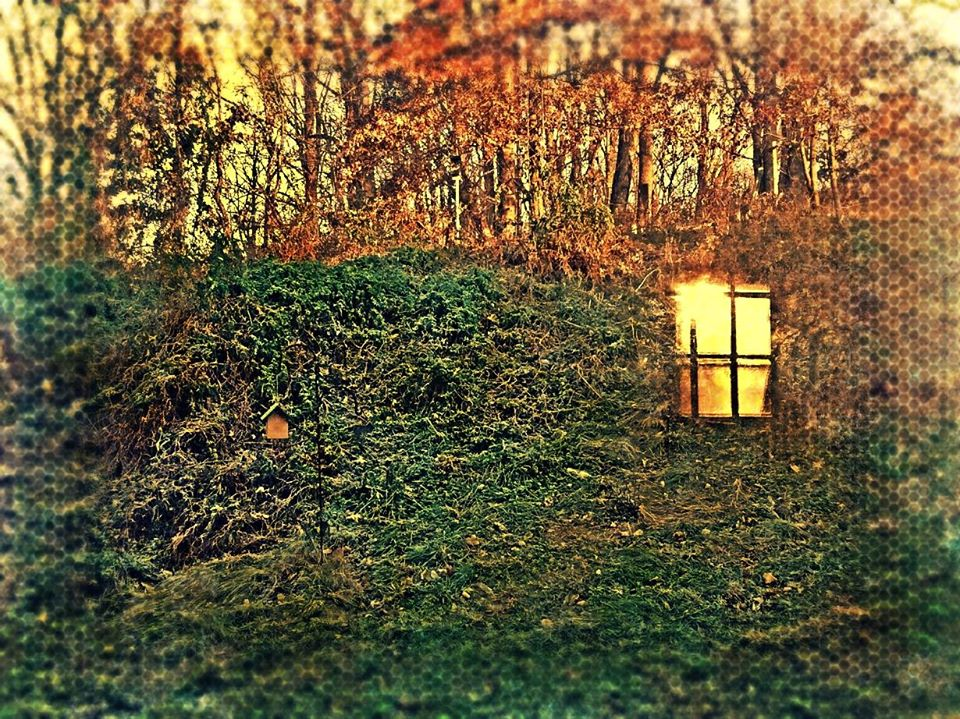
5. That viny brambly mess on the bluff is threatening to take over the world, but it’s got a thousand shades of green, and all sorts of tinyfolk live in its secret ways, so we must take great care in how we tidy it up, so as not to disturb the families of the little ones who live there. And messy as it is, it’s got a wild beauty.

Do Justice. Love Mercy. Walk Humbly–in Beauty!


“The ideal subject of totalitarian rule is not the convinced Nazi or the convinced Communist, but people for whom the distinction between fact and fiction (i.e., the reality of experience) and the distinction between true and false (i.e., the standards of thought) no longer exist.” —Hannah Arendt


“Caring for myself is not self-indulgence, it is self-preservation, and that is an act of political warfare.” ―Audre Lorde


Omid Safi says:
“There are three times in life when we experience this kind of a loveglance.
With our parents, our beloved, and a spiritual teacher.
How lovely the glance, how lovely the glancer, how lovely the one glanced at.”


“You are not an Atlas carrying the world on your shoulder. It is good to remember that the planet is carrying you.” —Vandana Shiva


“Muddy water, let stand, becomes clear.” ―Lao Tzu


“If there were a little more silence, if we all kept quiet…maybe we could understand something.” ―Federico Fellini


“When I look out on such a night as this, I feel as if there could be neither wickedness nor sorrow in the world; and there certainly would be less of both if the sublimity of Nature were more attended to, and people were carried more out of themselves by contemplating such a scene.” ―Jane Austen


Rob Brezsny:
Thomas Merton’s notion of what makes a saint doesn’t have to do with being a perfectly sinless paragon of virtue. The more important measure of sanctity, he said, is one’s ability to see what’s good and beautiful in other people. The truly holy person “retires from the struggle of judging others.”


You are the mountain, but awake.‬
‪You are the rain, but breathing.‬
‪You are the forest, but unanchored. ‬
‪You are the soil, but with choice.‬
‪You are the sunlight, but dreaming.‬

‪Soon, you will be these things again. Mountain. Rain. Forest. Sunlight.‬

‪So, what will you do until then?‬
—Jarod K. Anderson, The Cryptonaturalist
Advent 7: There Lives in Me

When I taught at a Waldorf School, we taught a little poem to the children:
There live in me an image
of all that I could be.
Until I have become it,
my heart is never free.

For some reason, as I try to recall it, my mind always substitutes “shadow” for “image.” It’s like something tickling at the back of my brain is trying to remind me that I am not only what can be seen on the surface, but that there’s something else there, too, some deeper me that needs to be recognized and integrated before I am truly whole and free.

Several years ago, I wrote a poem on the subject:

Shadow
I will be Crow.
Stone Steps to the Lady Shrine.
Spider’s tidy strands.
Moss. Pine cone.
Lichen. White stone.

Lady, what have you to say to me?

There lives in me a shadow. . .
Water trickling in the grotto.
Bark of the Sycamore Tree.
Crow. Willow.
Acorn. Sparrow.

What have you to say?

An image of all that I could be.
Ladybug on Her child’s chubby knee.
Spider in the fold of Her robe.
Green leaf. Cool breeze.
Whisper. Oak trees.

Become the Shadow.

I am the Crow and the Spider.
Scent of new boxwood.
The whisk-footed Squirrel.
Egg sac. Chickweed.
Web. Speedwell.

Breathe.

(From Song of the Toad and the Mockingbird by Elizabeth Weaver-Kreider, Skunk Holler Poetryworks, 2013.)

When I look into my own shadows, they’re composed of as many subtle colors and hues as the ones that intersect across my living room floor in the mornings. Some are indeed frightening and uncomfortable, because they are unknown, because they hold the secrets of my unresolved and unacknowledged self. Others hold a thrill, because they hide the daring and adventurous and wild side of me, because they harbor the self hinted at in my dreams. They whisper to me, ask me to take up the work they have.

The various personality and temperament studies I have done often point toward shadow work, to exploring those unexplored regions inside. I have found the Enneagram to be particularly helpful in this work. In the Enneagram, I am a pretty standard Seven, an Enthusiast. I call it Hedonist, to remind myself of the shadow possibilities. The Enthusiast wants to enjoy life to the fullest. What choose one option when five will do? We tend to overschedule ourselves, to take on more than we can handle, to eat too much and drink too much. We have a thousand unfinished projects because we want to try everything. We can be enjoyable companions because we like to pile on the fun. Some of the shadows that dog me are hoarding and gluttony and pain avoidance. There isn’t time or attention span enough to handle all the projects and ideas and things that I want to take on. And I get so excited about the next new thing that I avoid the actual work of other things I have committed myself to. In this case, working with my shadows means knowing this pitfalls, working with the anxiety that comes with saying no to the next new and exciting thing that comes along, learning to discipline myself to do the next thing that might bring work or pain.

And there are shadowselves that call me to integrate my the wilder, fiercer, more daring part of me into my everyday self. The shadows call: “Don’t let yourself be tamed! Don’t become domesticated! Don’t settle into safety and predictability. Don’t settle for the status quo.” It’s these shadowselves that raise their heads when everyday systems of oppression and injustice, patterns that everyone seems to accept, make us raise our heads and look around and start to ask questions. In order to live in a world that actively creates unjust systems, parts of ourselves slide into the shadows in order to function with minimal pain and less of the jarring sense of contradiction. Change in the world comes about when we let these sleeping shadows wake up and live within us.

Here, on the eighth day of our journey into the shadows of the December labyrinth, let’s walk into those rooms where our shadows wait, and examine their colors and shapes and textures. What might they have to teach us? This afternoon, I must tackle some things I have been avoiding, and set up a plan for myself to focus instead of fluttering from bright and shiny thing to bright and shiny thing.

What goal will you set for yourself? Maybe your natural state is to try to control all the details, and today you will let go of control? Maybe you’re dogged by particular shadow anxieties, and today is the day to look at them more closely, perhaps in the company of a beloved who can help you? Perhaps today is the day to wake up some sleepy shadows and start to make a plan to break the chains in an oppressive system that profits from your sleepiness?


Envisioning:
(At the beginning of Advent, my pastor asked us to hold the swords-into-ploughshares vision in our heads, to look for stories of people choosing that vision. For the next little while, I am going to look for such stories as my daily morning meditation.)

I think of the people of Landisville Mennonite Church and others who work with them to be companions to refugees and asylum seekers and immigrants who have been detained in York County Prison. These people are holding a vision of a welcoming community that helps people find their way in a new place. A group of people has come out of this work to raise money to pay the bonds for immigrants in the York detention center. Their website is IBAEPA.org, The Immigration Bond and Advocacy effort, if you would like to participate in their making their vision a reality.

In the Dreamtime, Day 11

The traditional Twelve Days of Christmas last until January 6, Epiphany. Since I begin my Dreamtime walk on the solstice, I give myself a few more days in Dreamtime, and choose my images and words for the year from the soup of my Dreamtime stew on the sixth of January. Perhaps I throw things off by adding a few extra days to my high holy days of winter. The twelve days have particular cosmic significance, being the number of days’ difference between the lunar and solar years. The twelfth day itself is only a partial day. I suppose I could have my Epiphany tomorrow, and then I’d have committed myself to only twelve days of dreaming. But maybe I need a longer gestation period for my ideas and words and images.

This morning, I woke up with the word “Maferefun” in my head. I had been reading an article earlier in the day about religious traditions around the world, and Maferefun is the Yoruba greeting for the holy ones. It means something like, “I greet you. Praise be!” A nice word, I think, to greet the new year, and a reminder to myself that all about me is holy. All carries the spark and imprint of the Creative Mystery. It is our work to notice and to greet it as we see that livingness in the world and the people around us.

Elderly bench that holds me as I sit in the morning, I greet you. Praise be.
Purring cat who wakes me in the dawn, I greet you. Praise be.
Owl calling your family home from hunting, I greet you, Praise be.
Sun soon to rise over the ridge, I greet you. Praise be.

As Peter Mayer says in his sweet song, “Everything is holy now.”


Gratitude List:
1. Slow Starts–Today is Professional Development, and then two days of classes for the week.
2. Setting boundaries
3. Knitting and Crocheting: Making beauty from a knotted piece of string
4. The Enneagram, a thoughtful tool
5. Reading together as a family. Jon bought us a copy of Danny the Champion of the World to read to us this break because he remembered loving it as a child. I missed part of it while I graded yesterday, but I heard the beginning, and the tender ending last night before the children went to bed.

May we walk in Beauty! I greet you! Praise Be!


Words for Wednesday’s Slow Start:
“The Work. I am learning, slowly and in tiny little ways, to stop asking myself what I can get from each moment, but instead what my Work is here in the moment. And realizing, ever so dimly, that when I am really doing my Work (really doing my Work), I am also receiving what I need.” —Beth Weaver-Kreider


“The best way to predict the future is to create it.” —Peter Drucker


“There is nothing in a caterpillar that tells you it will be a butterfly.” —Margaret Fuller


“Brew me a cup for a winter’s night.
For the wind howls loud and the furies fight;
Spice it with love and stir it with care,
And I’ll toast our bright eyes,
my sweetheart fair.”
—Minna Thomas Antrim


“For last year’s words belong to last year’s language. And next year’s words await another voice. And to make an end is to make a beginning.” —T. S. Eliot


“How do we go on living, when every day our hearts break anew? Whether your beloved are red-legged frogs, coho salmon, black terns, Sumatran tigers, or fat Guam partulas, or entire forests, mountains, rivers, lakes, or oceans, or the entire planet, the story is the same, the story of the murder of one’s beloved, the murder of one’s beloved, the murder of one’s beloved.” ―Derrick Jensen, Dreams


ONE OR TWO THINGS
by Mary Oliver from New and Selected Poems: Volume One (Beacon Press)
1
Don’t bother me.
I’ve just
been born.

2
The butterfly’s loping flight
carries it through the country of the leaves
delicately, and well enough to get it
where it wants to go, wherever that is, stopping
here and there to fuzzle the damp throats
of flowers and the black mud; up
and down it swings, frenzied and aimless; and sometimes

for long delicious moments it is perfectly
lazy, riding motionless in the breeze on the soft stalk
of some ordinary flower.

3
The god of dirt came up to me many times and said
so many wise and delectable things, I lay
on the grass listening
to his dog voice,
crow voice,
frog voice; now,
he said, and now,
and never once mentioned forever,

4
which has nevertheless always been,
like a sharp iron hoof,
at the center of my mind.

5
One or two things are all you need
to travel over the blue pond, over the deep
roughage of the trees and through the stiff
flowers of lightning– some deep
memory of pleasure, some cutting
knowledge of pain.

6
But to lift the hoof!
For that you need an idea.

7
For years and years I struggled
just to love my life. And then

the butterfly
rose, weightless, in the wind.
“Don’t love your life
too much,” it said,

and vanished into the world.