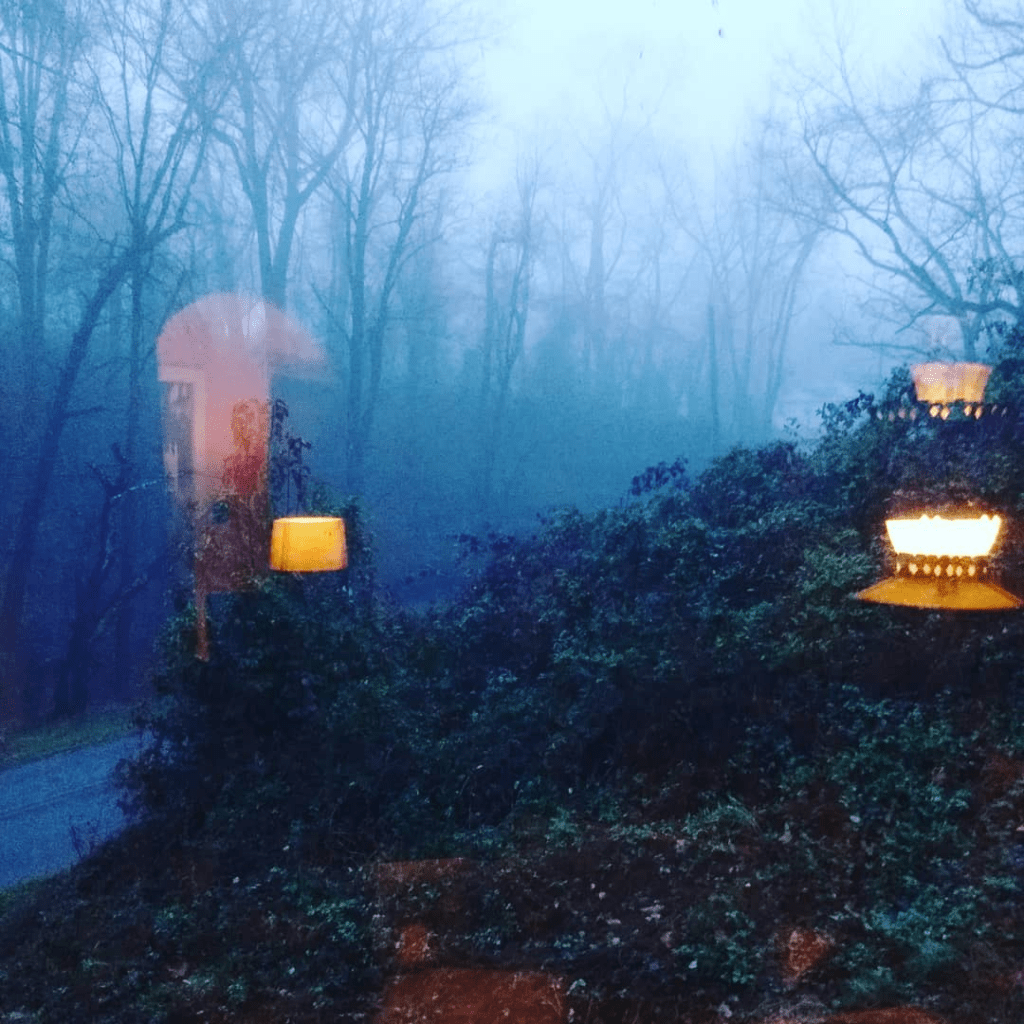
Today was my day to write for the Way of the Rose Annunciation Novena:
THE ANNUNCIATION NOVENA
Day 5, Sorrowful Mysteries
There’s something so inexorable about living.
One thing happens, and then the next,
chain reaction following chain reaction,
and one domino topples, so the whole damn line
just cascades, one thing after another,
until it’s all a pile of rubble on the floor.
You hear the rumble of thunder,
lightning strikes the tower,
and before you can think what to do,
it’s all just tumbling down around you,
crumbling to dust and ashes.
Sometimes it just feels as if all life does
is happen TO you, you know?
And yet, sometimes right there in the pile of debris,
among the wreck and the ruins,
in the quiet moment when the dust
is settling through shafts of light
falling all around you,
or sometimes it happens in the dew-bright garden
when every possibility seems to be in bud,
or in the roar of traffic when you are on your way
from hither to yon, just trying to keep up:
sometimes you can hear the Angel’s voice, asking
“Will you carry the light?
Will you carry and share
the mystery of seed and egg and birthing star?
Will you be the hands and feet of something
beyond your current kenning?
Will you use your heart, your strength, your cunning,
help to make the new thing within you,
in the service of Love?”
I keep forgetting that I get to choose,
that even between the crazy race and the cascade,
even in the dawn garden, even in the rubble,
I can choose when and how I participate,
how I collaborate with life to co-create
a destiny beyond my imagining.
No longer is it simply that I am made for this moment,
but I make myself for this moment,
and for the next, and for the next.
“When it’s over, I want to say: all my life I was a bride married to amazement. I was the bridegroom, taking the world into my arms.” —Mary Oliver
“Everything is held together with stories. That is all that is holding us together, stories and compassion.” —Barry Lopez
“With every action, comment, conversation, we have the choice to invite Heaven or Hell to Earth.” —Rob Bell
“Do not grow old, no matter how long you live. Never cease to stand like curious children before the Great Mystery into which we were born.” ―Albert Einstein
“Love will find you, wherever you are. It will seek you out in the most hidden places of your heart. It will search the crowded cities and walk the empty hours after midnight. It will overcome any obstacle placed before it, even those you create for yourself, to find you and to bring you its gift. No matter how far from love you feel you have drifted, it will never give up on you. Love is the Spirit, watchful and persistent, enduring and forgiving, the steady presence of a reassurance that will keep you safe whatever chance may bring you. If you are a believer, then believe this: love will always find you.” —Steven Charleston
“I have lived on the lip
of insanity, wanting to know reasons,
knocking on a door. It opens.
I’ve been knocking from the inside.” ―Rumi
“How monotonous our speaking becomes when we speak only to ourselves! And how insulting to the other beings – to foraging black bears and twisted old cypresses – that no longer sense us talking to them, but only about them, as though they were not present in our world.
Small wonder that rivers and forests no longer compel our focus or our fierce devotion. For we talk about such entities only behind their backs, as though they were not participant in our lives.
Yet if we no longer call out to the moon slipping between the clouds, or whisper to the spider setting the silken struts of her web, well, then the numerous powers of this world will no longer address us – and if they still try, we will not likely hear them.”
―David Abram, Becoming Animal: An Earthly Cosmology
In the Sufi way of seeing it, longing is a divine inclination, drawing us towards the Beloved. Just as lover and beloved long to be in each other’s arms, so too is it between us and the life which is meant for us. Like a plant growing towards the sun, longing is nature inclining us towards the light we need in order to be fruitful. But also, as Rumi writes, “that which you seek is seeking you.” So longing is not only the quality of seeking reunion, but the sound of something in search of us: the calling homeward.” —Toko-pa Turner
“Trees are poems the earth writes upon the sky.” —Kahlil Gibran
“I believe dignity emerges in the way you finally carry your own story. Through your painstaking reframes to write yourself as the heroine of your own life, your losses cease to consume you. They are not forgotten or made invisible, but rather aggrandised in your telling, eventually passed down through the line of mothers and daughters as the mythical ‘obstacles to flight’ that they were. But dignity also lives in one’s willingness to step wholly into a new life of love, even as its first strands are being woven together to create a shape that will warm you.” ―Toko-pa Turner
Sunday Morning Prayer
hope
like a seed
buried deep within the earth; hidden
covered by layers, disappointment, struggle, pain;
buried yet stretching,
growing and becoming.
hope
like a seed
becoming new life.
—Katherine Hawker
 Mockingbird Chronicles