Twelvenight: Omens and Messages

Today, some notes on the dreamwork I do during Twelvenight. I just read Caitlyn Matthews’ blog post, “The Omen Days: The Twelve Days of Christmas,” the most thorough consideration of the folklore and legend of the intercalary days (December 26 to January 6) that I have been able to find in a long time. Twenty or so years ago, I had done some reading about this season in the medieval calendar and pieced together my own practice for this period of Time out of Time. I’ve lost my original sources, so it was a delight to find her writing.

The search for omens and divination for a coming year may feel superstitious and strange to you. I think of the dreams and images that roil in my head during these days as guiding archetypes and images for the coming year. The observation of my dreams and the search for images in waking life is, for me, like being a beachcomber carefully combing the sand for anything the ocean of my psyche may toss up. Pick up a pretty shell here, a pebble there, a piece of driftwood, an oddly-shaped something of no known origin. When I lay them out on a table and examine each, some of them seem to fit into groups and categories, while others get discarded. Some I can make immediate sense of, while others I carry with me for months, loving them for their inscrutability, hoping that they’ll offer me a connection at some later point in time.

These inner labyrinths we’ve been traversing and exploring in the quiet work of Advent are also vast and unknowable oceans, tossing up bits of flotsam for us to examine. It can happen in recurrent dream messages, where the little hard-working elf of my deep self sends pictures and stories to try to get my attention. We don’t speak the same language, the deep self elf and I–she communicates in images and oblique stories that my waking self must interpret.

The same process often happens in waking-life observations and meditations. Several days ago, I wrote about the Fool, the topsy-turvy tumbler who offers true wisdom to the wise ones, often in the form of riddles. In the days since, the archetype of Fool has caught fire in my imagination, recurring to me throughout the day. I keep finding more that I want to say about the Fool. Then I read the seven little books that my family bought for me from Hedgespoken Press. One, in particular, Twilight by Jay Griffiths, is a prose-poem essay, a thoughtful meandering through the deep symbolic qualities of twilight. One of his primary images is the Trickster, the Fool. My own deep-self elf began to do a little dance. If she could speak in words, she’d be yelling, “See? See? Do you see the connections?” Instead, a deep satisfaction, a nearly audible visceral click occurs somewhere in my inner spaces. I get it, deep in my gut.

And so, for me, I think this year may have me following the path of the Fool, searching for that click again. Because my brain loves intellectual work, part of my exploration will include searching through Shakespeare for fools and fools’ talk. Because of Lear’s Fool, I trust Shakespeare on this. I might have to do some collage work or painting or doodling of fools. And when I see a representation of the Fool or the Sacred Clown or the Trickster in the mundane world, I’ll recognize her and we’ll wink at each other.

In some of the circles I work and play with, we do careful dreamwork together, telling dreams and reflecting on their symbols. One of the things we try to do is to tell the dream in present tense. It can take some work to get into that groove, but the immediacy of the present-tense telling often draws forth images and colors and general weirdness that get ignored in a past-tense telling. All storytelling is a process of choosing which details to tell and which to ignore. We try not to censor out the odd and seemingly-insignificant details in our dream-tellings. Often those deep-self elves have a purpose in the sudden shifts, when your sister is now a sparrow or you step out of bed and find yourself walking on air. In dream-tellings, the truth is often in the weird. Then when others reflect on the dream, we are careful not to baldly interpret. We rarely say, “I think your dream means. . .” More often, it’s “That red dress really catches my attention. I wonder if you have any associations with red?” Dreamwork seems to proceed best when done dreamily. Interpretation is fluid and watery, not calcified. And no one is an expert. We all have skills at noticing.

As often happens in dreams, last night’s setting was in a big rambling building. Sometimes, even though the rooms and halls are unfamiliar, my dream-mind knows exactly here I am. For years, my building dreams were located in my grandmother’s house, though not in any rooms that existed in my waking reality. School dreams have frequently recurred, as have various hotels.

Last night’s dream is in a school. I’m in the library, talking to a couple of colleagues. We are discussing giving an extension on a big paper to a student who has been sick. Students are looking for books. Out of the window, in the long straight rows of orchard trees, a vulture keeps spreading its wings wide against the green of the leaves. I can see the individual feathers and how the light shines on them. At some point in the discussion, I find that I am holding a small figurine of the bird, and my colleague says, “Oh, that’s just a crow.”

As we are leaving, important visitors come into the library, mostly men in short-sleeved button-up shirts and ties, with pens in their pockets. They look like Mennonite men from the seventies. They enter the library in two straight lines. I smile politely and edge past them. They feel like history, like people from my childhood, and so I am kind of drawn to them, but wary as well. I don’t really want them to notice me.

Yesterday, it felt somehow wrong to end the storytelling about the horrors of the day with my dream of the night before. Only a fragment, really: I am walking sock-footed up wet stairs around the outside of a big old rambling house, carrying a folding chair because I want to sit on the roof and watch a rainbow.

So, my current collection of Twelvenight deep-self flotsam for now contains a Fool, shining black wings, and a rainbow. I think the patriarchy is walking through there somewhere, too, but I will wait and see what connections that one makes. Oh, and that solemn phrase from two days back: “There’s more than two ways to think about it.” This table of gathered flotsam is going to get pretty full in the next nine nights!

What about you? What has been roiling and boiling inside you in these last days and weeks? What does the dreaming season have to tell you?


Gratitude List:
1. I can feel the light returning.
2. While I’ve been grateful for deep sleep, last night’s troubled sleep offered me more memorable dreaming to work with.
3. The seven little books that my family bought me for Christmas from Hedgespoken Press. Seven Doors in an Unyielding Stone is the name of the series. I love the writers: Terri Windling, Rima Staines, Tom Hirons, Jay Griffiths and more. I love the feel of them in my hands. They’re little and thin. I love the design, the font, the paper choice. I have been mulling and muddling self-publishing some more of my poetry for several years now, and this design is so compelling and enchanting, I might let it inspire me to next steps with that work.
4. This lo-o-o-ong break. Do you know what it feels like to breathe deeply and satisfyingly after you’ve recovered from the panting of a long walk or run? That.
5. Messages from that deep-self elf: dreams, contemplations, messages, archetypes, images, flashes of color. Psychic flotsam. The poetry of the deep inner realms.
6. Bonus: There are now 1000 condors! I can distinctly remember when there were fewer that 25, and I think there were only 8 in the wild!

May we walk in Beauty!

Twelvenight: Rachel Weeps

One thing about the Fool. The Fool somersaults and tumbles, one minute leaping high, and then pratfalling underneath the table the very next. The Fool shows us our up-and-down-selves, our extremes, our fluctuations, our truth. The Fool may tell jokes, but in the next breath comes a story to break your heart and tear you open.

In the Christian tradition, the holy blessed silence and the ringing song, the quiet candlelight, and the stories of shepherds and magi, are followed by a story so terrible we can hardly encompass it. We want to look away. Please, let me get back to finishing the Christmas cookies and playing that funny new game. Let me get back to gazing at the twinkling tree with a cat on my lap and that new book in hand. But this story will not be ignored.

I am leading worship in church this Sunday, and even the lectionary can’t make up its mind. We begin with the Hallelujahs! All creation celebrates the coming of the Child of Promise! Holy, holy, holy.

Then we enter the doorway of the Gospel reading and everything changes. An angry king, desperate to hold onto his own power, hears of the birth of a new king and orders a genocide of baby boys. Our hearts read this part fast, and rush with the Holy Family through dark of night, across a border to a safer land. We turn our faces away from the carnage they have left behind. We cannot bear to look. Yet even as we approach the border to safety with the vulnerable Mary-Joseph-Jesus, we hear Rachel wailing in the distance behind us.

Through the long hallways of space and time, we can still hear her howling her grief-rage, her despair. Whenever atrocities occur, Rachel’s voice from Ramah, from Bethlehem, rises, howling despair through the hollow places in our bones.

Herod’s men have ridden throughout history, committing unmentionable atrocities in every land. Men’s histories speak of strategy and honor in war, omitting the rape of women and children, the murder of the innocents. Even today, textbooks in the United States tell children that slavery, while not a good thing, was a dreamy transaction that protected and provided for the enslaved, making little or no mention of the inhuman atrocities committed by the powerful against the powerless. Their history books tell of brave frontier communities battling fierce Native warriors, forgetting that it was the Europeans doing the invading, committing genocide against the communities that thrived here before them.

On this day in 1763, the Paxtang Boys mounted their horses for a second time, to finish the terrible job they began on the 14th of the month when they wiped out everyone–mostly elderly people and children–in the last village of Conestoga people in Lancaster County. On this day, while the people of Lancaster City were at holiday concerts and parties, the Paxtang Boys rode into Lancaster, bribed or threatened the jail-keeper (unless he was in league with them), and savagely murdered the remaining villagers–children, elders, and others who were being kept in the poorhouse for their own safety. Rachel’s voice sounded through the halls of history, for there was no one left of the Conestogas to howl and wail. The genocide was complete.

They were completely and utterly defenceless. They were scalped and dismembered. Their names were Kyunqueagoah, Koweenassee, Tenseedaagua, Kanianguas, Saquies-hat-tuh, Chee-na-wen, Quaachow, Shae-e-kah, Tong-quas, Ex-undas, Hy-ye-naes, Ko-qoa-e-un-quas, Karen-do-nah, and Canu-kie-sung.

Herod’s soldiers, and the slave-owners, and the Paxtang Boys all continued to live respectable lives in their communities, powerful and dignified. Rachel’s life, and her sisters’ lives down throughout history, have been inexorably altered, marked by the horrors of the brutality committed by “respectable law-abiding” citizens.

And today? Where are Herod’s men enforcing Herod’s lust for power against the powerless? Where are the Paxtang Boys, claiming to keep their communities safe from the Other, instead committing atrocities against the Other? They won’t look like wild and raging desperadoes. They’ll be cloaked in the garb of respectability and community sanction.

Can you hear Rachel weeping? Can you hear her howls rending the air? She is inconsolable.

Can we welcome the holy child of light and promise, and turn our faces away from children torn from their parents and placed in cages? Can we gaze on the graceful face of Mary and ignore the wailing of her sister Rachel, her sisters Maria and Raquel and Isabella and Jimena?

The Twelve Days of Christmas: The Elf, the Fool, and the Lord of Misrule

“The Lords of Misrule,” by Rima Staines. She publishes her art and writing with Hedgespoken Press, in England. I got her little book Nine Praise Riddles for Christmas.

The song is sort of like the Christmas version of Ninety-Nine Bottles of Beer on the Wall. Will it ever end? It goes on and on, repeating the lists of ducks and swans and rings and dancers and servants until you just want the song to be done already! And it’s always on, in a thousand versions, all during the holiday season. But does anyone really know much about the Twelve Days of Christmas?

Like so many of our modern syncretistic celebrations, the Twelve Days of Christmas is a mishmash that holds within it the tradition of Catholic and Orthodox days of feasting and/or fasting and pagan mysticism and revelling, in this case Yuletide and Saturnalia. Shakespeare used this period as the setting for his play Twelfth Night, in which people take on different identities, and things are never as they seem.

These are the High Holy Days, Time Between Time, another period in which to meditate on the coming of the Light. These are also the days of the Lord of Misrule, when a young person or a peasant would perform the duties of the Lord of the Castle for this season, usually ordering wild parties and feasting and dancing. The Fool is ascendant, and the King takes orders. Having just finished a study of King Lear, I am pondering the strange wisdom of the Fool these days, and the foolishness of kings. No, I’m not making a political jab here. This is more inward, more mystical. We each have our own Ego-Ruler who sits on a golden throne and arranges things as they ought to be in order to maintain meaning and order. We also have an inner Child-Fool, who wants to set things tumbling, to play, to shift the patterns of inner law and order.

Have you ever noticed how much our modern depiction of Santa’s elves and their hats resemble to old Medieval fools and their foolscape? I have a slowly-growing theory that the Fool/Clown is so crucial to our human sense of equilibrium, and that this ancient western Medieval character of the Fool so satisfyingly fulfilled that role, that we have maintained the Fool in the character of Santa’s elves.

The “elf” hat my brother gave me for Christmas twenty years ago would look perfectly reasonable on Lear’s Fool. And here’s another thing: One of our favorite family Christmas movies is Elf. What is Will Ferrell’s Buddy if not the quintessential Fool? He doesn’t fit in “polite” society. He doesn’t know how to behave. He’s embarrassing and childlike. And he’s the wisest person in the story. The father kept trying to order things in his fashion, kept trying to maintain meaning in the only way he knew how: making money and having corporate power creates a safe social order. But Buddy came into his realm and, in that utterly cringey moment, sang, “I love you, I love you, I love you!” And the world began to topple.

This is a season when we recognize that the social order is not cast in stone, that kings fall and fools rise. Buddy the Elf gets a cynical city to believe in Santa Claus. The Fool leads the mad King through the storm and the fens. And, in the story that Christians are celebrating, a tiny baby turns the world upside-down. The child of a poor and insignificant family on the far-flung edge of the empire comes to upset the social and religious order.

Jesus is the Fool. He wanders, he questions, he turns everything upside-down, he tells his listeners, over and over: “You have heard it said, but. . .” This Holy Fool disobeys the law and order that have been set up by the people in power to maintain the power structures. Perhaps some of the struggle that Christianity faces today is that we keep wanting to make him the King. We want the seeming sense of the powerful ruler, and we eschew the seeming foolishness of the Fool. But in truth, the Kings are all mad and the Fool has wisdom to offer, if only we will hear.

His mother knew, didn’t she, when she spoke her prophecy poem while he somersaulted in her womb. He fill the hungry with good things and send the rich empty away. He will cast down the rulers from their thrones and raise up the lowly. Amen, Hallelujah. Here comes the Holiest of Fools.


Dreamwork:
If we keep up the labyrinth metaphor, these are the days of the walk out of the labyrinth–having considered what we lay down and let go on the inward journey, we now look at what we pick up for the coming year. I use Twelvenight for dreamwork. It’s more live Sixteennight for me actually, because I start really paying attention at Solstice. I mine my dreams for words and images that will accompany me into the coming year. I let the Fool of my dream-brain inform the Queen of my waking brain, offering up seemingly disjointed and disconnected ideas and words and pictures to break down the logical-intellectual meanings my day-brain has created.

This year, the valerian in the medicine I took to fend off that cold seems to have kept me sleeping well for days after. I have been sleeping deeply and satisfyingly in the last couple of days. This means I am not remembering much in the way of dreams. But this morning I woke up with this somewhat grammatically-challenged phrase in my head: “There’s more than two ways to think about it.”

My day-brain is a little offended. Duh! I’ve done that one already. I’ve meditated on both/and as a solution to either/or thinking. I’ve read everything by Richard Rohr on non-dual thinking. This is one of my core concepts. But the Fool wants me to learn it again, so who I am to fight it? More than two ways. . .


Gratitude List:
1. Fools and foolishness
2. Wisdom from unexpected places
3. b n v <–Sachs wrote that when he walked across my keyboard. Yes, Fuzzy Friend, I am grateful, so grateful, for the cats and for kitty kisses.
4. Chocolate
5. Days warm enough for me to take a walk.

May we walk in Beauty!

Dropping Down and Feeling

For several years, I’ve been practicing a spiritual discipline that I think of as non-defensiveness. I am not even sure when I first began it. It sounds vaguely Buddhist or Gandhian, and I’m certain those are influences, but I can’t really define where or how I began it as a spiritual discipline. Lately, I’m becoming uncomfortable with the term because it feels so non, so negativizing. And as I try to expand my ability to stay in touch with my feelings, something about the word feels too cold and calculating, too harshly reasonable, too solidly logical.

I think of rage and fury and defensiveness as the vanguard emotions, the frontier responses. They’re out there on the front lines, fighting it out. When I feel attacked, I practice dropping down below the fray, finding the steady place beneath the wild turmoil of the fighting plain (plane). And I have been getting better at that, good at taking that breath, realizing that my instinct is to dash in with my own verbal bombs, and instead dropping down. That dropping down, sinking to center, settling in–that’s the non-defensive posture that I have been learning to take.

I think, however, that there’s a danger of being non-defensively defensive, of sinking into that posture while wearing a mask of cold, hard, untouchable reason. It feels safe to step out of the fray and begin to take apart the arguments with logic. This is the King’s response–to break it down with the force of mind, the sword of reason. It’s not a bad stance, but it needs to be paired with the Queen’s shrewd eye for the inner world, her awareness of the secrets hidden in the chalice, the grail. If I don’t acknowledge my emotions while I drop down, I fail to find the true spiritual depth I’m seeking by not getting sucked into the skirmish.

It’s only by fully acknowledging the feelings that the skirmish brings up within me that I can truly grow from a non-defensive posture. Otherwise, I am just a Tin Man. While I breathe and drop down, I want to tell myself the story of my feelings: I feel hurt; I feel attacked and stalked; this wounds me.

Last spring, in Dr. Amanda Kemp’s course/workshop on Holding Space for Transformation, her emphasis on recognizing and acknowledging your feelings as you interrupt your defensive responses in the heat of the moment really spoke to me. When I mask my inner work with reason, I leave the feelings untended, and the wounds fester underneath my chain mail and my suit of armor.

And, to continue the martial metaphor, it isn’t that I never get into the battle. In these times, I believe that it is of utmost importance that people of conscience stand as a unified and powerful force against the powers that threaten to destroy the earth and the children, that silence the voices of the vulnerable, that exclude and marginalize difference and otherness. But I will not be effective in the big things if I spend my energy skirmishing, if I let myself get distracted from the big story by the little attacks in my individual story. And this big story needs us to be fully-realized humans who are capable workers in the realms of both reason and emotion. So the challenge, in the small skirmishes, is to drop down, but also to feel.

(I acknowledge that the archetypes of King and Queen are deeply gendered. I also find that they’re part of the language of the deep group conscious of my particular cultural background. Certainly, as a woman, I am more than the box that the Queen sits in, and I am more also than the King-Queen binary. I think that the fluid and ungendered realm of the Fool is where we will all be more free, but that’s for another day’s ruminations.)


Gratitude List:
1. Teachers who help me on the path toward wholeness. Thank you.
2. Time off, time out, time between time.
3. Three cats. I think a three-cat house is just about perfect for me.
4. How sleep tosses up bones for the dog of the brain to chew on.
5. That scarlet cardinal shining out in the gray of the morning.

May we walk in Beauty. With intention.

Guarding Our Deepest Treasure


Today’s Prompt is to write a “good for nothing” poem:

Good for Nothing
by Beth Weaver-Kreider

This poem has not practiced its lines,
it hasn’t memorized the tricky bits,
it doesn’t know the plot shifts.

This poem might be good for something,
but more likely it’s a time-waster.
More likely, it’s just addlepated.

This poem knows it isn’t going anywhere.
It knows it’s got a short shelf life,
so it will just take this country minute

to saunter into the middle of the room
and bow, and tell the only story it knows:
about the poem that has not practiced its lines.


“When Tolkien needed someone to place in the face of the great rising evil in his story, he chose the small ones. You and I are the small ones, friends. Let’s join hands and stand together. Let’s work together, speak together, sing and whisper and shout together.” —EWK
***
“We have been to the moon, we have charted the depths of the ocean and the heart of the atom, but we have a fear of looking inward to ourselves because we sense that is where all the contradictions flow together.” —Terence McKenna
***
“I am not free while any woman is unfree, even when her shackles are very different from my own.” —Audre Lorde
***
“Don’t operate out of fear, operate out of hope. Because with hope, everything is possible.” —Winona LaDuke
***
Our deepest fears are like dragons
guarding our deepest treasure.
—Rainer Maria Rilke
***
Praise Song
by Barbara Crooker

Praise the light of late November,
the thin sunlight that goes deep in the bones.
Praise the crows chattering in the oak trees;
though they are clothed in night, they do not
despair. Praise what little there’s left:
the small boats of milkweed pods, husks, hulls,
shells, the architecture of trees. Praise the meadow
of dried weeds: yarrow, goldenrod, chicory,
the remains of summer. Praise the blue sky
that hasn’t cracked yet. Praise the sun slipping down
behind the beechnuts, praise the quilt of leaves
that covers the grass: Scarlet Oak, Sweet Gum,
Sugar Maple. Though darkness gathers, praise our crazy
fallen world; it’s all we have, and it’s never enough.
***
“Look at everything
as though you were seeing it
either for the first or last time.
Then your time on earth will be filled with glory.”
—Betty Smith


Gratitude List:
1. Synchronicity
2. Magic
3. The bravado of the Fool
4. The wildness of crows
5. Reminders to be true to myself

May we walk in Beauty!

Everything is Sacred

The Goblin Rumpus began at exactly 2:48 AM with a sweet falsetto yawp from Little Thor. I went out into the hall to see what was happening, and about a dozen cats were zooming through the halls, bouncing off the walls, skittering down the stairs. My daytime brain knows that there are only two cats in the house. My nighttime brain knows that there were at least a dozen cats performing the Goblin Rumpus–a couple of them were indigo gray with shining golden eyes, and the others were orange blurs.


Today I am turning fifty. Growing up. I’ve completed a half-century here.

If you follow the numerological significances of things, five is the number of the hierophant or teacher, and zero is the number of the fool.  Doing a little wizardry with the numbers of my birthday and birth year, my birth number reduces to 5, so it appears that I am coming into my own this year, and carrying the madcap, free-spirited nature of the fool with me. This is the year to focus on my work as teacher and fool. I’ll take it!


I feel like this is my birthday poem:
“The Seven of Pentacles”
by Marge Piercy

Under a sky the color of pea soup
she is looking at her work growing away there
actively, thickly like grapevines or pole beans
as things grow in the real world, slowly enough.
If you tend them properly, if you mulch, if you water,
if you provide birds that eat insects a home and winter food,
if the sun shines and you pick off caterpillars,
if the praying mantis comes and the lady bugs and the bees,
then the plants flourish, but at their own internal clock.

Connections are made slowly, sometimes they grow underground.
You cannot tell always by looking what is happening.
More than half a tree is spread out in the soil under your feet.
Penetrate quietly as the earthworm that blows no trumpet.
Fight persistently as the creeper that brings down the tree.
Spread like the squash plant that overruns the garden.
Gnaw in the dark and use the sun to make sugar.

Weave real connections, create real nodes, build real houses.
Live a life you can endure: make love that is loving.
Keep tangling and interweaving and taking more in,
a thicket and bramble wilderness to the outside but to us
interconnected with rabbit runs and burrows and lairs.

Live as if you liked yourself, and it may happen:
reach out, keep reaching out, keep bringing in.
This is how we are going to live for a long time: not always,
for every gardener knows that after the digging, after the planting,
after the long season of tending and growth, the harvest comes.
*
“In these cataclysmic times, living in what Michael Meade calls the ‘slow apocalypse,’ despair can be dangerously seductive. Our lives may feel inadequate to the terrible momentum of our times, but it is in those moments that we must remember the difference between despair and grief.
While despair traps us in the bog of despondency, grief carries us into life. Grief calls us into a deeper engagement with those things that we love. And even as we are losing them, grief wants to exalt their beauty.

“If we let grief move us into expression, it will sing the blood into our songs, colour the vividness into our paintings, and slip the poetry between our words.

“Rumi says, “All medicine wants is pain to cure.” And so we must cry out in our weakness, our ineptitude, our beautiful inadequacy and make of it an invitation that medicine might reach through and towards us.” Toko-pa Turner
*
“I have always been spiritually promiscuous, lying down with any God who will have me. When I drop down into these ancient texts, I feel the breath of the God of Love on my face. It makes me crazy. In the very best way.” —Mirabai Starr
*
“By virtue of the Creation and, still more, of the Incarnation, nothing here below is profane for those who know how to see. On the contrary, everything is sacred.” —Teilhard de Chardin
*
“A library is infinity under a roof.”  —Gail Carson Levine


Gratitude List:
1. Fifty mostly satisfying years on this Earth.
2. Okay, even if I am working on less sleep today, the delightful thrill of a springy little cat walking begging for attention in the night–walking all over me, bringing me his new favorite toy, purring and snuggling.
3. Goldfinches: how they fly, how they twitter. Their purpose is joy.
4. Everything is Sacred, indeed. Grateful for the words of Teilhard de Chardin
5. The promise of a massage sometime in the next few months when I really need it. My guys gave me a gift certificate for a friend who is starting up her own business. Win-win! I love it!

May we walk in Beauty!

The End and the Beginning


Several years ago–we’ve been going through old photo files this weekend.

Here is my poem from the first of April:

Begin your road at the ending,
as the last pathway rounds the bend.
Dance to the lip of the chasm–
place your foot upon a bridge of rainbow.
Keep your eyes upon the distant wood,
your ears tuned to the song of undine and dryad.

Remember, your road is a circle,
and everywhere you are is the start of your journey.
Your road is of water, of vision, of air,
of heartbeat, illusion, and wisdom
a pathway of fire and smoke.

Feel how the sky under your feet holds you up,
how the earth at your back is made only of dreams,
how the only way forward is light and color,
how a distant harping draws you onward.

Here is today’s poem, on The World:

End your road at the beginning,
as the last pathway rounds the bend.
You stand on the lip of a whole new chasm–
dance out onto the bridge of gossamer web,
the wind in your hair, the sun warm on your face,
your ears attentive to whisper and blessing.

Are you back where you started? Do you
set your Fool’s feet on a whole new pathway?
What is your road made of? Of sunlight?
Of shadow? Of birdsong and cobweb?
Of wisdom and heartbeat, of fire and smoke?

Feel how the mystery you have encountered,
the secrets you’ve unearthed,
the knowledge you’ve longed for,
balance the bridge as it sways with your passing,
how a distant harping draws you onward.

No New Prompt for Tomorrow:
And so National Poetry Month comes to an end. I am weary, like my Fool, ready for the open road of the next cycle of the story, ready to relinquish the added work of the month, but I am sad, too, sorry to see the end of this cycle that has brought me new insight, new revelations. I am grateful, so grateful for the feedback I’ve received this month, a chance to hone and develop my craft more intentionally.

Tomorrow is Beltane, the ancient holiday marking the mid-point of spring, the wanton flowering season, the wild celebration of abandon and extravagant freedom. What will you give yourself to in the coming season? What direction will your passions lead you? What freedom can you claim for yourself in the days ahead? Throw off the cloaks and veils that hide you. Remove your corsets and girdles. Run barefoot in the fields. Roll in the grass. swing from the trees.

Tomorrow marks six weeks since I put out my little bundle into the weather and the elements. In the afternoon, I will bring it in and see how the elements have acted upon it, assess the wish I made six weeks ago, and begin to see what I can make from the pieces that I gathered.

Gratitude List:
1. Is there anything more visually and aurally satisfying than a bird with feathers the color of sunlight asking its sweet questions in a tiny tree with baby green leaves? Perhaps, when it flies on its rollercoaster of air to a redbud tree, twittering all the way. (I realize that twitter has become a vacuous word in recent years, but I refuse to relinquish it.)
2. Young voices.
3. Cleaning clutter. I could let myself be a little grumpy about how excited the kids suddenly are about cleaning up the floors, when every time I have mentioned it for months, they have hollered at me that I am trying to control their lives. Oh, but the satisfaction of a vacuumed floor!
4. Beginnings and Endings and Circles
5. Makloubeh for supper. And samosas. And cucumbers. Thanks, Mom!

May we walk in Beauty!

In the Desert


Mary at the tomb.

The way out of the desert, said the old woman,
can only be found by entering the desert.

No one can show you the way,
and if you have not first found the way
through the windy dunes of your own heart,
you will never find the secret pathways
through the shimmering sands.

The desert, she said, gives life,
but only if you know how to look for it.

If it is death which you seek,
the desert will help you to find it.
But life is hidden everywhere
if you have but the will to seek it.

TOMORROW’S PROMPT: Tomorrow the Fool encounters the Wheel of Fortune. Life changes. What was up will go down, and those who were crushed by the heavy weight of the wheel will rise to the top. Kings are brought low and paupers rise to greatness. Fortunes change. Hopes and promises are dashed and all is lost, and then suddenly despair is swept away and joy and delight return once more. Sounds a little like Easter morning?

Gratitude List:
1. Making connections
2. How we give our stories meaning. How our stories make us.
3. Creme Brulee for dessert
4. Intuition
5. Rituals of the Wheel of the Year. Living the stories again and again.

May we walk in Beauty!

The Way of the Fool

Ah, yes. Here on the first day of April, I spent the day with eight-year-olds, and am soon off to another birthday celebration with Grandma. Ah, the life of the Fool–planning it ALL in there, even if it seems impossible.

Begin your road at the ending,
as the last pathway rounds the bend.
Dance to the lip of the chasm–
place your foot upon a bridge of rainbow.
Keep your eyes upon the distant wood,
your ears tuned to the song of undine and dryad.

Remember, your road is a circle,
and everywhere you are is the start of your journey.
Your road is of water, of vision, of air,
of heartbeat, illusion, and wisdom
a pathway of fire and smoke.

Feel how the sky under your feet holds you up,
how the earth at your back is made only of dreams,
how the only way forward is light and color,
how a distant harping draws you onward.

Tomorrow’s Prompt: Let’s just keep going down the Fool’s Road, shall we? After she embarks on her Rainbow Road, the Fool enters the Enchanted Wood, where she meets a complex cast of characters, meets a variety of challenges, and develops her skills and knowledge. Today, let’s take her Into The Woods. Take a fairy tale turn or a psychological turn. Be whimsical or wise–or both: that’s the Fool for you.  My April 2 poem goes Into The Woods.

Gratitude List:
1. The world of the Fool. Stepping off the edge of the chasm into the void. Trusting the bridge.
2. The energy of eight-year-olds. Fun, playful, eager.
3. Moss and ferns in the woods. Green, green moss.
4. The play of sun through clouds.
5. Pink trees

May we walk in Beauty!

Fools Poem


Parable of the Rich Fool, Rembrandt (This one is new to me.)

Tomorrow is April Fools Day, which means it is also the first day of National Poetry Month. It’s a Fool’s Journey, the decision to write a poem every day for a month, even when things are feeling tight and busy. Still, it would be foolish to give up the writing and the striving to write just because my life is busy. So here’s to the new month. I am diving in! I will be creating my own prompts this month. Feel free to join me! You can post your poems in the comments section, if you like, or email me your endeavors at 4goldfinches@gmail.com, if you want to share.

  
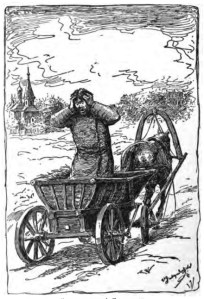
Polikushka’s Despair, from Tolstoy’s “Ivan the Fool,” and “King Lear and the Fool in the Storm” by William Dyce

For an April First Poem, write about the Fool. Consider your own fool’s journey, your own madcap dance on the edge of the cliffs, throwing caution to the winds. I once wrote an acrostic poem about the fool, using the words DANCING ON THE CLIFF’S EDGE for the first letter of each line. Fool that I am, I seem to have misplaced it, let it flutter off into the past.

  
The Fool on the Hill in the Bisti Badlands, by John Fowler; The Fool from the Rider Waite Tarot Deck, by  Pamela Colman Smith–the image of the Fool archetype. 

Gratitude List:
1. Things come together. Things get done. Sleep gets slept.
2. This man who is decorating a birthday cake for a boy’s birthday party tomorrow.
3. Rain. Then it stops. (Hoping for a clear day tomorrow–I don’t want a houseful of small boys.)
4. Shining eyes
5. Pablo Neruda

May we walk in Beauty!