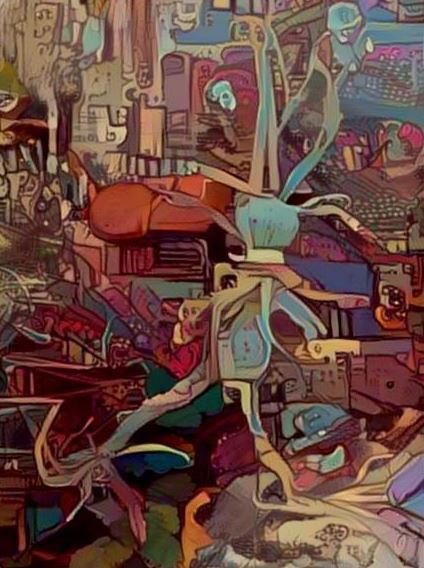
“Walk on air against your better judgment.”
–Seamus Heaney “The Gravel Walks”
Yesterday, as I was scrolling through Facebook in a lazy moment, I came upon another of those word search puzzles. This one was different. It was a different color, different font. The same friend had posted both this one and the one from the day before. The blurb at the top of the second, like the first, was something like: “The first three words you see are your words for the coming year!” I have my own processes for choosing my words for the year, but still, I couldn’t resist.
I’m a sucker for this stuff, and social media has been happy to oblige. I used to take those Facebook quizzes before I began to get wary about viruses and data collection. Like the puzzles, the quizzes offer you some random answer to an inner question. “What is my personality?” “What will 2020 be like?” “Who among my friends is most like me?”
I think that probably most of us who take these quizzes and do these inconsequential games are participating playfully, but also holding some tiny deep-self spark of hope that this little bit of utter randomness will offer us a truth we can hold onto. Like the mining of dreams or daily experience for images and ideas that will guide the inner work of the coming year, these games engage the younger, more playful deep-self part of our psyches, offering us a chance to seek meaning in organic and flowing associative connection as opposed to marked and organized logical connection.
Both processes are valid for inner work, but we have a tendency to downplay the imaginative and associative parts of our inner selves and try to make meaning and sense of the world through the logical processes. This is where I think we get ourselves into trouble. Even Einstein said, “Imagination is more important than knowledge,” and claimed to use associative processes like sleeping on an idea, and following intuitional trails, to find his way to some of his greatest thoughts about how the world works.
Searching for meaning in this way, by following the rabbit trails of the intuition, and associating seemingly random images and stories to create a narrative guide, is a form of divination. Humans have practiced divination since our early days as humans, and through all our cultures. We divined, through our senses and awareness of the natural signals around us, whether the day would be a good one for gathering mushrooms or for hunting. We let our intuition tell us whether those new mushrooms might be like the ones that feed us or the ones that kill us. It’s only natural, perhaps, that three crows in a dead tree or the sudden appearance of a coyote at the woodsedge might begin to take on greater significance, too.
Divine: an adjective, and sometimes a noun. Holy. Godlike. Heavenly. Having the properties and attributes of a deity.
Divine: a verb. To seek to know. To observe patterns and (perhaps random) elements in a landscape or a mind in order to create meaning, to develop a guiding narrative for the future.
Do my friends and I (and you, perhaps) believe that the faery folk, or God, or some spirit presence, guides our eyes down those word search charts to find us the exact words that are meant for us for the coming year? Probably not, or not exactly. Do those words take on meaning, at least for some of us? Yes. Out of the random soup of the thousands of words that we read and experience daily, here are three to focus on, three to consider special. Yes, the prophecy is definitely self-fulfilling. If Health appears in my three and I have been feeling an internal sense of having neglected my health, perhaps taking this as my word will mean that I begin, in intentional and unintentional ways, to look to my health, and so 2020 becomes a year of robust health for me. When I look back at the end of the year and remind myself of my 2020 words: “Amazing! Look! Health was one of my words, and look how that has come true!”
Magic happens in many ways, and sometimes we make the magic happen.
In the tarot system of divination, one of the major cards is the Fool, who dances on the edge of a cliff, seemingly unaware of the danger, but perhaps aware and dancing anyway, because one must live joyfully no matter the circumstances. Perhaps because of the dire nature of circumstances, the Fool must dance. Since I began to play with the idea of the Fool as one of my guiding concepts for 2020, the Fool has begun to appear everywhere, in books and images and references. Two days ago, I made that little corn dolly Fool and took some photos of her in various places. Yesterday, I did a little digital twisting of some of those photos, and came up with the one attached to this post. See how she dances at the edge of that cliff, even setting her foot into air as though she is about to trust the wind to hold her?
And here’s the strange thing about following the intuitional, poetic, pathways. Sometimes (and maybe often) delightful coincidences/synchronicities (call them what you will) occur. In the first Word Search I did, the words I saw first were: Health, Gratitude, Wade. Wade? Not particularly inspirational. Not like the others at all, haha. The maker of the puzzle clearly didn’t intend it. Of all the possibilities, wouldn’t you know it, I would find the odd one out. The second puzzle, remember, was a different puzzle. I looked closely at it afterward, and the words were definitely different, in different places. My words in the second? Dance, Friendship, and. . .Wade. Yes.
My logic-brain is rolling its eyes and chuckling. But that laughter is a doorway to the deep-self fool, who loves sense that doesn’t make sense, who molds coincidence into meaning. As quick as my logic-brain was working to shrug it off, that deep-self elf had already begun to weave the patterns of a new idea. So I’m wading in the coming year. Does that mean that things will be a slog? Or maybe I have finished swimming in waters above my head and I might now be free to wade instead. I’m heading toward the second. And, because my being human means that I am a meaning-maker, I will build the meaning into my narrative for the coming year.
Dreamwork:
Last night wasn’t particularly dreamy, but I did wake up with a sense of a dream in my head. I don’t remember all of the context or even the images. But I do remember the terrible sense of urgency to get a book ready to send to a publisher. Oooof. I don’t really want urgency in my collecting basket at the moment, and I’ve been wanting to put some poems or reflections or stories together into a book, but I’m not sure I want to marry that to greater urgency. There is a deadline coming up at the end of the month for a chapbook contest for Paraclete Press. Perhaps I’ll begin with that.
Gratitude List:
1. These long slow mornings I have had for writing and contemplating and meditating. I’m beginning to feel an edge of panic that I’ll be losing the gift of morning in just a few days, but I want to focus on being grateful for the days I have had to re-develop the habit of long morning writing sessions. My blog posts will soon be getting much shorter and quicker.
2. Still two days of break. Time to get more work done, and time to spend with my family and the cats.
3. Playing games. The boys got some new games for Christmas. Can’t Catch Harry is sort of like spoons, and Ravine and Spaceteam are collaborative problem-solving games.
4. Deep, sound sleep.
5. How the logic-brain and the deep-self work together to create meaning.
May we walk in Beauty!

 Mockingbird Chronicles