Today is National Librarian Day. Really. Write an ode to your librarian. Or to your library. Or to the Ancient Library of Alexandria. Odes are formal, song-like praise poems in honor of a person, an event, or an idea. Set it to music, maybe? Get your guitar and go sing to your librarian.
Here’s a rather free-verse ode to my librarian friends:
You are my favorite subversives, sneaking about in the racks of books, stalking the readers, eyes a-gleam: “This one, I think, might interest you,” knowing full well that you just may have altered the course of a life.
Gratitude List: 1. My colleagues. They’re such good folk. Such good folk. 2. Sunshine 3. Yellow flowers 4. Sunshine 5. Sunshine (Oh, did I say that one already?) 6. Sunshine
May you walk in Beauty!
The Happy Virus by Hafez
I caught the happy virus last night When I was out singing beneath the stars. It is remarkably contagious – So kiss me.
“It is our mind, and that alone, that chains us or sets us free.” —Dilgo Khyentse Rinpoche
“Political language is designed to make lies sound truthful and murder respectable, and to give the appearance of solidity to pure wind.” —George Orwell
“We must live from the center.” —Bahauddin, father of Rumi
“Some days I am more wolf than woman and I am still learning how to stop apologising for my wild.” —Nikita Gill
“Whoever undertakes to set himself up as a judge of Truth and Knowledge is shipwrecked by the laughter of the gods.” —Albert Einstein
“Writer’s block results from too much head. Cut off your head. Pegasus, poetry, was born of Medusa when her head was cut off. You have to be reckless when writing. Be as crazy as your conscience allows.” —Joseph Campbell
“Ask yourself: Have you been kind today? Make kindness your daily modus operandi and change your world.” —Annie Lennox
Time with the family. Leftovers. Baked goods. The color yellow. Rest.
May we walk in Beauty!
“My wish for you is that you continue. Continue to be who and how you are, to astonish a mean world with your acts of kindness.” —Maya Angelou
“If you pour a handful of salt into a cup of water, the water becomes undrinkable. But if you pour the salt into a river, people can continue to draw the water to cook, wash, and drink. The river is immense, and it has the capacity to receive, embrace, and transform. When our hearts are small, our understanding and compassion are limited, and we suffer. We can’t accept or tolerate others and their shortcomings, and we demand that they change. But when our hearts expand, these same things don’t make us suffer anymore. We have a lot of understanding and compassion and can embrace others. We accept others as they are, and then they have a chance to transform.” —Thich Nhat Hanh
“I have decided to stick with love. Hate is too great a burden to bear.” —Martin Luther King, Jr.
“When we plant trees, we plant the seeds of peace and seeds of hope.” —Wangari Maathai
I offered this as a short story prompt on my FB page the other day, and the results were compelling and moving. Let’s make it into a poem for today.
Write a three- to five-line poem in which you tell a story of loss and redemption.
The veil is torn. “Why are you weeping?” Tell me where they’ve taken his body. “Mary.” Morning dawns.
I love that Easter happens so often right near the beginning of April. although he is many archetypes–healer, teacher, revolutionary, dying god, redemptive force–one of my favorites is the Sacred Fool, and I never cease to be moved at the way the story plays this out in Easter and its aftermath, in the stories of Mary in the garden, Thomas the skeptic, Peter the shamed, and the travelers on the road to Emmaus. Each time, hope and relief burst in upon the devastation and despair.
The first one is with Mary in the garden. He approaches he and lets the truth of the story dawn on her in her time, lets the surprise flood in to her devastated heart without trying to push the discovery. And how does she hear the truth that he is alive? When he says her name.
It is my hope that, no matter what your spiritual story, that you will know you are Beloved, that you will be truly named.
Here is a Mary poem I wrote in 2017:
Turning the Wheel by Beth Weaver-Kreider
it can be that quick the change from one state to another there’s that moment of devastating awareness the kick in the gut and the tumble into the terrible truth then the cold crypt of devastation the going numb
but there’s that moment when you turn your face away from the shadows and into the glare and you don’t know yet who is it you see but there’s something in the stance something about the voice the why are you weeping and you don’t dare to hope but then you hear your own name and it all falls away and the wheel has turned and Love is there
Gratitude List: 1. How the light shines in 2. Holy surprises 3. Stories that bring hope to life 4. So many circles of care 5. Love
May we walk in Love!
“‘Kindness’ covers all of my political beliefs. No need to spell them out. I believe that if, at the end, according to our abilities, we have done something to make others a little happier, and something to make ourselves a little happier, that is about the best we can do. To make others less happy is a crime. To make ourselves unhappy is where all crime starts. We must try to contribute joy to the world. That is true no matter what our problems, our health, our circumstances. We must try. I didn’t always know this and am happy I lived long enough to find it out.” —Roger Ebert
In a mist of light falling with the rain I walk this ground of which dead men and women I have loved are part, as they are part of me. In earth, in blood, in mind, the dead and living into each other pass, as the living pass in and out of loves as stepping to a song. The way I go is marriage to this place, grace beyond chance, love’s braided dance covering the world. —Wendell Berry (The Wheel)
”You have to begin to tell the story of your life as you now want it to be, and discontinue the tales of how it has been or of how it is.” —Esther Hicks
For National Poetry Month, some of my poetry shelves.
Poetry Prompt for Day Three of National Poetry Month–
Rhyme Play! Why do we assume that the rhyme has to happen at the ends of lines? Write a poem (maybe four lines, or eight, or twelve) in which the first words of the lines rhyme, instead of the last. Or make the middle word in each line rhyme. Make ALL the words rhyme? Make the first word of each line rhyme with the last word of the previous line—essentially, you’re sticking your two rhyming words together, separated only by the line break. Give yourself an extra challenge and make the first word and last word of the poem rhyme, and you’ll make it a complete circle.
What does that do to the poem when you switch up the rhyme? How does it affect the tone and the energy and the way the line moves from beginning to end?
Here’s an attempt at the last one: When I think of how you’ve loved me, see the thread of your tender care, there in my self-absorbed cocoon, crooning myself a lullaby, I wish I had a poem to give you to tell you how you’ve saved my heart again.
Gratitude List: 1. The fine distinctions of flavor, and the joy of concentrating on scent and flavor 2. Brown creeper sidling up the little oak 3. Delicious supper last night: Thank you, Val! I can now distinguish mocha 4. Succulents. I repotted some of my classroom succulents yesterday. I think they grew happily because I was gone for so long and didn’t overwater them 5. Spring birdsong
May we walk in Beauty!
“Sound or vibration is the most powerful force in the universe. Music is a divine art, to be used not only for pleasure but as a path to Awakening.” —Yogananda
“As above, so below, as within, so without, as the universe, so the soul.” —Hermes Trismegistus
“The greatest danger to our future is apathy.” —Jane Goodall
“Did I offer peace today? Did I bring a smile to someone’s face? Did I say words of healing? Did I let go of my anger and resentment? Did I forgive? Did I love? These are the real questions. I must trust that the little bit of love that I sow now will bear many fruits, here in this world and the life to come.” —Henri Nouwen
“In the end, we’ll all become stories.” —Margaret Atwood
“Privilege is when you think something’s not a problem because it’s not a problem to you personally.” —attributed to many authors
“If they don’t give you a seat at the table, bring a folding chair.” —Shirley Chisholm
I made this bulletin Board this week. As people write poems on leaves, I will staple them on, and we’ll watch the tree leaf out. I might have to make some apples to add.
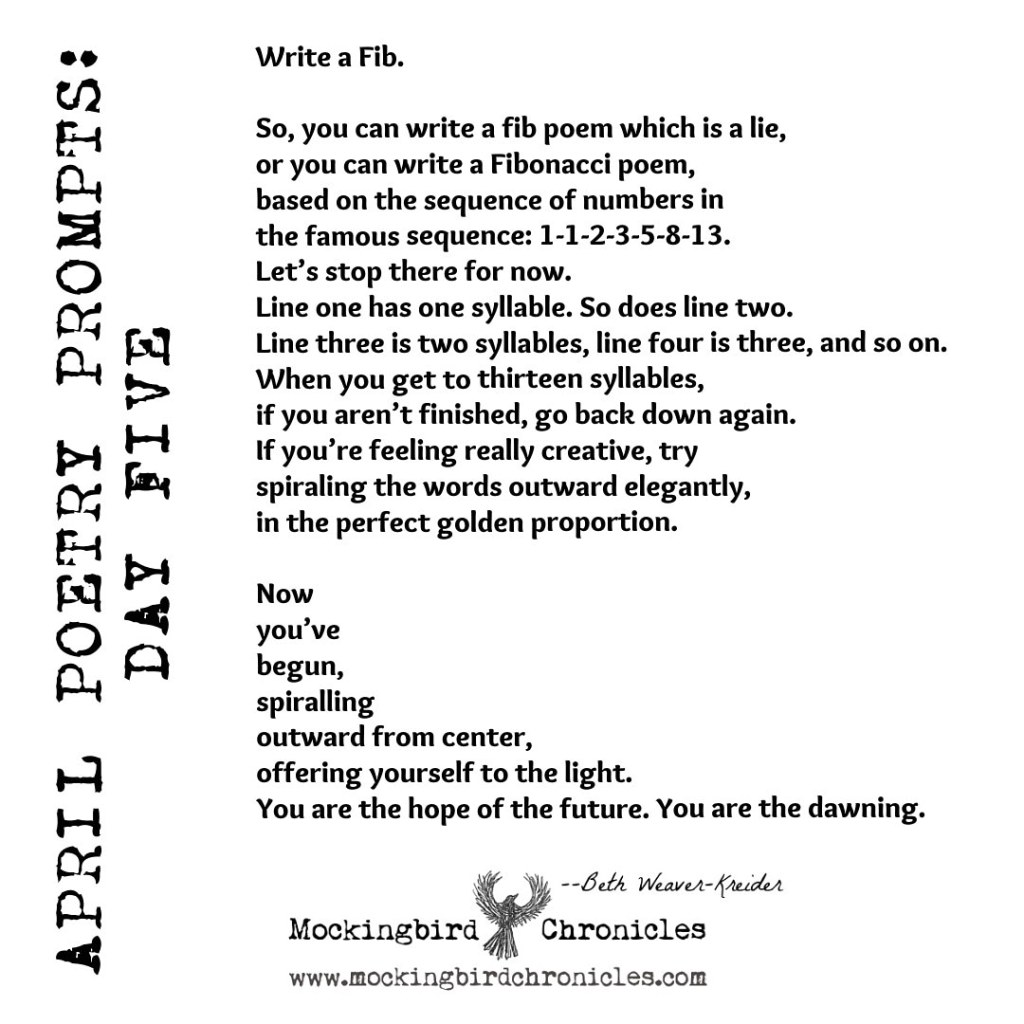
(NPM=National Poetry Month) Write an Acrostic Poem Choose a word—your name, your favorite word, your password (just kidding!), the name of your town, April—and begin each line of your poem with the letters of the word.
For example: Please understand: Once upon a time, Everything hurt My feelings.
Write one word per line, or make long and rambling prosy lines. Make it rhyme or eschew rhyme. Acrostics can be addictive. You probably can’t stop with just one.
This one’s more prosey, perhaps, than poetic, but it’s part of my ongoing chronicle:
Obviously, you can Live without this one, Fairly easily. When they Ask, “Which sense Could you not bear To lose?” no one speaks Of smell. But every day, I Rest my face in roses, hoping. Yes, today, the tiniest whiff.
Gratitude List: 1. Succulents. It’s not true that you can’t kill them–I have–but they make such pleasant companions 2. The red leaf-buds on the trees against that blue true dream of sky (eec) 3. My sense of smell is beginning–slowly–to return 4. For all its flaws, The Lord of the Rings. We watched The Fellowship again last night, and it is such a marvelous story to drop into. 5. A long weekend. I’ll say it again: A long weekend!
May we walk in Beauty!
“What we seek, at the deepest level, is inwardly to resemble, rather than physically to possess, the objects and places that touch us through their beauty.” —Alain de Botton
“We are capable of suffering with our world, and that is the true meaning of compassion. It enables us to recognize our profound interconnectedness with all beings. Don’t ever apologize for crying for the trees burning in the Amazon or over the waters polluted from mines in the Rockies. Don’t apologize for the sorrow, grief, and rage you feel. It is a measure of your humanity and your maturity. It is a measure of your open heart, and as your heart breaks open there will be room for the world to heal.” —Joanna Macy
“We should have respect for animals because it makes better human beings of us all.” —Jane Goodall
“Let yourself be silently drawn by the strange pull of what you love. It will not lead you astray.” —Rumi
“If you hear the dogs, keep going. If you see the torches in the woods, keep going. If there’s shouting after you, keep going. Don’t ever stop. Keep going. If you want a taste of freedom, keep going.” —Harriet Tubman
“The little grassroots people can change this world.” —Wangari Maathai
“Some form of the prayer of quiet is necessary to touch me at the unconscious level, the level where deep and lasting transformation occurs. From my place of prayer, I am able to understand more clearly what is mine to do and have the courage to do it. Unitive consciousness—the awareness that we are all one in Love—lays a solid foundation for social critique and acts of justice.” —Richard Rohr
“You don’t have to attend every argument you’re invited to.” —Anonymous
The Fool, of course! Today is about shapeshifting, foolery, jesting.
Write a three-line poem (call it haiku, if you need to) that seems like one thing in the first two lines, but shifts to something else in the third line. Bring in a surprise.
Maybe March goes out like a lamb, and the third line brings the lion roaring in. Maybe you step in the door of the first lines only to step out the door in the third. Maybe you show your masked self in the first two lines and take off the mask (metaphorically, of course) in the third.
You don’t have to go for a big surprise. It can be a dawning, a quiet wave of change, a whisper, the unfurling of a leaf in the wasteland.
Here’s one I wrote a couple weeks ago:
feathers by the trail cardinal takes flight in the belly of the hawk
Gratitude List: 1. Blue carpet of Speedwell 2. Purple carpet of Deadnettle 3. Green carpets of Chickweed and other spring friends 4. Feeling better every day 5. A long weekend to recover in
May we walk in Beauty!
“The fullness of joy is to behold God in everything.” —Julian of Norwich
“Loneliness does not come from having no people about one, but from being unable to communicate the things that seem important to oneself, or from holding certain views which others find inadmissible.” —Carl Jung
“The historical Jesus probably looked like an average Syrian refugee. You know…the ones we turn away.” —Rebecca James Hecking
“Poems are maps to the place where you already are.” —Jane Hirshfield
“Be still, and the world is bound to turn herself inside out to entertain you. Everywhere you look, joyful noise is clanging to drown out quiet desperation. The choice is to draw the blinds and shut it all out, or believe.” —Barbara Kingsolver, High Tide in Tucson
“When you do not know you need mercy and forgiveness yourself, you invariably become stingy in sharing it with others. So make sure you are always waiting with hands widely cupped under the waterfall of mercy.” —Richard Rohr
“All four gospels insist that when all the other disciples are fleeing, Mary Magdalene does not run. She stands firm. She does not betray or lie about her commitment to Jesus—she witnesses. Hers is clearly a demonstration of either the deepest human love or the highest spiritual understanding of what Jesus was teaching—perhaps both. But why—one wonders–do Holy Week liturgies tell and re-tell the story of Peter’s threefold denial of Jesus, while the steady and unwavering witness of Magdalene is passed over—not even noticed? How would our understanding of the paschal story change if instead of reflecting upon Jesus dying alone and rejected if we were to reinforce the fact that one person stood by him and did not leave? For this story of Mary Magdalene is as firmly stated in scripture as the denial story. How would this change the emotional timbre of the day? How would it affect our feeling of ourselves? How would it reflect upon how we have viewed, and still view, women in the church? About the nature of redemptive love?” —Cynthia Bourgeault, Episcopal Priest
“When I feel this fog rolling in on me, I light fires of affection in the hearts of others. I tell them in tangible ways how the life they live makes me live mine differently, how precious and important they are to the rest of us. That fire then becomes like a beacon which burns through the grey and which I can sail towards.” –Toko-pa Turner
It’s good to leave each day behind, like flowing water, free of sadness. Yesterday is gone and its tale told. Today new seeds are growing. —Rumi
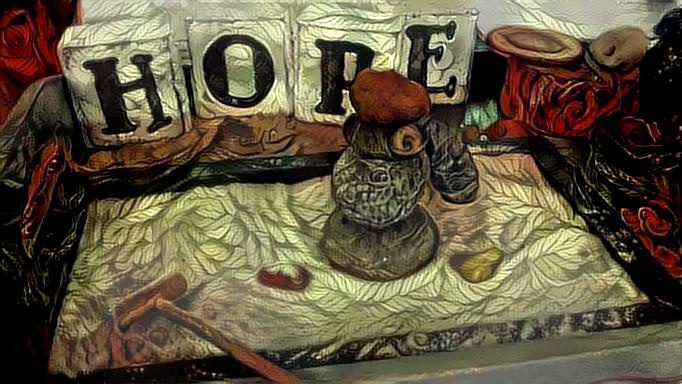
This is the little zen garden in my classroom. It was constantly changing throughout the day as different students would rake and arrange it. I miss those moments.
Since I have been working from home, I have noticed–along with the uncomfortable energies of anxiety and irritability and grieving–a positive energy shift. In normal life, I am often exhausted and worn down. I can’t sleep past 5:30. I get home, and all I want to do is sleep. I try to get to the big grading projects, and it’s like trying to walk through a wall inside my brain. I start to feel like I am a lazy procrastinator. The sense of inadequacy makes me feel more tired and run-down.
In the two and a half weeks since I’ve been working at home, I find that I have to remind myself to stop working. I have to make it a point to take breaks. I feel like I have the energy to work like I need to, to do ALL the grading.
As I have been pondering it, I realize that the energy shift has to do with introversion and extraversion, with being an ambivert–both intro and extra. I think that in many public spaces I present primarily as an extravert, and I love that part of myself. When I am teaching, the interaction with students, whether one-on-one or in a class setting, is one of my great joys. I love pushing myself outward, meeting the other, making connection. But the constant extraversion, and the need to be “on” all the time, takes a toll on my emotional energy. The introvert never gets fed.
Grading, while it’s a solitary sort of task, is (I think) an extension of the extraverted element of the working day. In normal life, I just hit a wall and can’t seem to get past it to push myself out there to do the next thing. My extravert side is exhausted and run-down, and my introvert can’t find the energy to get back into balance.
These days, the grading and the school communicating is pretty much all I have for that crucial connected part of my work-life. My introvert is being fed with lots of quietness and stillness, even in this crowded house. I pace myself. I have re-taught my body to sleep until 6:30. The grading and the school communications give my life purpose and structure. The wall between me and the grading projects is gone. I just sit down and do the next thing. I actually feel (mostly) adequate to these particular tasks.
But I miss my students terribly. I can hardly bear that I might never see some of them again. I know that some of them are hurting and struggling, and I don’t know how to be Present through a computer. When this is over, I will happily go back to physical school. Despite what I am learning about myself and my energy, I don’t think I am meant to be a cyber-school teacher. I need faces and classrooms. While I think that my teaching can be perfectly adequate from home, there’s nothing like the magic of exploring ideas about literature and writing in a real-time class. And there are costs to this kind of work. I NEED to have a life outside of school, and now that school has invaded my home, there is almost nothing that is not school. I must set boundaries, and leave some work unfinished.
I think I will need to hold some of this sense of empowerment and adequacy that I am gaining in my introverted time when I return to extraverted life. Perhaps this current sense of being adequate to the grading tasks will stick to me a little more solidly and I will be able to manage my ambiverted self with a little more balance and grace.
Gratitude List: 1. National Poetry Month! Something to break up the steady monotony of constant school. Today’s prompt is to write a new world poem. 2. Chipping sparrows. They’re so sweet, sort of timid, smaller than the white throats, and they wear those rusty caps. When they come in to the bird feeder, they sometimes hover for a couple seconds before they alight. 3. The sound of a woodpecker rat-a-tatting in the walnut tree. 4. Vanilla in my coffee. I make coffee shakes in the mornings: hot coffee, a little butter a little coconut oil, half-and-half (if I have it), and a scoopful of vanilla protein powder. Blend and drink. 5. How the altered times are teaching me things about myself, things I knew in my head, but didn’t have the space within which to explore the deeper truths.
Take care of each other!
Words for the Day of the Holy Fool: “The fullness of joy is to behold God in everything.” —Julian of Norwich
“Loneliness does not come from having no people about one, but from being unable to communicate the things that seem important to oneself, or from holding certain views which others find inadmissible.” —Carl Jung
“The historical Jesus probably looked like an average Syrian refugee. You know…the ones we turn away.” —Rebecca James Hecking
“Poems are maps to the place where you already are.” —Jane Hirshfield
“Be still, and the world is bound to turn herself inside out to entertain you. Everywhere you look, joyful noise is clanging to drown out quiet desperation. The choice is to draw the blinds and shut it all out, or believe.” —Barbara Kingsolver, High Tide in Tucson
“When you do not know you need mercy and forgiveness yourself, you invariably become stingy in sharing it with others. So make sure you are always waiting with hands widely cupped under the waterfall of mercy.” —Richard Rohr
“All four gospels insist that when all the other disciples are fleeing, Mary Magdalene does not run. She stands firm. She does not betray or lie about her commitment to Jesus—she witnesses. Hers is clearly a demonstration of either the deepest human love or the highest spiritual understanding of what Jesus was teaching—perhaps both. But why—one wonders–do Holy Week liturgies tell and re-tell the story of Peter’s threefold denial of Jesus, while the steady and unwavering witness of Magdalene is passed over—not even noticed? How would our understanding of the paschal story change if instead of reflecting upon Jesus dying alone and rejected if we were to reinforce the fact that one person stood by him and did not leave? For this story of Mary Magdalene is as firmly stated in scripture as the denial story. How would this change the emotional timbre of the day? How would it affect our feeling of ourselves? How would it reflect upon how we have viewed, and still view, women in the church? About the nature of redemptive love?” —Cynthia Bourgeault, Episcopal Priest
“When I feel this fog rolling in on me, I light fires of affection in the hearts of others. I tell them in tangible ways how the life they live makes me live mine differently, how precious and important they are to the rest of us. That fire then becomes like a beacon which burns through the grey and which I can sail towards.” –Toko-pa Turner
It’s good to leave each day behind, like flowing water, free of sadness. Yesterday is gone and its tale told. Today new seeds are growing. —Rumi
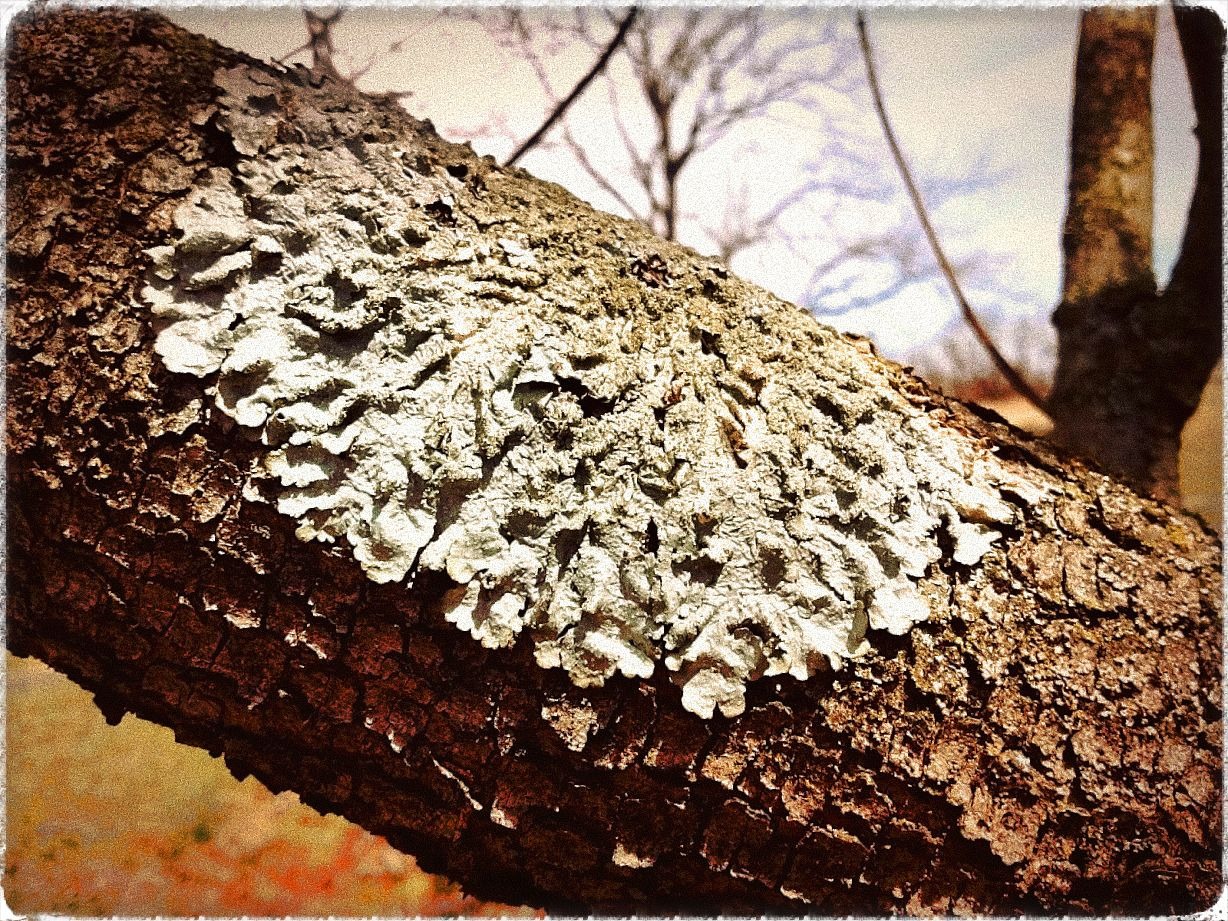
Lichen on a branch like a lace doily on the arm of a grandmother’s chair.
Brewer’s prompt today is to write an animal poem. As usual, when I leave the poem until the end of the day, my mind has scrambled down too many tunnels to form a coherent poem.
On the green carpet, a golden patch of sunlight. A question-mark cat.
It’s another April. This year, grades were due at 8 a.m. on April first, so I didn’t even consider Poem-a-Day until after I’d muddled my way through the day, taken a nap, and eaten supper. But here I am. It’s a strange compulsion, this drive to write a daily poem, knowing that the next four weeks will have their own share of other stresses, that there will come a day, mid-month, when I will hate the way poetry is holding the whip above my head, when I will write a grocery list and call it a poem, just to get through the day. But now, on the first day of the month, everything seems bright and shiny, and I feel up for anything.
Brewer’s prompt today is to write a morning poem. I worked up a photo of this morning’s magenta cloud in a blue sky to go with it.
Finishing the Grades
The battle cry of yesterday’s ghost startled me into morning at precisely 4:38 according to the clock, and as I couldn’t wrestle the monster back into oblivion, I strapped on the day like a rusty sword and went downstairs in the chilly dark, to coffee and a blue screen, to the silent dread of numbers on a page, and the certainty of this day’s wave of work receding, while the pull of the next wave began its undertow toward the rising sun.
Today’s Prompt is to write a portrait poem. I looked at an old photo of my great-great-grandmother, Catherine Witwer Weaver, who was a midwife.
I took a photo of the photo on the wall, and captured the light from my own room reflected into hers, and there is the room of my own head casting a shadow on the left side of the photo.
Gratitude List: 1. Poeming
2. Grandmothers
3. Kestrel on a wire
4. Dreaming
5. Sleeping





 Mockingbird Chronicles