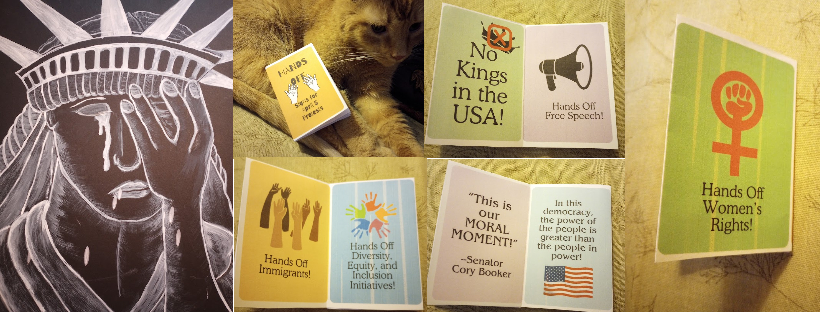
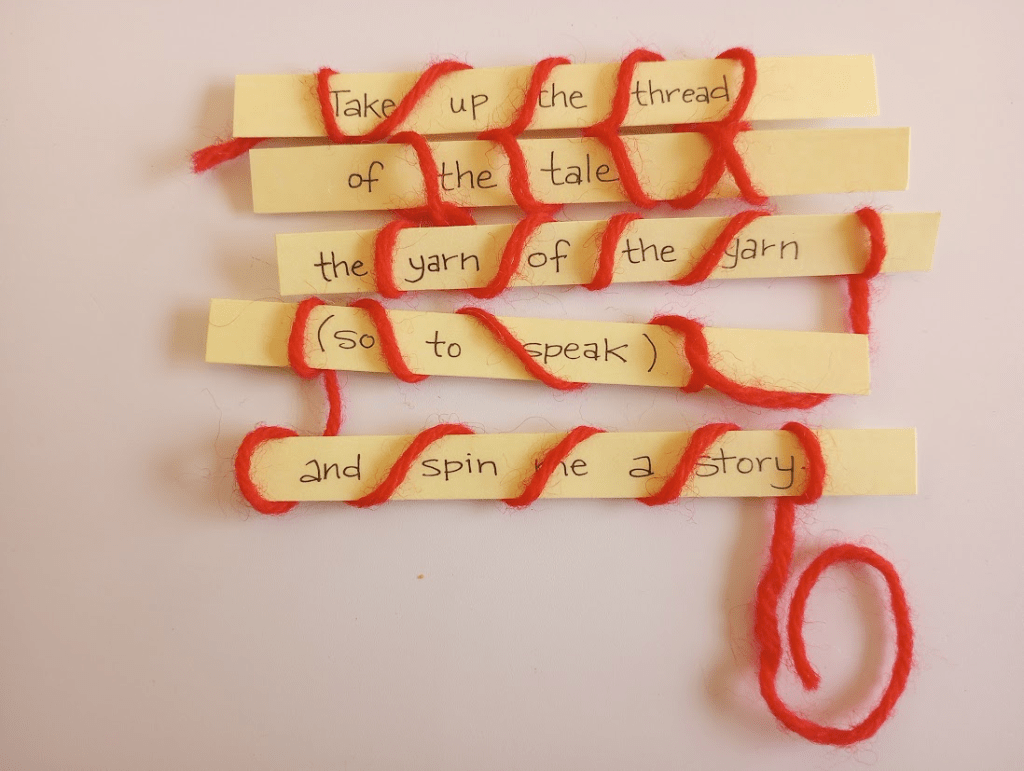
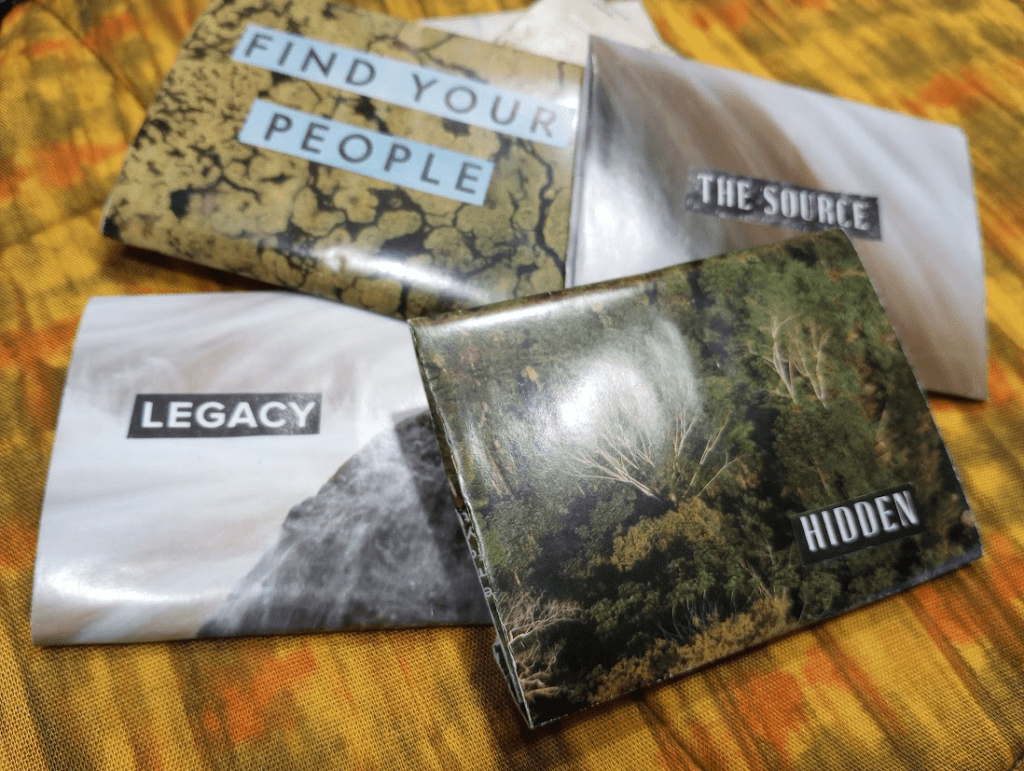
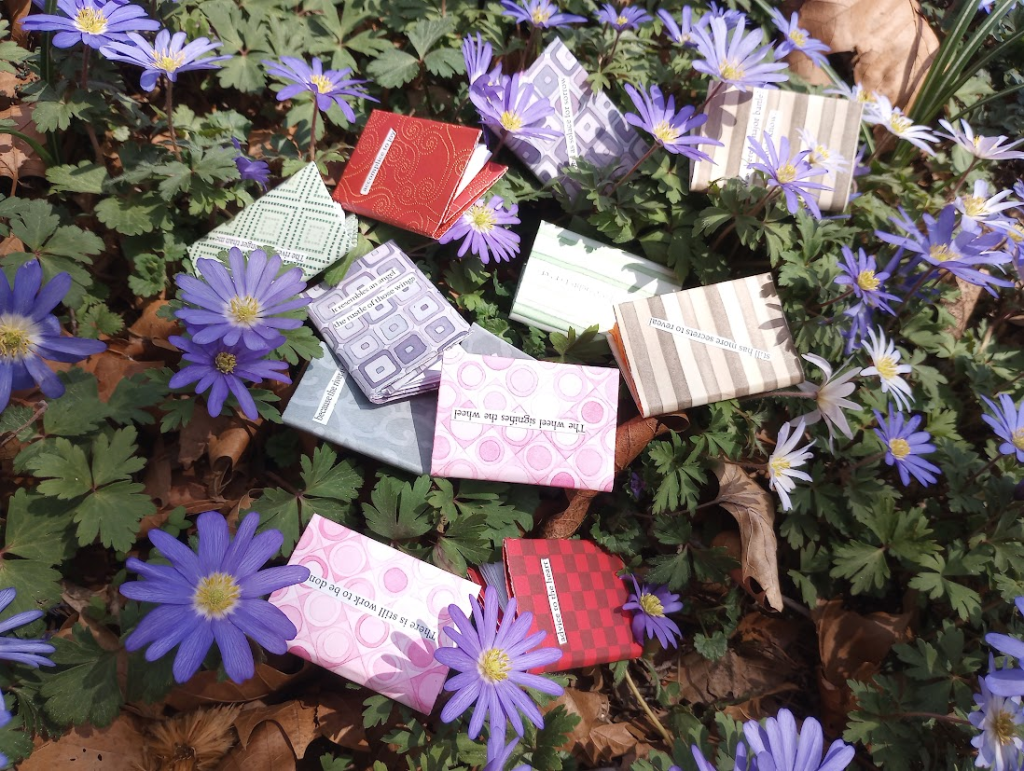
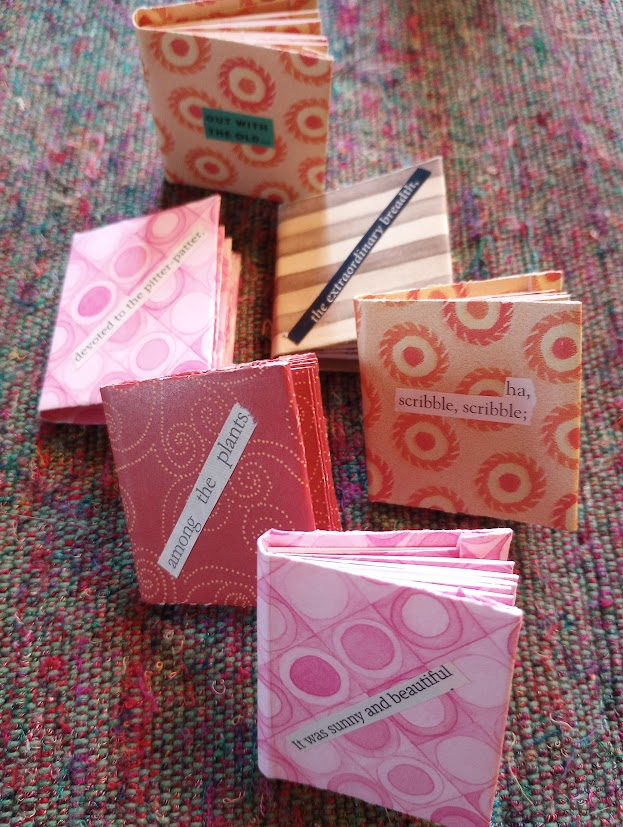
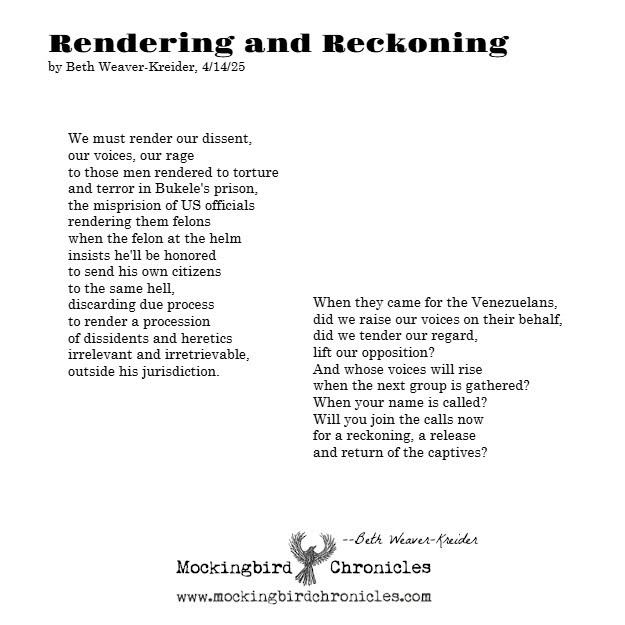
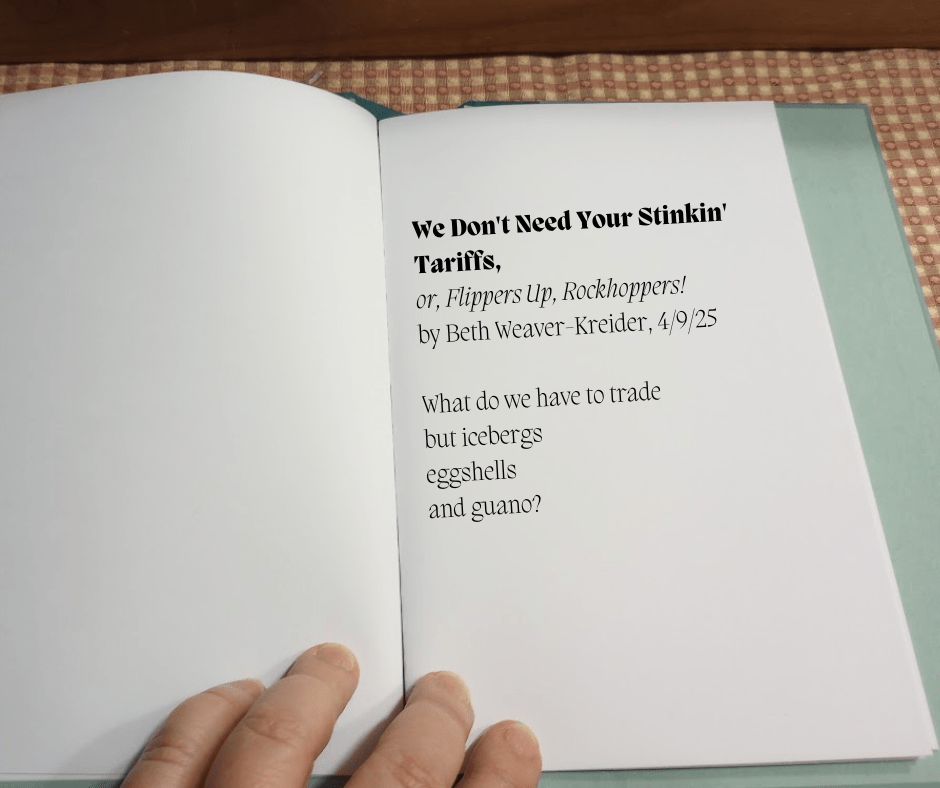
I have been writing. Really! I just haven’t been posting here. This season, I have gotten myself into a little bit of a bind with the artistic disciplines. I’m doing #The100DayProject, making a book a day, and I’m writing a poem a day in April. These are the things that keep my mind alive and questing during the stress of the spring season at school. The quick publish/post for daily poem and book has been Instagram and Substack, and so I will post a catalogue of some of my favorite poems and books here today.
I’ve had quite a few ideas about how I wanted to organize this year’s November Poem-a-Day. Try on a different persona every day? Do a month’s worth of epigraph poems? Do two days on each of the fifteen Mysteries of the Rosary? Write a daily ekphrastic poem based on drawing a tarot card? Do a month’s worth of found poems? Make each a magic spell?
Today I hadn’t yet settled on an organizing motif, and I’d sketched out the beginnings of several ideas for today’s poem, when I picked up The Best American Poetry 2000 (edited by Rita Dove) to read during Library Period while my students were independently reading.
One of the poets described how his poem in the anthology had taken him three years to write. Three years!?! How does a poet sustain the energy and attention for a single poem over three years? My own process has become very tied to my poem-a-day cycles in April and November, a discipline that tends to place practice over craft, a way to ensure that even when I go through dry times, I’ll always come back to a writing practice twice a year.
Even as I wrote that last sentence, I began to quibble with myself, because the practice, messy as it is, has definitely honed and sharpened my craft, and I always come back, select the best of the month’s harvest, and subject them to more careful crafting. I’m not just a word-vomit poet. I take crafting seriously.
But this poet who took three years to craft a poem! Perhaps it’s my own squirrelly attention span, or the mediocrity of my poetic sensibility, but I have never been able to imagine the process when poets talk about lengthy poem-crafting, the aching strain of shaping an idea over such a span of time. What was the poem doing in those years? Was it like a painting waiting for the artist to dab a few dabs of paint a day? Or half-abandoned like one of my knitting projects that gets stuck in the bottom of a basket for months before I remember to work on it again? Was it working on the poet’s psyche every day?
Perhaps the poem that rushed from me as I considered this poet and his process, and my own slap dash throw-it-on-the-page method of writing, made me a little defensive. I don’t really intend the tone to be snarky–toward him or myself. I was invigorated by the rush of ideas, the whoosh and whisper as the words winged in.
Perhaps this is one I will return to more deliberately, to craft into a gem. It will not take me three years, and yet, despite that essential lie, I feel like I’ve found some gold inside today’s idea.
Three Years by Beth Weaver-Kreider
This poem has taken me three years to write. First, it was a simple spot of blood, blooming crimson on the white petal of the page, glowing slightly, touched with were-light. It hovered in that state for months, in stasis while I hammered out the form, the quiet exhalations of its line breaks, the humming tension of occasional enjambment heightening the tautness of the structure, driving the metrical processional to the first stanza’s end. That was the first year.
In the second year, I crawled about, blindly, in the dusty rooms of the poem, gathering shadows like cobwebs stuck to my knees, my hair, my teeth. Here and there I tugged transitions into place, opened blinds to let light in, took myself in hand and faced the demon labyrinth of the second stanza with every scrap of strength my soul could muster. Perhaps you can sense, Sensitive Reader, the longing that fed me forward to the exhausting conclusion of the second year?
The third year was filled with howling and wrangling, attempting to tame the wild creature of the poem without breaking its will, feeding it symbols and reasons, assonance, consonance, rhythms and patterns to live for, then recanting the dominion within me that sought to subject it, to coax and corral it under my will. I gave it some rein for its wildness, then set it free. And just today I heard it nickering on the hill behind the orchard, its gentle form slipping through the mists to return to me complete.
Gratitude List: 1. Writing Practice 2. Writing Craft 3. How golden sunlight fills the bowl of woods, of hollow. 4. Weekend 5. No matter what happens, people will continue to work for good. May we walk in Beauty!
“I am passionate about everything in my life, first and foremost, passionate about ideas. And that’s a dangerous person to be in this society, not just because I’m a woman, but because it’s such a fundamentally anti-intellectual, anti-critical thinking society.” —bell hooks
“Bless the light and the darkness, the love and the fear.” —Rabbi Olivier BenHaim
“It doesn’t matter who you are or what you look like, so long as somebody loves you.” —Roald Dahl, The Witches
“For women who are tied to the moon, love alone is not enough. We insist each day wrap its knuckles through our heart strings and pull. The lows, the joy, the poetry. We dance at the edge of a cliff. You have fallen off. So it goes. You will climb up again.” —Anais Nin
“The creation of a thousand forests is in one acorn.” —Ralph Waldo Emerson
“In the morning I went out to pick dandelions and was drawn to the Echinacea patch where I found a honeybee clinging to one of the pink flowers. She seemed in distress, confused and weak. She kept falling off the flower and then catching herself in midair and flying dizzily back. She kept trying to get back to work, to collect her pollen and nectar to take home to the hive to make honey but she was getting weaker and weaker and then she fell into my hand. I knew she would never make it back to her hive. For the next half hour she rested in my palm, her life slowly ebbing away as a thunderstorm started to brew. I sat on the earth waiting for death with her. The lightning flashed over the mountains, a family of turkeys slowly walked the ridge, a wild dog keyed into what was happening circled past us. The trees appeared startlingly vivid and conscious as the wind blew up and the thunder cracked and then her death was finished. She was gone forever. But in her going she taught me to take every moment as my last flower, do what I could and make something sweet of it.” —Layne Redmond
“Let me seek, then, the gift of silence, and poverty, and solitude, where everything I touch is turned into prayer: where the sky is my prayer, the birds are my prayer, the wind in the trees is my prayer, for God is all in all.” —Thomas Merton
“Beware; for I am fearless, and therefore powerful.” —Mary Wollstonecraft Shelley, author of Frankenstein
Audre Lorde: “For women, then, poetry is not a luxury. It is a vital necessity of our existence. It forms the quality of the light within which we predicate our hopes and dreams toward survival and change, first made into language, then into idea, then into more tangible action. . Poetry is the way we help give name to the nameless so it can be thought. The farthest external horizons of our hopes and fears are cobbled by our poems, carved from the rock experiences of our daily lives. . As they become known and accepted to ourselves, our feelings, and the honest exploration of them, become sanctuaries and fortresses and spawning grounds for the most radical and daring of ideas, the house of difference so necessary to change and the conceptualization of any meaningful action. Right now, I could name at least ten ideas I would have once found intolerable or incomprehensible and frightening, except as they came after dreams and poems. This is not idle fantasy, but the true meaning of “it feels right to me.” We can train ourselves to respect our feelings, and to discipline (transpose) them into a language that matches those feelings so they can be shared. And where that language does not yet exist, it is our poetry which helps to fashion it. Poetry is not only dream or vision, it is the skeleton architecture of our lives.”
“Wake at dawn with a winged heart and give thanks for another day of loving.” —Khalil Gibran
Marge Piercy: Forgive the dead year. Forgive yourself. What will be wants to push through your fingers. The light you seek hides in your belly. The light you crave longs to stream from your eyes. You are the moon that will wax in new goodness.
“Surrender is not passively resigning yourself to something. . .it is a conscious embracing of what is.” —Cynthia Bourgeault
Today’s prompt, the last of the month, is to write a poem titled “And ________.” I will probably take a break from daily poeming after today, but I hope not to be so absent from the blog as I sometimes am between the Poem-Months of April and November. This month of poem-a-day has been almost as rich for me as the first one I ever did, which deepened my poetic voice. I am grateful for these challenges.
And then the story ended.
And then the wild one broke through the walls we’d built to keep out the harrowing questions and protect our careful dogmas. And the wind scoured our spaces clear of the lies and dissembling, tearing down the towers we’d erected of malice and spite and smugness, breaking down the bridges we’d placed above the perilous chasms. None of us escaped its shriving. And some of us were devastated, and many of us were relieved.
And then the story began.
Gratitude List: 1. Dogs. Every school should have dogs that come to visit sometimes. 2. Poem-a-Day. I loved the work of this month, and how it expanded my craft as well as pushing me to do more intentional inner work. But I am also tired and ready for a break. 3. Guidance and protection 4. A happy lamp–full spectrum light to get me through the gray days. (I do love rainy days, and even rainy November days, but it is nice to have my alternative sunshine to get me through days of no-sun and early night.) 5. Shiny stones May we walk in Beauty!
“I don’t always feel like I belong, or like I understand the unwritten rules of certain groups, even though I think I am a pretty good observer of human nature. So when I am in a group whose rules accept everyone’s awkwardness and oddness unconditionally, which loves each one not in spite of our oddities, but because of them, then I feel safe. Then I feel belonging. I am especially grateful to those of you who know how to extend unconditional welcome in ways that make everyone believe they belong.” —Beth Weaver-Kreider
“To wantonly destroy a living species is to silence forever a divine voice. Our primary need for the various life forms of the planet is a psychic, rather than a physical, need.” —Thomas Berry
“All through your life, the most precious experiences seemed to vanish. Transience turns everything to air. You look behind and see no sign even of a yesterday that was so intense. Yet in truth, nothing ever disappears, nothing is lost. Everything that happens to us in the world passes into us. It all becomes part of the inner temple of the soul and it can never be lost. This is the art of the soul: to harvest your deeper life from all the seasons of your experience. This is probably why the soul never surfaces fully. The intimacy and tenderness of its light would blind us. We continue in our days to wander between the shadowing and the brightening, while all the time a more subtle brightness sustains us. If we could but realize the sureness around us, we would be much more courageous in our lives. The frames of anxiety that keep us caged would dissolve. We would live the life we love and in that way, day by day, free our future from the weight of regret.” —John O’Donohue
“I was going to die, sooner or later, whether or not I had even spoken myself. My silences had not protected me. Your silences will not protect you…. What are the words you do not yet have? What are the tyrannies you swallow day by day and attempt to make your own, until you will sicken and die of them, still in silence? We have been socialized to respect fear more than our own need for language.”
I began to ask each time: “What’s the worst that could happen to me if I tell this truth?” Unlike women in other countries, our breaking silence is unlikely to have us jailed, “disappeared” or run off the road at night. Our speaking out will irritate some people, get us called bitchy or hypersensitive and disrupt some dinner parties. And then our speaking out will permit other women to speak, until laws are changed and lives are saved and the world is altered forever.
Next time, ask: What’s the worst that will happen? Then push yourself a little further than you dare. Once you start to speak, people will yell at you. They will interrupt you, put you down and suggest it’s personal. And the world won’t end.
And the speaking will get easier and easier. And you will find you have fallen in love with your own vision, which you may never have realized you had. And you will lose some friends and lovers, and realize you don’t miss them. And new ones will find you and cherish you. And you will still flirt and paint your nails, dress up and party, because, as I think Emma Goldman said, “If I can’t dance, I don’t want to be part of your revolution.” And at last you’ll know with surpassing certainty that only one thing is more frightening than speaking your truth. And that is not speaking.” —Audre Lorde
If you’re just joining me in these recent posts, I am taking a trip through the Fool’s Quest, the soulpath laid out in the stages of the Major Arcana of the Tarot cards. My use of the tarot as a tool for deep inner understanding and spiritual growth and development has recently caused some shifts in my life. What people do not understand, they often demonize, and my use of the tarot has caused people in my community to doubt my truth and goodness. Instead of giving in to the scandal and shaming, I have decided to publicly explore the rich terrain of this tool for inner wisdom that I have been studying since 1992.
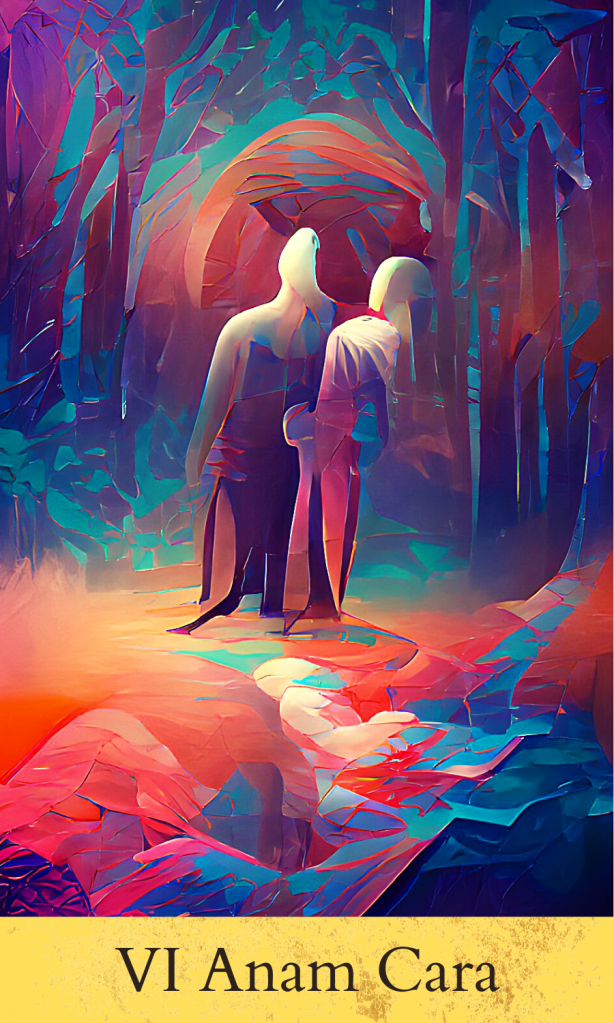
The sixth card on the Fool’s Quest is the Anam Cara, traditionally known as The Lovers. While I am completely comfortable with the simple meaning of this card as a reminder to look to the balance of romance and sexuality in one’s life, I think this card is much more layered. We humans are complex and multi-faceted, and reducing the love balance in this card to sexuality and romance feels too simplistic.
The Irish poet (and former priest) John O’Donohue began using the term anam cara, or Soul Friend, to express the deep level of friendship that extends beyond the surface, that meets emotional needs, but also enriches and nurtures emotional and spiritual growth. Hopefully you have one or more of these people in your life, people who integrate you, make you feel more whole and complete, not because they fill a void within you, but because they believe in your capacity to be always more fully yourself. And people for whom you can reciprocate.
At this stage in the Quest, after the Fool has learned skills and mysteries and knowledge, you (for you and I are the Fool) draw to yourself the Anam Cara, the friend who can spur you to deeper understanding of yourself in the world, one who listens and engages and challenges you. Blessed are you if you have found such a person or community in your life. The Anam Cara, I think, is different than a loving teacher. That was our last card. This is someone who is on the journey with you, experiencing it with you. You teach each other, smooth each other’s sharp edges, share openly about your bitters and sweets. You love deeply and openly, reciprocating, sharing, mirroring.
This person may indeed be your lover, but might as likely be a friend or group of friends. How can you nurture these sorts of deep, give and take, committed relationships in your life?
Can you be your own Anam Cara? To some degree, I think that’s part of the point of this quest, to meet that deep inner self that gets hidden under all the masks and veils of everyday existence. Perhaps it’s only in truly meeting and knowing my own inner Anam Cara that I can be openly available to engage others at that deep level as well. And, as Aristotle pointed out, friendship is a mirror in which we see ourselves, so having strong, loving, soulful relationships helps us to see ourownselves more clearly and deeply, so the path outward–toward another–is in this case the path inward–toward deep inner knowing.
Gratitude List: 1. Soul Friends, mirrors, companions on the journey 2. Lunch with two former students yesterday. What marvelous humans! Their lasting friendship is inspiring. I’m so grateful they included me in their time together, so grateful our paths crossed so many years ago, and again today. 3. I signed the papers! It’s official. I’ll be teaching at The Janus School this fall as a Humanities teacher. I may be teaching some science and social studies (thank you, Waldorf School, for that experience), as well as language arts–using my background in reading and writing instruction. Classes are small. The philosophy feels like a good match for me. I love that this is a position that will both draw on my skills and offer me new challenges to learn and develop. 4. The travelers. So many of my online friends are traveling these days! Lots to various places in the UK, some to mainland Europe, others throughout the US. Because I can’t be traveling to those places at this point, I am delighted to be an armchair traveler, exploring the world through their eyes. 5. Faces in the Green. Do you ever find yourself idly gazing at a tree or a group of trees, and suddenly see the faces? I can’t often intentionally start looking for faces in the woods, but when I’m not thinking about it, I’ll suddenly see a face or series of faces, and when the breezes are blowing, like now, they seem to be talking. There’s a name for it, which I always forget, for noticing faces in objects and environments. May we walk in Beauty!
“And suddenly you know: It’s time to start something new and trust the magic of beginnings.” —Eckhart Tolle ***** “We are called to assist the Earth to heal her wounds and in the process heal our own—indeed, to embrace the whole creation in all its diversity, beauty and wonder. This will happen if we see the need to revive our sense of belonging to a larger family of life, with which we have shared our evolutionary process.” —Wangari Maathai
“When will our consciences grow so tender that we will act to prevent human misery rather than avenge it?” ―Eleanor Roosevelt
“Do you not see how everything that happens keeps on being a beginning?” —Rainer Maria Rilke
“Every soul innately yearns for stillness, for a space, a garden where we can till, sow, reap, and rest, and by doing so come to a deeper sense of self and our place in the universe. Silence is not an absence but a presence. Not an emptiness but repletion A filling up.” —Anne D. LeClaire
“To me, every hour of the day and night is an unspeakably perfect miracle. ” —Walt Whitman
“Sometimes the most important thing in a whole day is the rest we take between two deep breaths, or the turning inwards in prayer for five short minutes.” —Etty Hillesum
“Am I killing time, or is it killing me?” —The Middle Brother Band
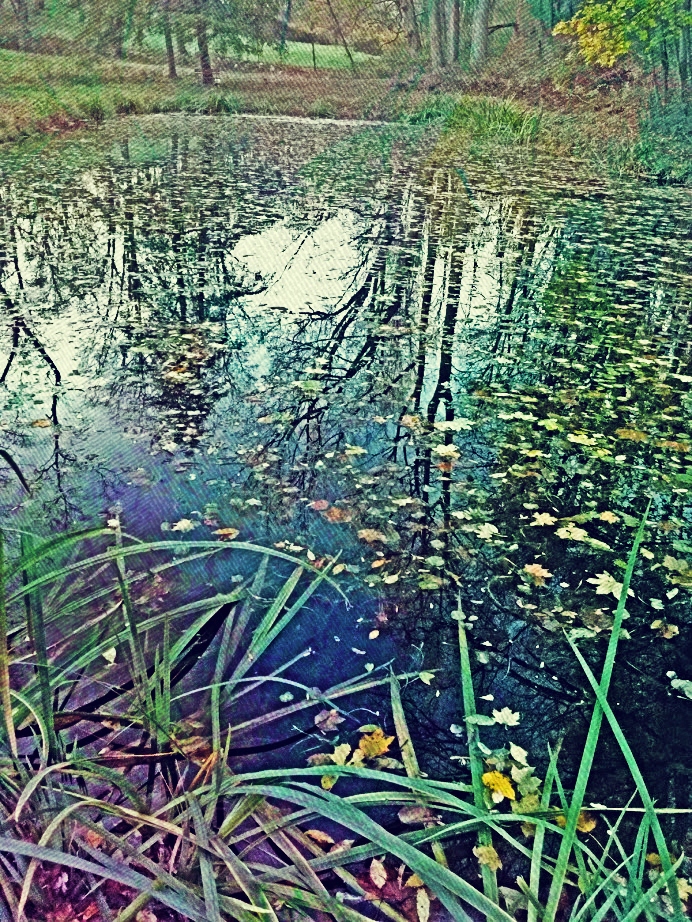
Photo taken from a moving car by a reluctant teenager. I tinkered with it to try to bring it closer to my memory of the moment of color.
This is the dawn of a new semester. Here on the second day of our new classes, I am trying to get a baseline writing sample from all my students, and trying to make sure that everyone knows how to submit their assignments electronically from the get-go. I’m playing Amanda Gorman’s inaugural poem today as the poem of the day, and then asking them to write about what they want America (or their own country) to be.
Here are some of my reflections from yesterday: The relief was almost as hard to breathe through as the grief has been. I felt like I do when I get off the bike and don’t walk it off–light-headed and wobbly. Even though I was extra careful with my daily grounding and breathing, it was hard to keep that energy anchored. It’s been a heavy task to carry the weight of constant destruction in these past four years, and laying down the better part of that burden was a shock to the system, especially as the anxiety of further domestic terrorism still hung over the day. Are we safe now? I kept asking myself. Maybe now? Maybe we can say we’re safe now?
We have made it from there to here. Now it is time to take ourselves from here to the next where. We are safe, but not rebuilt. I celebrate with great joy all the successes of yesterday, all the diversity of cabinet members, all the voices being called in and called on and amplified. Now we hold the leaders to the vision they offered us, and to the dream of a just and equal society, of justicia para todos.
It would have been nice to have had some indigenous representation in the ceremony, some Muslim voices. I admit that I cringed at the overtly Christian tone it set. Our new president is Catholic, and so I think it is perfectly apt and acceptable to have priests and ministers give Christian blessing to the ceremony, but I did come away with a sense that there was an assumption of Christianity. I think someone even used the words “people of faith” as though it belonged to us all. This does not destroy the beauty of so much of the ceremony, even in the prayers and speeches–but it mars it a little for me, makes me wince. I want our leaders to commit to separation of church and state, a separation that can bless the religious perspectives of a Catholic president, as well as the Muslims and Buddhists and pagans and atheists and seekers among us all.
Yesterday, after four years of a constant barrage of vicious and violent and belittling rhetoric, a young Black woman taught us how to speak to each other again. Kindly and firmly, honest about the brokenness we have walked through. She showed us how the language of poetry can craft a vision of a desired world in ways that rhetorical speeches cannot. The wildly joyful response to her words show how starved we have been for poetry, how we have longed for the uniquely disruptive vision of the Poet. I kept wanting to tell people, “I loved Amanda Gorman before Amanda Gorman was cool,” but that would have been a buzz kill–I remember how entranced I was the first time I heard her voice. “Tyrants,” she said, in the poem she spoke at her own inauguration as National Youth Poet Laureate, “fear the poet.” Yup. There has been no poetry in this past administration.
The mockingjay is not necessarily a call for violent revolution, ya’ll. As I understand the books, the mockingjay was about the networks of people committed to changing an oppressive system that privileged the wealthy, about resisting an authoritarian regime that brutalized children and families in order to control the population (sound like a familiar border-control plan?), that centered the vicious and horrific as entertainment. I don’t know if Lady Gaga and her stylists intended the association between her peace dove and The Hunger Games mockingjay, but I hope they did. It was brilliant. To me, it means that the people are still holding the powers that be accountable, no matter who holds the titles. As it should be in a democracy.
I do not pledge my allegiance to any flag or nation. I belong to the world, and pledge my allegiance to the planet and her peoples and her plant and animal life, to her networks of energy. I do like the liberty and justice for all part of our pledge, however. I do hope we can start living up to that. Especially the ALL part. Yesterday was the first time I ever got teary-eyed during the pledge. A Black woman, signing the pledge. White gloves. Eloquent hands. Her strong, clear voice. Her distinct signs that made even non-ASL speakers understand the meanings. (And then later, Amanda Gorman’s eloquent hands that seemed to be speaking along with her voice. Eloquent hands.)
Speaking of hands, I am a fan of Bernie’s Mittens, made for him by an elementary schoolteacher, by recycling wool sweaters, using fleece made of recycled plastic bottles for the lining. I hope he understands that the meme-making of the image of him sitting there in his mittens is more about how he also represents something about us rather than making fun of him. I, too, am sitting in the cold in my mittens, legs and arms crossed, watching to see what we will make of our chances. Dear practical Senator Sanders, how we need your vision to help guide us now. Be as curmudgeonly as you need to be. (And also, I think I might start swearing by Bernie’s Mittens. Seems like an emblem of power somehow. Eloquent mittens.)
I don’t really like our warlike national anthem. Never have. I prefer to think of “America The Beautiful” as our anthem. Why isn’t it? And I loved the sweetness of J-Lo’s rendition of that one, and the gorgeous intensity of her breaking in with the Spanish version of the pledge. My Spanish isn’t good, but I understood what she was saying by the time she got to “justicia para todos.” Yes, please!
Despite my dislike of the anthem, I found myself moved again, at the moment that Lady Gaga turned and gestured (eloquent hands again) to the flag, as she sang that it was still there, and suddenly it wasn’t just about war but about the fact that we had just weathered an insurrection, and no longer just the flag, but Democracy, was still there. Suddenly it all stood for so much more than war and colonialism and imperialism, but for the basic principles of democracy that we keep trying to get right, that were under attack just two weeks before in that exact same spot. I still don’t like the anthem, but Lady Gaga transformed it momentarily for me yesterday.
Keep singing, Mockingjay. We’re listening. We’re gathering. We’re working as hard as we can to make justicia para todos a reality. We’re ready to be that light you spoke of, Sweet Fierce Poet.
May we be worthy of our dreams.
Gratitudes: 1. Safety 2. Rest 3. Poets 4. Breath 5. Tabula Rasa
May we create justicia para todos.
“For while we have our eyes on the future history has its eyes on us This is the era of just redemption We feared at its inception We did not feel prepared to be the heirs of such a terrifying hour but within it we found the power to author a new chapter To offer hope and laughter to ourselves.” –Amanda Gorman, excerpt from The Hill We Climb
THE LUTE WILL BEG by Hafiz
You need to become a pen In the Sun´s hand. We need for the earth to sing Through our pores and eyes. The body will again become restless Until your soul paints all its beauty Upon the sky. Don´t tell me, dear ones, That what Hafiz says is not true, For when the heart tastes its glorious destiny And you awake to our constant need for your love God´s lute will beg For your hands.
“Your pain is the breaking of the shell that encloses your understanding. Even as the stone of the fruit must break, that its heart may stand in the sun, so must you know pain. And could you keep your heart in wonder at the daily miracles of your life, your pain would not seem less wondrous than your joy; And you would accept the seasons of your heart, even as you have always accepted the seasons that pass over your fields. And you would watch with serenity through the winters of your grief.” —From “On Pain” by Khalil Gibran
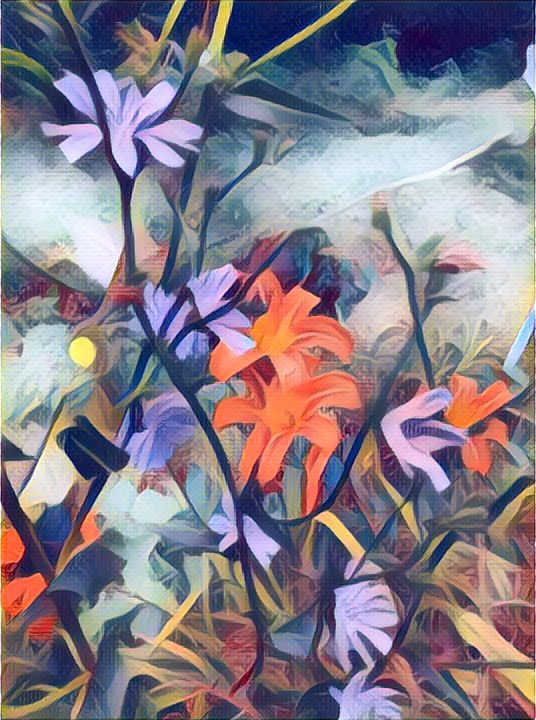
This is the season when chicory and day lilies bloom together, and the lace of Queen Anne, and the stars of St. John, and the tall hag’s tapers of the mullein, and the profusion of dogbane, and the tidy self-contained heads of red and sweet clover, and the yellow sparkles of sweet melilot, and the nodding pink balls of milkweed that catch you with their wisps of scent when you’ve already walked on five paces. Our roadside is rife with the buzzing and humming of pollinators.
Yesterday, I worked in the herb room at Radiance, the little shop where I work one day a week in the summertime. It’s one of my favorite places. In the evening, Jon and I walked down the road. As we walked, I began to see the same beings I had been smelling and measuring during the day: St. John’s wort, plantain, mullein, red clover, chicory, raspberry leaves, thistle. Wendell Berry’s words flash into my heart: “What we need is here.” And a fragment of Mary Oliver: “The world offers itself. . .” ***** I often dream that I am wandering down the hallways of a large and rambly and labyrinthine hotel. Sometimes it’s a school, sometimes city streets, but mostly a hotel. I go down hallways and through doors that sometimes lock behind me, into dark passages, up stairways, back into well-lit hallways with a thousand doors. Sometimes I am completely alone, and sometimes there’s a bustle of people.
The anxiety dreams are usually set here, and I have a deadline, somewhere I have to be, and I can’t find my way. Usually, for me, I’m trying to find a class I am supposed to have been teaching, and I’m probably late, and I may have actually missed teaching the class for a couple of days, and my students are completely unsupervised, and I should have had the schedule and directions with me, but I don’t, and I can’t seem to pull it up on my phone. Sometimes, like last night, I ask a helpful receptionist. Last night, I was told brightly to please take a seat and I would be helped in fifteen minutes or so. But I was already five minutes late for a forty minute class. So I set off again to try to find my way on my own.
At one point last night, I did manage to meet up with friends and colleagues for lunch in an incredibly busy dining hall (no Covid in this dream), which was nice, except I was terribly afraid they would discover that I had not taught a single class yet that day and that I had even forgotten how to get from class to class. I was so ashamed. But Ellis was in the dining hall, too, even though he was with his friends, and it was nice to see him there, and happy, and the cooks had made a huge pot of ugali, so he and I kept going back for more of that.
I had kicked off my pointy red high-heeled shoes in my own classroom, but I was supposed to go to a different classroom for every class, and I was supposed to be teaching Math and Foods as well as English, and I suddenly realized as I was rushing down the hall that I was barefoot (thank heavens I wasn’t naked this time), and I was further ashamed that people would see me barefoot because it’s against dress code not to wear shoes.
So it was a long and tiring night, and I kept waking up, and every time I went back to sleep I was back in the dream. At one point, I did manage to find a schedule, but I was already so far behind in the day that it was sort of pointless, and I couldn’t find my way anyway, so I went back and got my painful shoes and sat in on someone else’s French class.
Glad to be awake now.
Gratitudes: For plant medicine all around, for wise women, for catfolk, for time to make and create, for the mirror of dreams, for giving up shame–anxious bit by anxious bit, for the ones who are committed to transforming themselves and society.
May we do justice, love mercy, and walk humbly in Beauty!
“To be a poet in a destitute time means: to attend, singing, to the trace of the fugitive gods. This is why the poet in the time of the world’s night utters the holy.” ―Martin Heidegger
“Joy is the infallible sign of the presence of God. —Pierre Teilhard de Chardin
“You have to learn to get up from the table when LOVE is no longer being served.” —Nina Simone
“I like sitting at the piano. I like the idea that there are things coming in through the window and through you and then down to the piano and out the window on the other side. If you want to catch songs you gotta start thinking like one, and making yourself an interesting place for them to land like birds or insects. Once you get two or three tunes together, wherever three or more are gathered, then others come.” —Tom Waits
“The poem, I’ve always felt, is an opportunity for me to create an integrated whole from so many broken shards.” —Rafael Campo
“Which came first, the fear or the gun? The broken heart or the bleeding one? The impulse toward death or the desperate reach for love?” —Mark Morford
“A journey can become a sacred thing: Make sure, before you go, To take the time To bless your going forth, To free your heart of ballast So that the compass of your soul Might direct you toward The territories of spirit Where you will discover More of your hidden life, And the urgencies That deserve to claim you.” —John O’Donohue
“There is no such thing as being non-political. Everything we say or do either affirms or critiques the status quo. To say nothing is to say something: The status quo—even if it is massively unjust and deceitful—is apparently okay. The silence of many Christians is used to legitimize the United States’ obsession with weapons, its war against the poor, Israel’s clear abuse of Palestine, politicians who are “pro-life” on the issue of abortion but almost nothing else, the de facto slavery of mass incarceration, and on and on.” —Richard Rohr
If you could trust your voice completely, if you didn’t have to consider how how others would respond, if you didn’t have to be safe, to be tame, to be docile and humble, acceptable and charming and quiet, if you had not been trained to make your words into an easy chair, to turn your voice to honey: What would you say?
Today’s Poetic Asides Prompt is to write a poem titled “Complete (____).” I’m going to take a little bit of liberty.
The Compleat Poet
Bait your hook with a juicy image, the wriggling worm of a story, something you’ve pulled from the muddy garden plot of an ancient dream, or from underneath the rock of a hidden memory.
Your elements are tabula rasa and type. Sounds and silences. Language and lore.
Walk along the stream-bank every morning at dawn, so you can learn how the mist rises above the waters just before the fish start leaping.
Learn their habits, their secret hiding places, their favorite words and phrases. Bring them the most succulent morsels.
Tease your line across the surface, dipping down with quick and tantalizing strokes. Cultivate patience.
Carry your treasures home in a pail, or scrawled in a notebook or napkin. Learn to cook them fresh.
Gratitude of Resistance Twenty-Three: Poetry. November always feels a little frantic because I add writing a poem a day to my schedule. I have been doing this for so many years that by now, I would feel lost and bereft if I didn’t do this. It’s part of what holds me to my true purpose. I love teaching, and I feel like I belong in this job with these students and these colleagues at this time in my life. But I have chosen Poet as my identity, and whether or not my poetry ever makes an impression in the world, I would no longer be able to do my other work without it. November and April and summer always bring me back to poetic center.
Gratitude List: 1. Towhee and peewee, and phoebe and wren
2. Hummingbird is still in the hollow. I thought she had gone, or died.
3. Those who accompany the people in vulnerable situations
4. Cucumbers with cream cheese
5. The voices of the people are sometimes heard. Speak up. Speak out. Stand for justice.
May we walk in Beauty!
Thoughts for Monday:
“To be a poet in a destitute time means: to attend, singing, to the trace of the fugitive gods. This is why the poet in the time of the world’s night utters the holy.” ―Martin Heidegger
***
“Joy is the infallible sign of the presence of God.: —Pierre Teilhard de Chardin
***
“You have to learn to get up from the table when LOVE is no longer being served.” —Nina Simone
***
“I like sitting at the piano. I like the idea that there are things coming in through the window and through you and then down to the piano and out the window on the other side. If you want to catch songs you gotta start thinking like one, and making yourself an interesting place for them to land like birds or insects. Once you get two or three tunes together, wherever three or more are gathered, then others come.” —Tom Waits
***
“The poem, I’ve always felt, is an opportunity for me to create an integrated whole from so many broken shards.” —Rafael Campo
***
“Which came first, the fear or the gun? The broken heart or the bleeding one? The impulse toward death or the desperate reach for love?” —Mark Morford
***
“A journey can become a sacred thing:
Make sure, before you go,
To take the time
To bless your going forth,
To free your heart of ballast
So that the compass of your soul
Might direct you toward
The territories of spirit
Where you will discover
More of your hidden life,
And the urgencies
That deserve to claim you.”
—John O’Donohue
***
“There is no such thing as being non-political. Everything we say or do either affirms or critiques the status quo. To say nothing is to say something: The status quo—even if it is massively unjust and deceitful—is apparently okay. The silence of many Christians is used to legitimize the United States’ obsession with weapons, its war against the poor, Israel’s clear abuse of Palestine, politicians who are “pro-life” on the issue of abortion but almost nothing else, the de facto slavery of mass incarceration, and on and on.” —Richard Rohr









 Mockingbird Chronicles