Cracking the Code

Today when we had walked to the top of the hill, we stopped to examine that big patch of ice that formed when water pooled just above the eastern corner of the fields beside the little grassy airstrip at the top of the ridge.  It formed a nice ice-puddle which Joss immediately dubbed his very own skating rink.  I got to increase the step-count on my pedometer by walking around and around and around the puddle, holding on to his hand as he skidded and slipped over the icy surface.  It was a classic Christopher Robin moment, a small boy happily involved in the imaginative possibilities of the moment.

At one point, he lay down on the ice, and said, “Oh!  It’s beautiful!  There’s writing here!”

The ice had crystallized in a hieroglyphic pattern across the surface.

“Can you read it?” I asked him.

“No.  It’s in cursive.”

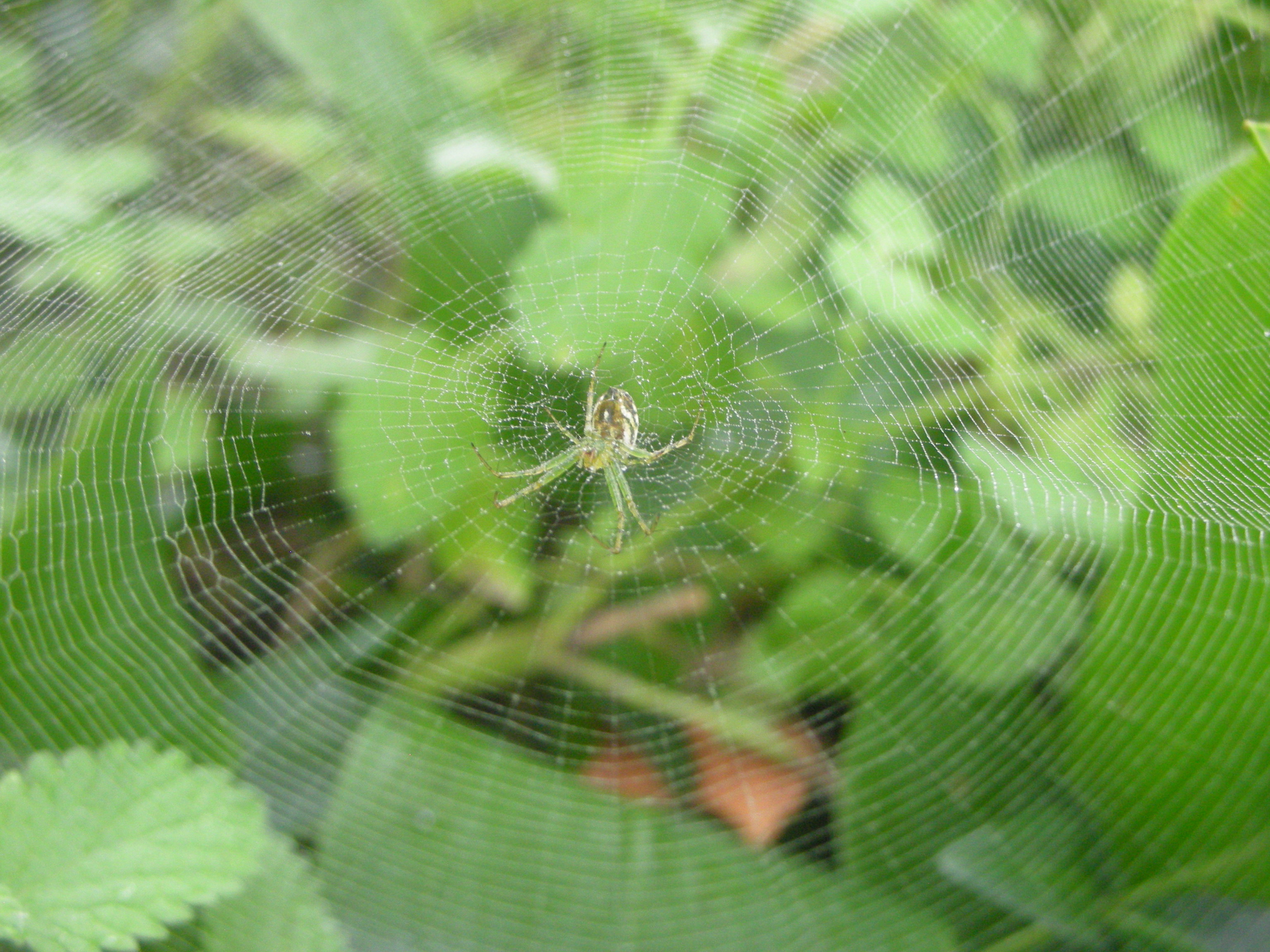
But there’s not a shred of doubt in your mind, Small One, that the writing is there to be read, if only one can crack that cursive code.  I know the feeling.  I had experienced it myself only moments before, watching a flock of Canada geese honking their way toward the River in front of a Michelangelo sunset sky, the shifting patterns of Vs undulating across the clouds.  I had the same feeling as we were watching the robins moving through the fields, the dark brown of their backs seeming to make the very earth bubble and boil like a live thing.  I get that feeling when I see bird tracks in the snow like cuneiform writing on the most transitory of tablets.  And it’s the same feeling I get when I see a branch or twig that has been burrowed by small insects who leave behind their trails in the wood, like a complex system of writing just waiting for me to figure it out.

Perhaps it’s just that age-old human trick of trying to make sense and meaning out of the seemingly random patterns of a chaotic natural world.  Or perhaps it’s an intrinsic awareness that we all have, that even if the random patterns about us do not make alphabetical sense, there’s an underlying order or patterning to everything around us, a purposefulness.

Maybe the point is not so much the attempt to decipher the coded purpose in the pattern, but to notice it and wonder at it where and when we see it, to lie down right there on the ice and say, “Oh, it’s beautiful!  There’s writing here!”

Gratitude List:

1.  Sleep
2. Doorways
3. Crocheting
4. Anticipating time off
5. Sleep

May we walk in Beauty!

Taking a Walk

Random thoughts from a walk around the farm this afternoon:

–This Step-Counting contest at school is doing what it is supposed to, getting me out and walking.  I am afraid I am letting my team down with my low, low numbers.  I am more sedentary than I admitted to myself–grading and FB and granny squares and playing Legos keeps me sitting in one place.  A lot.
–On one hand the pedometer feels like a ball and chain.  I check it every half hour or so throughout the day, and I am feeling incredible pressure to get up and walking.  On the other hand, it pushes me to get outside and walk, which I don’t usually take the time for, so it’s freeing me, too.
–I like being on a walk.  I live having been walking.  I like having walked.  I just don’t like going walking.  It’s the anticipation and the getting myself in gear part that I don’t like.
–There were tracks everywhere in the last bits of snow and slush: deer, squirrel, bird, bird, bird, and canid.  Maybe that last is fox, maybe dog, maybe coyote.
–I haven’t seen a coyote in years, though Jon saw a pair of them only a couple weeks ago.  I was pretty desperate to find evidence of them in the tracks today.  One set of tracks had a really largish print, and the claws pushed deep into the snow.
–I found a grey-ish owl pellet and broke it apart to look for the mouse bones. But then I realized it was probably a misshapen piece of raccoon poo.
–The bees are sleeping.  I wonder how they’re surviving the winter in their hive.
–I found two unopened pods in one of the milkweed patches.  We brought them down to the house.  Jon has been collecting milkweed seeds with the hope that he can get some to grow in the spring to give away.
–One Small Boy came up to me and said, “Best snack ever!” as he crunched a chunk of ice in his left hand and then chewed off a bite of the kale in his right hand.
–That yellow frost-nipped kale looks about as winter-bitten as I feel right now.


Gratitude List:
1. Wind that scours
2. Fire that transforms
3. Water that purifies
4. Earth that supports
5. Spirit that inspires

May we walk in Beauty!

Welcoming What Comes

It is Groundhog’s Day. That whistle pig is the guide. It’s time to assess: What will I keep hidden in the dark recesses of winter and what will I bring out into the light? As the groundhog is emerging from winter sleep and starting to think about the Farmer’s vegetables, what will I open my own eyes to? What plans will I make for the coming season?  How ill I nourish myself?

It is Brigit’s Day. Her followers committed themselves to keep her fires always lit. What flames need my vigilance and attention in the coming year?  What paths and processes will I commit myself to following?  What will be my contemplative work in these final weeks of winter?

It is Candlemas. Time to tend to the candles, to bless the tools that will give me light in the coming year.

Here’s to February, the longest month.

Gratitude List:
1. The work of the emergency Women’s Shelter in Lancaster at the YWCA.
2. Early morning sun and late afternoon sun casting long blue shadows of trees over the snowy fields.
3. Looking forward.  Looking backward.  Looking inward.
4. Six weeks.  It’s only six weeks.  I can make it through winter.
5. You.  Thank you for all the ways you keep the fires lit, all the ways you bring light, all the ways you lift your candles and say, “Here.  This is the way.”

May we walk in Beauty!

Small Town

Today’s Auto Writing Prompt: Featuring at least one example from each of the five senses, describe a small town.  It is helpful for me to force myself to do a sudden descriptive writing piece since this is the type of work I demand from my students.

The town marches straight up the hillside. Walking up Main Street from the River, you feel the weight of gravity pulling you backwards and downwards.  Perhaps it’s the weight of the town’s own defiant history, furtively harboring the desperate people who followed the River northward to freedom and burning the bridge across the River to keep the southern armies from marching on their neighbors to the east.  Brick and stone and wood–your fingers can almost trace the layers of history, read the stories of rebellion and desperation in the walls of this town.

On a clear breezy day, you will just catch the briefest whiff of the metallic tang mingled with rot (almost more a taste than a smell) that comes from the dump high on the ridge, and the town is daily filled with the rumble of trucks from many parts of Pennsylvania and her neighbors on their way to unload their burdens at the landfill.

Gratitude List:
1. The heart-filling gratitude of students.
2. Little naps
3. Nailing it, but also trying again when I don’t nail it. So, second chances.
4. Being part of a team, a net, a compassionate web–knowing that others are also looking out for the ones I feel troubled about
5. Snowy mornings.  My favorite thing, besides a little extra time in the mornings with my family, is seeing the tracks in the snow.  Cat feet. Squirrel feet. Bird feet.  Wingtips.

May we walk in Beauty!

Breaching Innocence

I had an anguished moment of breaching my child’s innocence tonight. It all started with the project I was helping him with, a poster on Thurgood Marshall. And that’s great, right?

And we read that he was a staunch opponent of the death penalty. And that’s great, right?

Only: “What is that, Mom? What is the death penalty?”
Really, I had no idea he didn’t know. I told him. I am a firm believer in not unpacking the harsh realities too early for children, but I don’t believe in the outright lie.

“But then the person who put someone to death would have to be put to death, too, right? And then on and on. . .”

Me: “Yes, it would seem like that, but we say that it is the state that puts them to death, not the person.”

Quiet. Thoughtful eyes. “Well, I’m glad they don’t do that anymore.”
Oh, Sonny. “Well, actually. . .”

Then, with certainty, “Only in other countries, right?”
Really. He said that. I knew we were going all the way down this trail. “No, here, too.”

And, here it comes: “But not in Pennsylvania?”

“Yes, in Pennsylvania, too, Buddy. I’m not happy about any of it myself.”

At least if he needs to know this small and terrible truth, he has it in the context of the good man of Thurgood Marshall. Loving Source of the Universe, may he always find violence confusing and strange. May he be one who works for the best of human good.

Epiphany

My holiday season is Twelvenight, the time that stretches from Christmas to Epiphany, a quiet and contemplative time, time out of time, intended for the gleaning of images and words that might help me focus the unfolding of my story in the coming year.  I extend the season a little, beginning at Solstice.  Through the long nights and the waiting for light to begin to return, I watch and listen for images and words that compel me in some particular way.

Two years ago, I found myself suddenly obsessing over the word palimpsest, a strange and new word that carried the sense of layers and shadings of meaning, of old stories suddenly appearing in the middle of new stories to inform the current living.

Last year, bridge was my word–an image that appeared repeatedly to me in conversations and dreams, and a concept that became incredibly powerful to me in the meaning-making of my own life when I found myself suddenly making a major life transition, from farm and child care back to teaching.

My grab bag of images and ideas this year is full and cluttered.  Fred the cat has been in one of his agitated cycles during the past couple of weeks, frequently waking us up in the middle of the night, which leaves my head whirling with fog-skuthers of dream-images, compelling pictures that slip into my thinking space throughout the day.  I woke up one morning thinking about a student at our school, wondering if she would be in my class next semester, with an almost wild sense of protectiveness for her.  Vulture, lynx, and leopard have appeared in my dreams.  Plantain and pigweed.  Storytellers, fools, and shamans (somehow associated with the image of those magical folk from the east who decided to follow the sign of a star).  There was even a nightmare about watching a plane crash that woke me up with a pounding heart and tight breathing.  The dreams have been full and fantastical.

Out of it all, I have settled on two words that have floated to the surface of the pond of my unconscious: secrets and impeccability. I don’t really like the word secrets (I have seen unhealthy secrets destroy relationships too often), and I keep trying to change it to mysteries, but something in me thinks that the distinction may be important to explore during the coming season, particularly in the context of the word impeccability.  Perhaps it’s a step in gaining wisdom and maturity, that ability to keep one’s own council and trusting to the strength of one’s own character.  I know I have much to learn on both fronts.

A Poem Should Be

DSCN7423

After my long post the other day about meaning in poetry, I keep hearing Archibald MacLeish’s line in my head: “A poem should not mean but be.”

And Grace Paley’s “Responsibility.”

I am in the midst of trying to bring to birth a poem that I think might be titled “The Shaman’s Lexicon.”  Perhaps I need to write my own “Ars Poetica,” my own “Responsibility.” Getting caught up in the whirlwind of a compelling poetic idea reminds me again that despite the thought-provoking analysis of even the most careful critics, when it comes down to it, writing poetry is an art, and that like a visual artist, a poet is often following the trail of an obsessive idea.  The process is less about seeking meaning, perhaps, and more about relieving the curiosity of what lies beyond the next turning.

Gratitude List:
1. A Christmas Carol. Joss discovered Grandma Kreider’s unabridged copy with gorgeous illustrations and asked Jon to read it to him.  They spent hours with it, Jon explaining some of the denser bits and skipping some of the longer bits of of description, and finally made it through. Joss was engrossed.  I’ll admit to openly weeping when the Spirit of Christmas Future showed Scrooge the Cratchit house after the death of Tiny Tim.  I hope we can make that a tradition.  Now I am going to try to finish The Best Christmas Pageant Ever with them today.
2. Dawn in the hollow, sun shining on frost.  The chickens used to get me up and out to see it every day.  Now, most days, I am on the road before the dawn spreads her rosy fingers over the sky, and I have bequeathed the chickens to friend who will be a less distracted caretaker.  So I am grateful this morning for the wee sleekit mousie who needed repatriation in the upper fields.
3. Advice Rebound: I told a friend the other day, in that advice-giving tone that I can’t seem to make myself stop using: “You need to take a break, carve out time just for yourself.” I could feel those words bouncing back on me as I said them.
4. Dreams.  I am gleaning my dreams for the messages of the year, here in the bowl of Twelvenight.
5. The murmurings and mutterings of the children playing together in the background.

May we walk in Beauty!

Making Sense

leaves1

“A good poet tries to lead you into universal experience by leading you into the shocked concrete experience of one flower, one frog, one dog, one tree, one rooster. . . .” —Father Richard Rohr

A few weeks ago, when former US Poet Laureate Mark Strand died, I read a quotation by him about the twin streams of narrative and surrealism that are hallmarks of contemporary poetry.  For some reason, googlability and all, the exact quote eludes me, so you’ll have to trust me on the paraphrase.  My inner ears really perked up at the marriage of those two streams into one sentence, because, without trying to place myself directly into any particular style of poetry, I find myself drawn to both the narrative and the surreal in my own reading and writing.  Even the act of placing those two words into the same context–narrative AND surreal–is something of a surreal exercise itself.  The nature of narrative, of telling a story, is to make sense of a series of events.  Surrealism is a breaking up of sense, a marring of the waters of sense and meaning.

This week, I ran across Matthew Buckley Smith’s Prose Feature in 32 Poems magazine, titled “Why Poems Don’t Make Sense,” and it sent me deeper into this exploration of the meaning of meaning in poetry.  He suggests that sometimes poets engage in a cliquish game of “Keep-away,” writing with such obscure allusions (or with no definite referents at all) that only the in-crowd of poets and erudite thinkers could “get” the deeper meaning, which leaves the majority of people scratching their heads and saying they hate poetry because it doesn’t make sense, or else pretending that they really do find meaning where there is none or little to be had.  He also writes that some poets may deliberately avoid cliched and conventional patterns of meaning-making in their poetry as a way to fight the oppression of conventional thinking.

When I write poems, why do I intentionally obscure the meaning, slanting the sense into images that–depending on your personal reference points–could take on many different meanings? Why, as a reader, am I so often moved by poems that are a series of seemingly unrelated images that seem to suggest a story or an idea, but only in the spaces between the images?  I hope I am not being clubby, trying to make references that only the knowing and thoughtful in-group will understand.  I don’t think so.

His other point does resonate for me, however.  You’ll have to read his article to explore his ideas in detail, but here is my take on it.  We use language to build the structures upon which we hang our ideas.  Language is the scaffold upon which we develop whole structures of thought.  Language anchors and shapes and breathes life into thought and idea.  Conventional thinking, and conventional language, can end up being a pretty tight little box of a windowless building that doesn’t let in the light.  The air in there gets pretty stale.  When language–and its attendant ideas–become calcified and crippled into arthritic patterns, poetic image and word-use can find new ways to say things, can break windows into the walls of those airless rooms and build ornate new additions onto the old structures.  Poetry jars the cart of language out of its constricting wheel ruts.  This is why poets and writers can make good revolutionaries–if they know their work and do their jobs well.

Good poetry, I think, is more about finding your way by signposts than about following a map.  It gives readers a few cues and clues, sets us loose, and then waits for us to say, “Oh!  I recognize this territory!  I know this landscape.” A series of seemingly unrelated but compelling images can spring to life when sprinkled with the fairy dust of beautiful language or the hint of a story.  While I want to be able to understand enough of the controlling idea of a poem for it help me create some sort of sense, the most satisfying meaning that I derive from reading a good poem comes not through the intellectual front door, but through the back door of the emotions.  Meaning made through emotional connection rather than mental processing often appears in the form of wonder and holy surprise, even when it comes in a painful or angry guise.  Poetic understanding is gut-level understanding.  I have long been a fan of singer-songwriter Paul Simon.  I don’t think I know what he means about anything, but he always makes me feel something.

The sense-making in poetry is about getting behind the brain.  A poem is a door.  Sometimes poets make sturdy, locked, exclusive club doors that you can only enter if you are one of “us,” or if your can speak (or pretend to know) the password.  A really good and satisfying poem is an open and inviting doorway that frames the view in a particularly compelling way.  “Look!” it says.  “Stand and stare.  Take a deep breath.  Then tell me what you see.”

Good poetry, I think, holds a paradoxical perspective on language itself: it acknowledges the inadequacy of words to completely map an inner geography, and it also steps with reverence and awe into the sacred space that language creates between writer and reader.  Words are both inadequate and holy.

I Will Get to You

On paging through Shaking the Pumpkin: Traditional Poetry of the Indian North Americans:

I had to put the book down
and walk away,
the fire of it still running
up and down my spine

lest I fall into the pit of poetry
and lose myself there for the day,
for the year,
lose my family,
time,
direction.

Even this,
these black marks on the page,
these birds’ feet in the snow,
quiver on my skin
like coals.

***

Perhaps it’s the result of going so suddenly from teaching to resting, but now my brain is filling up with images and ideas, like a room crowded with children all clamoring for my attention.  Ah!  There’s the image: sometimes when class begins, I suddenly find myself in the center of a crowd of earnest and intent students all needing something from me–a pass, a signature, an explanation, a bit of comfort–and I cannot meet every need at once, but I want to look everyone in the eye and say, “I’ll get to you,” knowing that I haven’t the time or the energy to entirely fulfill the needs they carry.  Today, I opened that book, and suddenly the new poems and writing ideas that I have been putting off for so many weeks now have come crowding about me, begging for passes and signatures and permission to go get a drink.  Were I single and childless, I would make this a day of delicious writing, but I’ll need to put these voices off for just a little while yet.  I’ll get to you, Bright Ones.  I promise I will do my best.


Gratitude List:
1. The dimple in Ellis’s chin.  Where did that come from?  I don’t think that the Weaver or the Kreiders have chin-dimples.  Do they?  And why is it so endearing?
2. The poetry of Mara Eve Robbins, which fills me with delight and sadness, tears me up and heals me, whichever I need at the moment–her words always seem to come at just the right time, to be just the right thing.
3.  The writing of Barbara Kingsolver.  Why do I always take so long to get started on her books?  She writes with equal power of both internal and external landscapes.  I am listening to Flight Behavior these days, and all around me now I hear the whispers of butterfly wings.
4. The best Christmas ever.  That’s what the boys keep saying, and who am I to disagree?
5.  Dreams.  Listening.

May we walk in Beauty!

Hush

The sun is setting out of the hollow now on this day before the the shortest night.  At about this time tomorrow (6:03 EST to be exact), we reach our furthest point on the outbreath of this trip around the sun.

Pause. Regroup.  A moment of holy hush.

These are the days for dreaming and contemplation, for listening for the messages.

What words, what images, will you glean from your dreamings to take with you into the coming wheel around the year?


Gratitude List:
1. The night has secrets and messages to offer.
2. Sunreturn is upon us.  I have made it to the center of another season of darkness. Now for the journey back around.
3. Anticipation
4. People believing that their work makes a difference.  It does, you know.
5. Blessings. Benedictions. Beannacht.

May we walk in Beauty.